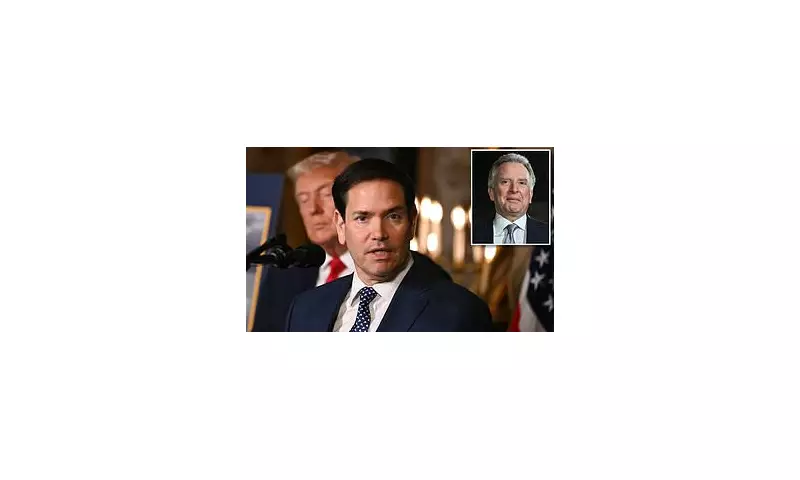
Secretary of State Marco Rubio has solidified his position as the most popular member of President Donald Trump's Cabinet, according to a recent opinion survey. The findings arrive amidst reports of behind-the-scenes friction in US efforts to broker an end to the war in Ukraine.
Polling Surge for the Secretary of State
A Daily Mail poll conducted on December 20 and 21 by J.L. Partners revealed a notable uptick in Rubio's public standing. The former Florida senator achieved a net approval rating of +6 points, with 39 percent of respondents approving of his performance versus 33 percent who disapprove.
This marks his highest net rating of the year, surpassing a previous peak of +3 in late April. In contrast, Attorney General Pam Bondi was found to be the least popular Cabinet member, though her net rating was only slightly negative at -1.

The poll, which surveyed 1,000 registered voters online, carries a margin of error of plus or minus 3.1 percent. It was conducted shortly after Rubio made headlines by stating he would not challenge Vice President JD Vance for the Republican presidential nomination in 2028, a move seen as reducing the potential for internal party conflict.
Diplomatic Friction and the Ukraine Negotiations
As the polling concluded, reports emerged detailing clashes between Rubio and Trump's Special Envoy, Steve Witkoff, over the direction of Ukraine peace talks. According to an NBC News report on December 22, tensions arose from Witkoff's methods, which included using his personal plane for diplomatic travel and initially scheduling a high-level meeting with the French president without inviting the Secretary of State.
While the State Department publicly described the pair as having a 'close working relationship' and being 'personal friends,' sources indicated the situation was highly unusual. 'It's an almost unheard-of scenario that a businessman with no foreign policy experience would get a one-on-one meeting with a head of state over the U.S.'s top diplomat,' the report noted.
The two men also reportedly differ on strategy. Rubio is said to favour maintaining economic pressure on Russia to force the Kremlin to negotiate, whereas Witkoff has faced criticism for taking 'too light a hand' with Russian President Vladimir Putin. One congressional official bluntly told NBC that Witkoff was 'a gift to the Russians.'
Rubio's Hands-On Role in Seeking a Deal
Further insight into Rubio's diplomatic approach came from a New York Times report. It revealed that in March, Rubio pressed a Ukrainian delegation to define their 'absolute bottom lines' for survival, asking them to draw acceptable borders on a map. This was seen by some US officials as a breakthrough, signalling President Zelensky's willingness to discuss territorial concessions.
Rubio reportedly warned that if Russian President Vladimir Putin rejected a deal based on those lines—which included a provision that Ukraine could join the EU but not NATO—then 'he has a Donald Trump problem.' The Secretary of State also adopted a firm tone in early meetings with Russian officials, quoting from *The Godfather* to emphasise that nuclear powers 'cannot be careless' in their communications.
However, the complexity of dealing with Moscow was highlighted in September. Russian Foreign Minister Sergei Lavrov claimed President Trump had committed to forcing Ukraine to cede most of the Donetsk region during a meeting in Alaska, and demanded a public acknowledgement. US officials denied any such commitment was made, suggesting the letter from Lavrov was an unsanctioned 'power play.' Following this incident, President Trump authorised further sanctions against Russia.
The public's view on potential peace terms remains divided. The same Daily Mail poll found voters were most opposed to Ukraine ceding territory not currently held by Russia. Opinions on lifting US sanctions as part of a deal were split, with 32 percent finding it acceptable and 33 percent unacceptable.