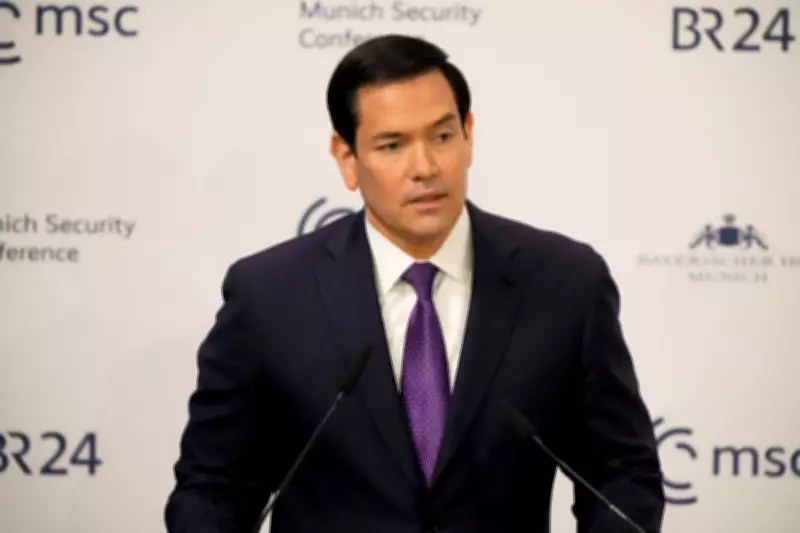
U.S. Secretary of State Marco Rubio delivered a significant address at the Munich Security Conference on Saturday, 14 February 2026, where he strongly emphasised the United States' unwavering desire to preserve and strengthen the trans-Atlantic alliance. Speaking in Munich, Germany, Rubio made a poignant declaration, stating that the United States "will always be a child of Europe," a remark that resonated deeply at a conference where a notable rift with Washington's European allies had emerged just a year prior.
Addressing Historical Rifts and Future Commitments
Rubio's speech came at a critical juncture, as tensions between the U.S. and its European partners have been increasingly visible over recent months. The Secretary of State used the platform to acknowledge these challenges directly, while simultaneously reaffirming America's foundational ties to Europe. He highlighted the importance of maintaining robust diplomatic and strategic relationships across the Atlantic, underscoring that despite differences, the alliance remains a cornerstone of global stability.
Reflections on Cold War Euphoria and Modern Threats
In his remarks, Rubio provided a historical context, arguing that the "euphoria" following the Western victory in the Cold War led to a dangerous delusion of triumph. He suggested that this overconfidence now threatens the very institutions that were instrumental in defeating both the Nazi regime and the Soviet Union. Rubio warned that complacency could undermine the alliances and frameworks that have ensured peace and security for decades, urging a renewed focus on collective defence and cooperation.

The Secretary of State's comments were seen as a call to action for both American and European leaders to bridge their differences and reinforce their shared values. He stressed that the trans-Atlantic partnership is not merely a political convenience but a deep-rooted bond shaped by history and mutual interests. Rubio's emphasis on preserving this alliance reflects ongoing efforts to navigate complex geopolitical landscapes, including issues related to trade, security, and foreign policy.
Observers noted that Rubio's speech aimed to mend fences while also setting a forward-looking agenda. By invoking Europe as a parent to America, he sought to remind audiences of the cultural and historical connections that underpin the relationship, even as practical disagreements persist. The Munich Security Conference, a key forum for international security dialogue, provided an apt backdrop for this message, drawing attention from policymakers and analysts worldwide.