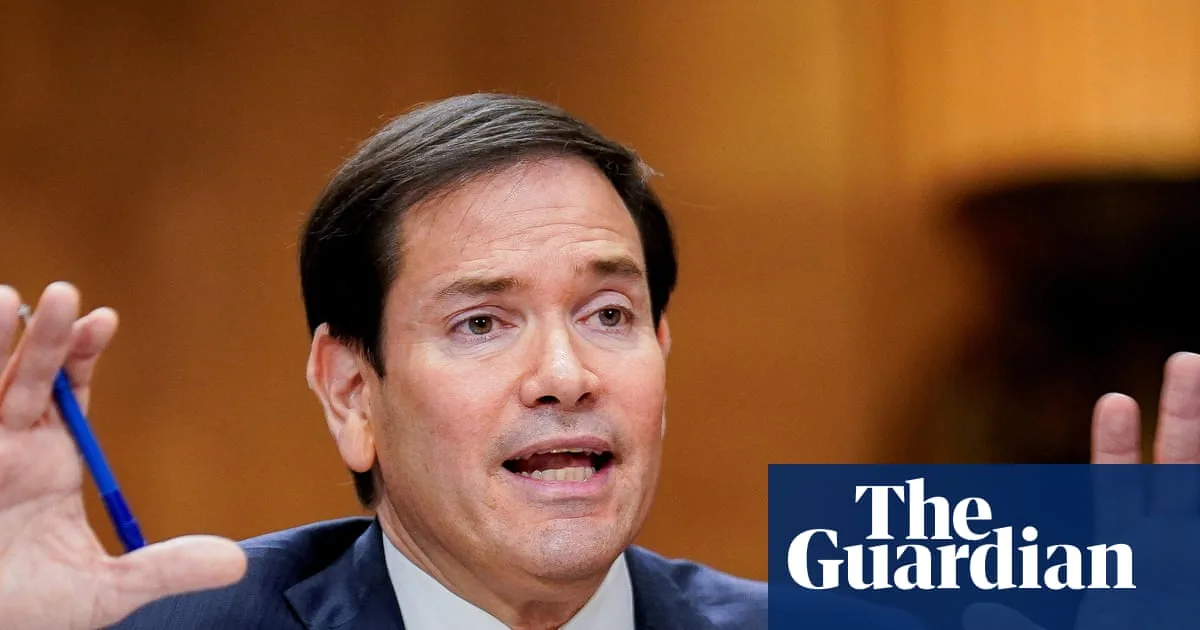
US Secretary of State Marco Rubio has declined to rule out future military action in Venezuela, telling a Senate committee that President Donald Trump “does reserve the option” to use force. Appearing before the Senate Foreign Relations Committee on Wednesday, Rubio defended the Trump administration’s unprecedented intervention, including the removal of Nicolás Maduro and the seizure of Venezuelan oil.
Pressed by Senator Chris Murphy on whether the US would use force to compel cooperation on oil sales, Rubio cited a hypothetical scenario of an Iranian drone factory threatening US forces. However, he acknowledged that “military action is not good for recovery and transition”. Rubio insisted the administration does not intend to take such steps, saying: “I can tell you right now with full certainty, we are not postured to, nor do we intend or expect to have to take any military action in Venezuela at any time.”
Murphy questioned whether the approach was “destined for failure”, given that Maduro’s former aides remain in control. “You are taking their oil at gunpoint. You are holding and selling that oil,” he said. Rubio refused to commit to a timeline for democratic transition but said conditions would improve within months. He acknowledged that no-bid licenses were given to two US oil trading companies as a “short-term fix” to move Venezuelan oil to market, with a long-term plan involving direct sales to refineries.
In prepared remarks, Rubio defended Trump’s decisions to remove Maduro, continue strikes on drug-smuggling boats, and seize sanctioned tankers. “There is no war against Venezuela, and we did not occupy a country,” he said. “There are no US troops on the ground. This was an operation to aid law enforcement.” Congressional Democrats have condemned the moves as exceeding executive authority, while most Republicans support them. A wrongful-death case has been filed by families of two Trinidadian nationals killed in a US boat strike, one of 36 strikes that have killed at least 126 people since September.
Rubio also indicated that acting president Delcy Rodríguez has little choice but to comply with US demands, including opening Venezuela’s energy sector to US companies and ending subsidised oil exports to Cuba. Rodríguez has said her government and the Trump administration have established “respectful and courteous channels of communication”.