Putin Vows Unwavering Support for Iran's New Supreme Leader
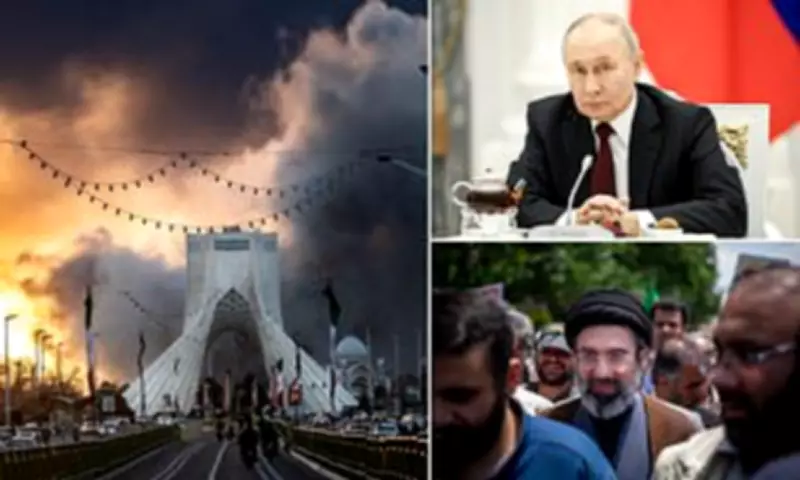
Russian President Vladimir Putin has pledged "unwavering support" to Iran's newly appointed supreme leader, Ayatollah Mojtaba Khamenei, who was named to succeed his father after the elder Khamenei was killed in US-Israeli strikes. In a message delivered on Monday, Putin reaffirmed Russia's solidarity with Tehran, stating that Moscow "has been and will remain a reliable partner" to Iran.
International Reactions to Leadership Transition
Putin's message emphasized that "at a time when Iran is confronting armed aggression, your tenure in this high position will undoubtedly require great courage and dedication." This follows a Friday phone call between Putin and Iranian counterpart Masoud Pezeshkian where the Russian leader voiced support for an immediate ceasefire in Iran.
The Kremlin confirmed that "Russia's principled position on the need for an immediate cessation of hostilities was reaffirmed," with Putin calling for a "return to the path of political and diplomatic resolution." Russia's ambassador to the UK, Andrey Kelin, further clarified Moscow's stance on Sunday, stating his country is "not neutral" in the US/Israeli war with Iran and "of course" supports the hardline Tehran regime.

China Joins Russia in Backing Iran
Also on Monday, China declared its opposition to any attempts to target Mojtaba Khamenei. Foreign ministry spokesman Guo Jiakun told reporters that Iran's decision to appoint the younger Khamenei was "based on its constitution," adding that "China opposes interference in other countries' internal affairs under any pretext, and Iran's sovereignty, security, and territorial integrity should be respected."
These statements of support come after Israel's Defence Minister Israel Katz threatened to assassinate any Iranian leader picked to succeed the previous supreme leader. In a social media post, Katz declared that any leader selected by Iran "will be a certain target for assassination, no matter his name or where he hides."
Trump's Position on Iranian Leadership
Former US President Donald Trump stated that Iran's next leader "is not going to last long" without his approval. In an interview prior to Iran's announcement, Trump said whoever the Iranians pick as Khamenei's successor is "going to have to get approval from us," adding "if he doesn't get approval from us he's not going to last long."
However, Trump had previously dismissed Mojtaba Khamenei as a "lightweight," telling media outlets last week that "Khamenei's son is unacceptable to me. We want someone that will bring harmony and peace to Iran."
Supreme Leader's Powers and Appointment
Iranian state television confirmed on Sunday that Mojtaba Khamenei had been named Iran's next supreme leader. The 56-year-old was chosen by the 88-seat Assembly of Experts, the group of clerics responsible for selecting Iran's supreme leader.
As Supreme Leader, Mojtaba Khamenei will now serve as commander-in-chief of the regime's armed forces and appoint the leaders of all military branches, as well as choosing the head of the judiciary. Iran's powerful paramilitary Islamic Revolutionary Guard Corps (IRGC) also answers directly to the Supreme Leader, who will have final authority over the nation's war strategy.
Escalating Regional Conflict
Russia and China's support comes as the war in the Middle East has entered its second week. US Secretary of Defense Pete Hegseth stated that Washington is "willing to go as far as we need to to be successful," adding that America will "make sure that their nuclear ambitions are never achieved."
Commenting on Trump's demand for "unconditional surrender" from Iran, Hegseth explained: "It means we're fighting to win. It means we set the terms. We'll know when they're not capable of fighting. There'll be a point where they'll have no choice but to do that."
Iran's Response and Regional Attacks
Iran's foreign ministry spokesperson downplayed the likelihood of a ceasefire as long as attacks continue, stating "there is no point to talk about anything but defence and crushing retaliations against enemies." Esmaeil Baghaei reiterated that Tehran has no war to fight with its Muslim neighbours but must target "facilities used by aggressors" for its legitimate defence.

These comments come as Gulf states experienced severe targeting by Iran overnight. Bahrain reported the highest number of casualties since the beginning of the war, with 32 people injured in an Iranian attack on the island of Sitra after Bahrain's Bapco oil refinery was hit by drones.
Several explosions were also heard Monday in the Qatari capital Doha, as Qatar, Saudi Arabia, the United Arab Emirates and Kuwait all reported new attacks. Iran additionally launched a fresh wave of attacks on Israel overnight, with one person killed by shrapnel and at least two seriously injured in the Yehud area.
Meanwhile, Israeli airstrikes on Lebanon's capital Beirut continue, with the Israeli military warning on Monday it would strike branches of Al-Qard al-Hassan, a Hezbollah-linked financial firm mainly operating in the group's strongholds.