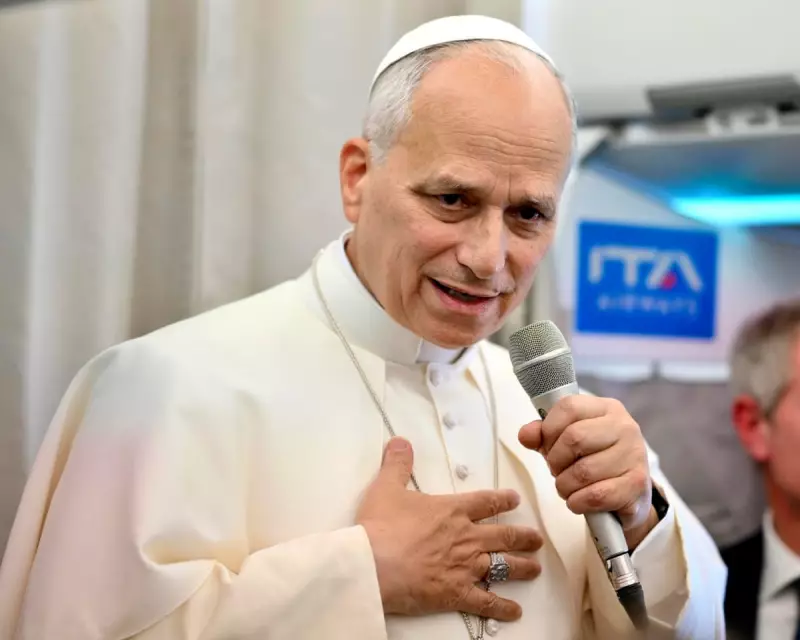
In a bold move that has captured global attention, Pope Leo has embarked on a high-stakes diplomatic mission to Venezuela. The visit, confirmed for early December 2025, comes at a moment of heightened friction between the United States under President Donald Trump and the government of Venezuelan leader Nicolas Maduro.
A Pontiff's Peace Mission in a Volatile Region
The Vatican announced the pontiff's itinerary, which will see him land in Caracas on December 2nd. This marks the first papal visit to the South American nation in over a decade. The trip's primary stated goal is to foster dialogue and reconciliation within a country grappling with profound political and economic crises.
However, the visit's significance extends far beyond Venezuela's borders. It is widely interpreted as a direct intervention into the fraught relationship between Washington and Caracas. President Donald Trump's administration has maintained a policy of maximum pressure against Maduro's regime, recognising opposition leader Juan Guaidó as the legitimate interim president and imposing severe economic sanctions.
Analysts suggest Pope Leo aims to act as an impartial mediator. His office has expressed deep concern over the humanitarian impact of the ongoing stalemate, which has exacerbated poverty and triggered mass migration. The Vatican's strategy appears to be one of quiet diplomacy, seeking to create a neutral space for communication that official channels have failed to provide.
The Trump Administration's Stance and Military Posturing
The pontiff's peace overture coincides with a notable hardening of rhetoric from the White House. In recent weeks, President Trump has reiterated his view that "all options remain on the table" regarding Venezuela, a phrase often interpreted as not ruling out military intervention. This posture has kept regional tensions at a simmering point.
Simultaneously, the US military has conducted exercises and increased its presence in the Caribbean, actions it describes as routine but which Caracas condemns as provocative. The Maduro government has frequently accused Washington of plotting its overthrow, pointing to these manoeuvres as evidence.
Against this backdrop, Pope Leo's mission is fraught with risk. He must navigate the sensitivities of a Venezuelan government suspicious of foreign influence and an American administration committed to a policy of regime change. Success is far from guaranteed, but the mere attempt at shuttle diplomacy represents a significant geopolitical event.
Potential Outcomes and Regional Implications
The potential outcomes of this papal visit are manifold. At a minimum, it could temporarily lower the temperature of public exchanges between Trump and Maduro. It may also open back-channel communications that have been previously severed. The most optimistic scenario would see the initiation of formal, internationally mediated talks aimed at a political solution.
Conversely, the mission could also highlight the intractable nature of the conflict. A failed mediation might embolden hardliners in both capitals, leading to an escalation. The Vatican is likely aware of these risks but has calculated that the moral imperative to act outweighs them.
The visit also carries immense symbolic weight for the people of Venezuela, a predominantly Catholic nation. For many citizens suffering from hyperinflation and shortages, the pontiff's presence is seen as a beacon of hope and a reminder to the world of their plight. His sermons and public addresses will be scrutinised for any subtle messages to the ruling elite or words of comfort to the opposition.
As Pope Leo prepares to step onto Venezuelan soil, the world watches. His journey is more than a pastoral visit; it is a test of moral authority in an age of geopolitical brinkmanship. Whether his diplomacy can alter the course of a long-standing crisis remains to be seen, but his intervention has already reshaped the diplomatic landscape surrounding this enduring conflict.