Historic Gesture in Istanbul: Pope's Visit Bolsters Christian Unity and Diplomatic Thaw
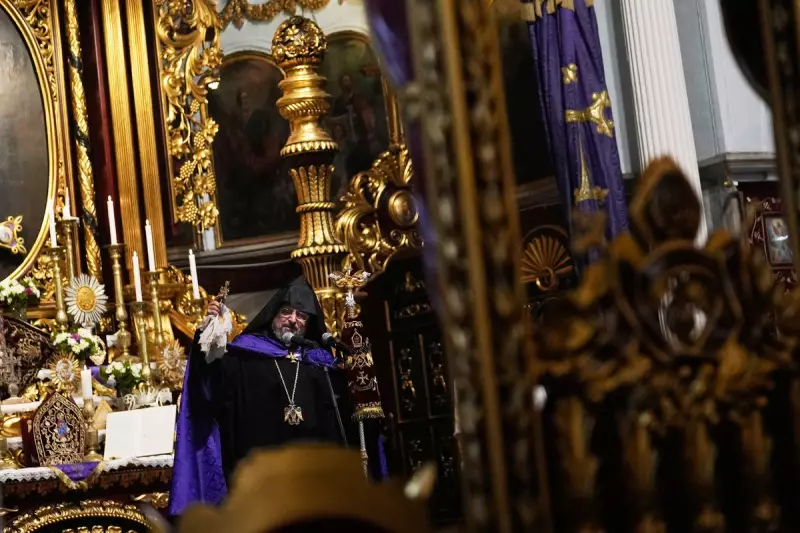
In a significant move for ecumenical relations, Pope Leo XIV is scheduled to pray at the Armenian Apostolic Cathedral in Istanbul this Sunday. This act is widely seen as a powerful gesture of support for Christian unity and the Christian minority communities within Turkey.
Observers note that beyond its religious symbolism, the pontiff's visit quietly signals backing for ongoing efforts to heal the deep, century-old wounds between Turkey and Armenia. The two nations have been scarred by mass killings and decades of profound mistrust.
A Painful History and the Path to Normalisation
The historical context is dominated by the events beginning in 1915 in Ottoman Turkey, where an estimated 1.5 million Armenians died in massacres, deportations, and forced marches. While historians widely regard this as a genocide, Turkey strongly disputes the term, maintaining that the death toll has been inflated and that the casualties were victims of civil war and unrest. Ankara has actively lobbied against international recognition of the events as genocide.
This visit draws inevitable comparisons to Pope Francis's tenure. During his 2014 trip to Turkey, Francis did not visit Armenian sites but made an unscheduled stop to visit the ailing Armenian Patriarch Mesrob II. A year later, he provoked Ankara's anger by explicitly referring to the slaughter as "the first genocide of the 20th century," a term he repeated during a subsequent visit to Armenia.
In contrast, Pope Leo XIV has largely steered clear of controversy during his first six months in office. His approach to this sensitive topic during the Istanbul trip is being closely monitored for any echoes of his predecessor's language.
Diplomatic Momentum and Regional Complexities
Richard Giragosian, founding director of the Regional Studies Center in Yerevan, suggested the pontiff's visit lends crucial support to normalisation efforts. "More than just the symbolic importance of bringing the Vatican closer to the Armenian Church... (the visit) is also, in some ways, promoting Armenia-Turkish normalisation," he stated.
The diplomatic backdrop is complex. Turkey and Armenia have no formal diplomatic ties, and their shared border has been closed since the 1990s. Though special envoys were appointed in 2021 to explore reconciliation, these talks are intertwined with tensions between Armenia and Azerbaijan, a close Turkish ally. Turkey supported Azerbaijan during the 2020 conflict over Nagorno-Karabakh.
In a notable development, Armenian Prime Minister Nikol Pashinyan visited Turkey in June for talks with President Recep Tayyip Erdogan. Pashinyan later clarified that while the genocide is an "indisputable fact" for Armenians, pursuing its international recognition is not a current government priority. It is widely expected that Leo will not press for formal genocide recognition during this diplomatically delicate visit.
The cathedral service will be attended by roughly 500 Armenian worshippers, according to Garo Vram Babayan, spokesman for the Armenian patriarchate in Istanbul. The event will include prayers, speeches from the Pope and Patriarch Sahak II, an exchange of gifts, and the unveiling of a marble stone in Leo's honour, continuing a tradition followed by Popes Paul VI, John Paul II, and Benedict XVI.
Vatican spokesman Matteo Bruni emphasised the deep roots of the Armenian community in the region, a presence recognised throughout the Pope's itinerary. Meanwhile, analysts point to Leo's formative years in Chicago, where he would have engaged with diverse immigrant communities, including Armenian Americans, as shaping his perspective.
For Armenians, the visit carries profound symbolic weight. As 65-year-old Yerevan resident Armen Arshakyan noted, while it may not change Turkey's policies, it "honours us and reminds the world about Armenians."