In a significant reaffirmation of Vatican policy, Pope Leo XIV has declared a two-state solution to be the "only solution" capable of delivering a just and lasting peace between Israelis and Palestinians.
In-Flight Press Conference Sets Firm Stance
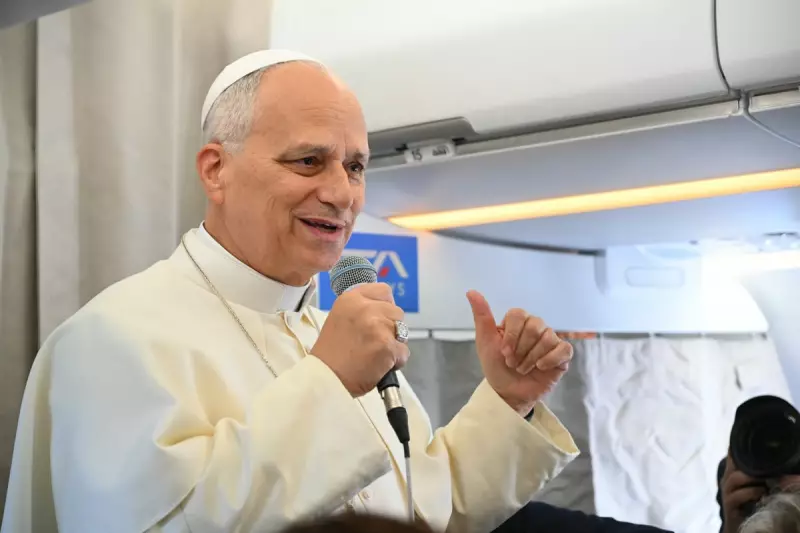
The American pontiff made his remarks during his first airborne news conference while travelling from Istanbul to Beirut on Sunday 30 November 2025. This informal briefing, a tradition upheld by his predecessors, was limited to just two questions from Turkish journalists but provided a clear insight into the Holy See's diplomatic priorities.
When questioned about his private discussions with Turkish President Recep Tayyip Erdogan, Pope Leo confirmed that the ongoing wars in Gaza and Ukraine were central topics. He emphasised Turkey's "important role to play" in both conflicts, noting its previous efforts in facilitating low-level talks between Russia and Ukraine.
A Longstanding Position with Renewed Urgency
Addressing the situation in Gaza directly, the Pope reiterated the Vatican's long-held support for the creation of a Palestinian state. "We know that in this moment, Israel doesn't accept this solution, but we see it as the only one that can offer a solution to the conflict," he stated candidly.
The Holy See formally recognised a Palestinian state back in 2015. However, the push for a two-state solution has gained significant new momentum during the recent Israel-Hamas war, with several more countries offering their formal recognition at the latest UN General Assembly.
Pope Leo stressed the Vatican's role as a friend to both sides, aiming to be a "mediating voice" that can help bridge the divide and achieve "justice for all."
Ecumenical Focus of the Maiden Voyage
The Pope's primary reason for visiting the region was to commemorate the 1,700th anniversary of the Council of Nicaea, held in present-day Iznik, Turkey. This gathering produced the Nicaean Creed, a foundational text still recited by millions of Christians worldwide.
Looking to the future, Pope Leo proposed a major ecumenical gathering in Jerusalem in 2033 to mark the 2,000th anniversary of Christ's crucifixion and resurrection. He described this as a potential "new visible sign of their unity," a suggestion warmly received by the Orthodox patriarchs he met in Istanbul.