Pope Leo XIV has departed Turkey and is now en route to Lebanon, carrying a profound message of hope for a nation battered by years of successive crises. His arrival in Beirut marks a pivotal moment in his first papal trip, aimed at bolstering the spirits of the Lebanese people and reinforcing the vital Christian presence in the Middle East.
A Pilgrimage of Unity and Commemoration
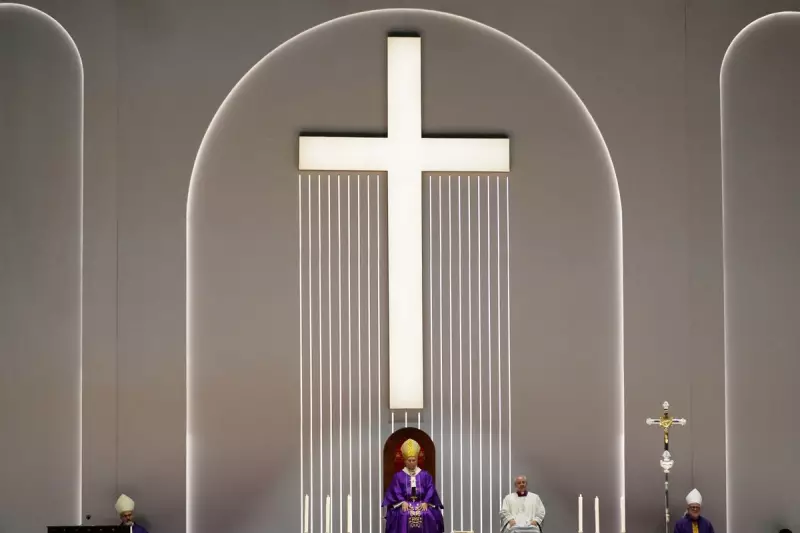
Before flying to Beirut, the Pontiff completed a significant leg of his journey in Istanbul. There, he attended a prayer service at the Armenian Apostolic Cathedral. The centrepiece of his Turkish visit, however, was a divine liturgy celebrated with Ecumenical Patriarch Bartholomew, the global spiritual leader of Orthodox Christians. This joint service, held to mark a key anniversary in Christian history, was the primary reason for Pope Leo's journey to the region.
This visit to Lebanon fulfils a long-standing ambition of his predecessor, Pope Francis, whose own planned trip was thwarted by declining health. Pope Francis often echoed the words of St. John Paul II, who in 1989 described Lebanon as not merely a country but a 'message' of fraternity and coexistence. This is embodied in Lebanon's unique political structure, where the president is always a Maronite Christian, the prime minister a Sunni Muslim, and the speaker of parliament a Shiite.
Arriving at a Fragile Crossroads
Pope Leo arrives in Lebanon at an exceptionally fragile time. The small Mediterranean nation has been reeling from a cascade of disasters. In 2019, the country's currency and banking system collapsed, wiping out the life savings of countless citizens and triggering severe shortages of electricity, fuel, and medicine.
The situation was further catastrophically compounded on 4 August 2020, when a massive stockpile of ammonium nitrate detonated at the Beirut port. The blast killed 218 people, injured thousands, and caused billions of dollars in damage. The Lebanese people were enraged, viewing the explosion as a direct result of government negligence. Five years on, an investigation has repeatedly stalled, and no official has been held accountable.
Bishop George, the Melkite Greek Catholic Archbishop of Beirut, stated ahead of the visit, "The Holy Father is coming at a very difficult moment for Lebanon and for our region." He noted that Lebanese citizens are deeply worried about the future and still fear a potential return to all-out war with Israel. "In this difficult moment, the pope’s visit is a sign of hope. It shows that Lebanon is not forgotten," he told reporters.
A Mission of Encouragement Amid Regional Conflict
The Pope's itinerary is carefully designed to address these profound challenges. A highly symbolic moment will occur on his final day, 2 December, when he will spend time in silent prayer at the site of the 2020 port explosion and meet with victims of the tragedy. Many in Lebanon hope he will use this platform to demand accountability from the political class, emphasising that there can be no true peace without justice.
Another key engagement will be his meeting with young Lebanese. He is expected to offer them encouragement at a time when emigration has drained the country of its youth, while also acknowledging their disillusionment with the failures of previous generations.
The papal visit also occurs against a tense regional backdrop. The war in Gaza, sparked by the 7 October 2023 Hamas-led attack, drew in the Lebanese militant group Hezbollah. Its conflict with Israel escalated into a full-scale war in September 2024, killing more than 4,000 people and causing widespread destruction. Although a US-brokered ceasefire nominally ended the conflict two months later, Israel continues near-daily airstrikes, and many Lebanese live in fear of a return to all-out war.
Ahead of the Pope's arrival, Hezbollah urged him to express his "rejection to injustice and aggression"—a reference to the Israeli strikes. The group, which is allied with several Christian political factions, also called on its supporters to line the Pope's route from the airport as a mark of respect.
The Pope's message of hope is also keenly awaited beyond Lebanon's borders. In neighbouring Syria, where hundreds of thousands of Christians fled during 14 years of civil war, a delegation of some 300 Syrian Christians planned to travel to Lebanon to see him. "We are in need of someone like the pope to come and give us hope as Christians," said 24-year-old Dima Awwad, a delegation member, expressing a "fear of an unknown future."
Through his visit, Pope Leo XIV seeks to reassure Lebanon's beleaguered Christian community, encourage them to remain in their historic homeland, and bring a glimmer of light to a nation yearning for stability and peace.