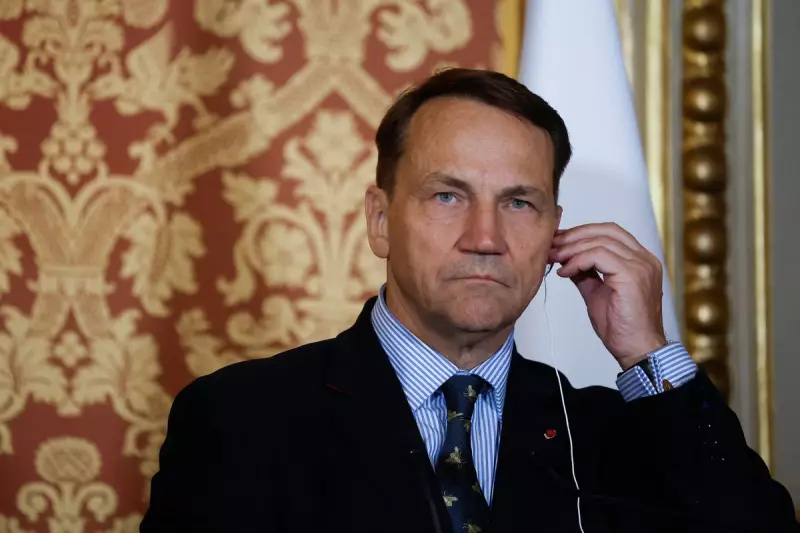
The three-day diplomatic visit of Poland's Deputy Prime Minister and Foreign Minister, Radoslaw Sikorski, to India concluded under a cloud of tension on Tuesday, 20 January 2026. The high-level engagement, intended to bolster a strategic partnership forged in 2024, was instead dominated by pointed disagreements over regional alliances and energy policy.
A Strategic Partnership Tested
Mr Sikorski's trip marked his first official visit since Poland and India elevated their bilateral relationship to a strategic partnership during Prime Minister Narendra Modi's 2024 visit to Warsaw. The core agenda focused on strengthening ties in trade and technology, with bilateral trade having grown by an impressive 200 per cent over the past decade. However, these plans were quickly overshadowed by longstanding geopolitical grievances aired in a televised meeting with Indian External Affairs Minister S Jaishankar on Monday.
The Indian minister did not mince words, directly confronting his Polish counterpart over his visit to Pakistan in October last year. This trip occurred just months after India and Pakistan fought a limited four-day war that brought the region to the brink of a nuclear conflict. Mr Jaishankar urged Poland to show "zero tolerance for terrorism" and cautioned against actions that could "fuel the terrorist infrastructure in our neighbourhood".

Reciprocal Criticisms: Russia and Ukraine
The friction was not one-sided. Minister Jaishankar also expressed India's strong objection to what it perceives as selective targeting over its continued purchase of Russian oil. He referenced previous discussions in New York and Paris, stating he had "repeatedly underlined that the selective targeting of India is both unfair and unjustified".
In response, Mr Sikorski agreed that "selective targeting is not limited to tariffs", hinting at broader geopolitical pressures. He then raised Poland's own security concerns, notably India's participation in the Zapad 2025 military exercises held in Belarus with Russia from 12 to 16 September last year. Warsaw views these drills as "threatening". Poland remains a staunch critic of Delhi's Russian oil imports, seeing them as financing President Vladimir Putin's war machine in Ukraine.
An Abrupt End and Underlying Stability
The palpable tension spilled over into a media interaction. While speaking to NDTV about the Ukraine war, Mr Sikorski was asked a question regarding "cross-border terrorism from Pakistan". The query prompted the Polish minister to abruptly end the interview, capping off a visit marked by unusually blunt diplomatic exchanges.
Despite the public friction, the underlying relationship between India and Poland remains robust. Both sides are planning to increase direct flights and expand cooperation. The visit forms part of a series of high-level European engagements with Delhi this month, following trips by Germany's chancellor and France's national security adviser, and preceding an EU-India Summit.
Nevertheless, the stark disagreements highlight the complex challenges of navigating a fragmented global order, where historic partnerships are tested by contemporary alliances and conflicting security priorities.