Oscars 2026: Hollywood's Political Awakening with Peace Pins and Protests
The content of Sunday's 98th Academy Awards ceremony proved significantly more politically charged than in previous years, as Hollywood's biggest night saw artists protest a range of global issues beyond just the Trump administration's immigration policies.
Red Carpet Activism and Symbolic Statements
While "BE GOOD" and "ICE OUT" pins at the Academy Awards were fewer than at last month's Grammys, numerous attendees used the red carpet to advocate for Palestinian liberation and call for a ceasefire amid the fragile situation in Gaza. This continued a trend of artist-driven activism at major entertainment awards shows throughout the season.
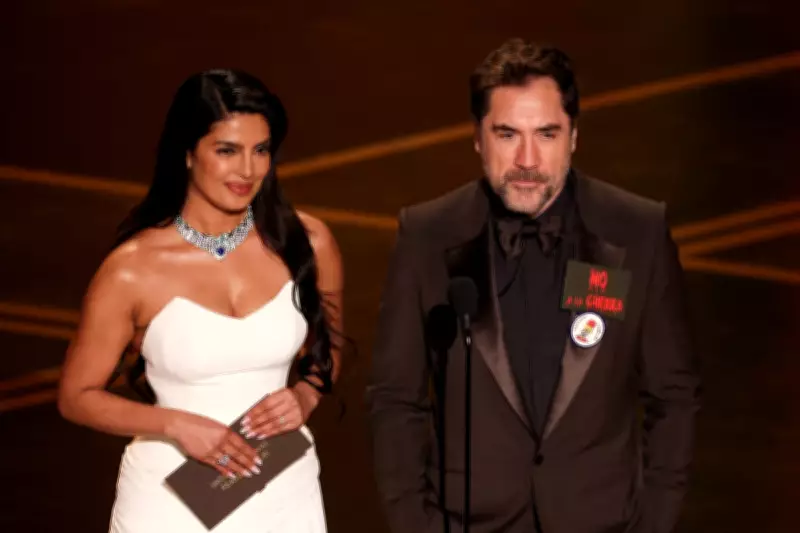
Actor Javier Bardem made a particularly bold declaration onstage before presenting the award for Best International Feature Film, stating "No to war and free Palestine." He wore a patch reading "No a la Guerra," reviving the same anti-war slogan he had sported to protest the Iraq war more than two decades earlier.
Organized Advocacy and Celebrity Voices
As Hollywood's awards season concluded with the Oscars, political organizers suggested celebrities found their political voices more prominently this cycle than in recent years. Maremoto Executive Director Jess Morales Rocketto, whose Latino advocacy group initiated the Golden Globes' immigration pins, described it as a "return to form" for artists' political engagement.
She credited comments by Mark Ruffalo on the Golden Globes red carpet in January, where the often-outspoken actor told Entertainment Tonight that "as much as I love all this" he found it difficult to pretend "like this crazy stuff isn't happening."
"I think we tapped into something early on that this is a time to take stands and make clear where you are at this moment in history," Morales Rocketto said ahead of Sunday's Oscars.
Specific Causes and Documentary Commentary
On Sunday, attendees representing "The Voice of Hind Rajab" wore a new red "Artists4Ceasefire" pin. The docudrama, which follows efforts to rescue a Palestinian girl killed in Gaza, was nominated for best international feature film. Israeli strikes have killed hundreds of Palestinians since a U.S.-brokered truce went into effect in October, according to Gaza's Health Ministry.
"Our struggles are connected. So is our liberation. And we're so, so honored to be here tonight," Saja Kilani, one of the film's stars, told The Associated Press on the red carpet.
The best documentary category brought additional social commentary, with nominees containing overt political messages. David Borenstein, one of the "Mr. Nobody Against Putin" directors, said the documentary explores "how you lose your country" through "countless small little acts of complicity" such as when "a government murders people on the streets of our major cities" or when "oligarchs take over the media."
"We all face a moral choice, but luckily, even a nobody is more powerful than you think," he said during the ceremony.
Broader Political Context and Host Commentary
The content of Sunday's ceremony proved more political than previous years, even if it lacked direct references to the Iran war and other global issues. "One Battle After Another" director Paul Thomas Anderson said he wrote the political drama for his children to apologize for the "housekeeping mess we left in this world we're handing off to them."
Host Conan O'Brien cracked jokes at the expense of the U.S. health care system and Kid Rock, referring to conservative organization Turning Point USA's alternative Super Bowl halftime show. In a rare moment of sincerity, O'Brien said the Oscars are particularly resonant in "moments like these," nodding broadly at the many different world crises.
"We pay tribute tonight not just to film, but to the ideals of global artistry, collaboration, patience, resilience and that rarest of qualities today: optimism," he told the audience.
Additional Advocacy and Media Protests
Other advocacy groups used the hubbub of the show to draw attention to their causes. Pushing against corporate media consolidation, Free Press had a mobile billboard circling the Dolby Theater to protest Paramount Skydance's likely takeover of Warner Bros. Discovery.
Morales Rocketto acknowledged that no single pin would create the systemic change to U.S. immigration policy that she seeks. But she likened each individual action to "droplets" in the "giant ocean that we are trying to move."
"This only happens if stars say yes, if stars decide to use their platform, if they decide that they want to make statements that go beyond, 'What am I wearing,'" she said. "I don't take that for granted. It's a big move for people to say that."
The 2026 Oscars thus marked a significant moment in Hollywood's political engagement, with celebrities using their platforms to address international conflicts, immigration reform, media consolidation, and broader social justice issues through both symbolic gestures and direct statements.