Norway's Strategic Position in the Arctic Power Struggle
While global attention remains fixed on Greenland following Donald Trump's renewed demands for US control, another crucial NATO member finds itself at the centre of escalating Arctic tensions. Norway, with its strategically vital Svalbard archipelago, now faces unprecedented scrutiny as geopolitical rivalries intensify in the rapidly changing polar region.
The Svalbard Conundrum: More Than Just a Seed Vault
Though internationally renowned as the location of the Svalbard Global Seed Vault – often dubbed the "Doomsday Vault" for its preservation of global food supplies – this remote Arctic territory holds far greater strategic significance. Positioned in the sensitive corridor between Europe and the North Pole, Svalbard's proximity to Russian naval routes and undersea communication cables makes it as strategically important as Greenland in the context of NATO-Russia relations.
The 1920 Svalbard Treaty granted Norway "full and absolute sovereignty" over the archipelago, creating what has been described as a unique example of enduring international cooperation that persisted even through the Cold War's tensest periods. However, nearly 106 years later, dramatically shifting geopolitical dynamics threaten to thrust this territory and its approximately 2,900 inhabitants back into the global spotlight.

Trump's Nobel Prize Grievance and Norwegian Anxieties
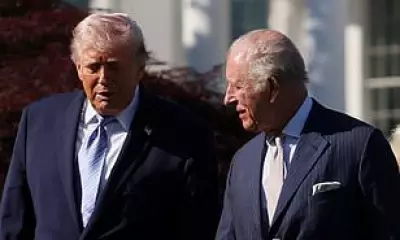
The situation intensified recently when Donald Trump sent a text message to Norwegian Prime Minister Jonas Gahr Store suggesting his push to control Greenland was linked to his failure to win the Nobel Peace Prize. "Considering your country decided not to give me the Nobel Peace Prize... I no longer feel an obligation to think purely of Peace," the US president wrote.
Prime Minister Store reiterated that the prize is awarded by an independent body over which the Norwegian government has no control. Yet this exchange has heightened concerns about the capricious nature of current US foreign policy and its potential implications for Arctic security.
Russian Interests and Historical Presence
For Svalbard's residents, historical threats have traditionally come from the East. The 1920 treaty allows people and companies from signatory countries equal rights for commercial activities like mining and fishing, while scientists from around the world enjoy equal research access.
Russia maintains Barentsburg, the last remaining Soviet-era coal-mining settlement, though its population has dwindled from over 1,000 to just 297. Moscow's continued interest in the colony is viewed by some analysts as evidence of the Kremlin's determination to strengthen its Arctic foothold.
Worryingly, Russian lawmaker Sergey Mironov proposed last year that Svalbard be renamed the "Pomor Islands," invoking historical ties in a move reminiscent of justifications used before Russia's invasion of Ukraine. The Russian foreign ministry has also expressed concern about what it describes as Norway's growing militarisation of the archipelago.
Norwegian Response and Sovereignty Assertions
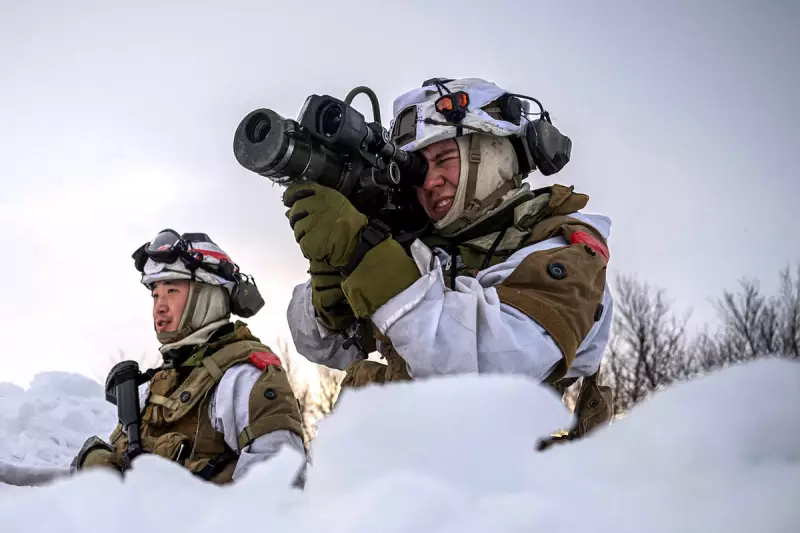
Norwegian officials privately stress that while the 1920 treaty restricts military activity, as sovereign Norwegian territory – and therefore part of NATO – Svalbard is not demilitarised. The Norwegian government has implemented several measures to reinforce its control, including banning land sales to foreigners, prohibiting Chinese students from the University Centre in Svalbard, and disenfranchising foreign residents.
Eivind Vad Petersson, Norway's state secretary at the Ministry of Foreign Affairs, told The Independent: "Svalbard is Norwegian sovereign territory. This is not in dispute. It is as much part of Norway as Oslo, Bergen and Trondheim."
Expert Perspectives on Arctic Vulnerabilities
Arne O Holm, editor of High North News, describes fear as an "omnipresent and constant feature of life" for Svalbard's inhabitants. "Trump has effectively opened up the possibility for Putin to expand his territories by saying he wants to take Greenland," Holm observed. "If Trump is saying this, then what is stopping Russia from doing the same with other places?"

During a recent lecture in Longyearbyen, Svalbard's largest settlement, Holm noted that while most residents claimed not to be afraid, everyone had discussed the geopolitical situation within the previous 24 hours – a significant shift from previous conversations focused on recreational activities.
Strategic Implications and Future Concerns
Russia has heavily invested in icebreaker technology for the Arctic as part of its long-term strategy to control and develop the region, operating one of the world's largest icebreaker fleets including multiple nuclear-powered vessels. Holm suggests Russia is more likely to continue hybrid warfare tactics in Svalbard similar to those seen across Western Europe, rather than attempting outright seizure.
The Norwegian government has acknowledged that the country now faces "the most serious security situation since 1945." This sentiment echoes the premise of the 2015 Norwegian political thriller series Occupied, which depicted a near-future geopolitical crisis in the Arctic and Europe – a scenario that feels increasingly plausible amid current tensions.
As Holm poignantly summarised the difficult reality facing Norwegians: "Who do you fear most, your NATO ally or Russia? That is not an easy reality for people here to live with." With climate change making the Arctic more accessible and geopolitical rivalries intensifying, Norway's century of relative Arctic tranquillity appears increasingly threatened by forces beyond its control.