Northern Israelis Defy Conflict, Urge Decisive Action Against Hezbollah
On a Thursday morning in Metula, Israel's northernmost town, residents gathered in cafes, their conversations punctuated by the distant thud of artillery and the roar of low-flying warplanes. The night had been "difficult," with sirens blaring until the early hours as Hezbollah, backed by Iran, launched a barrage of rockets and drones. Yet, amidst the chaos, a steadfast determination to maintain a semblance of normal life prevailed.
Life on the Frontline
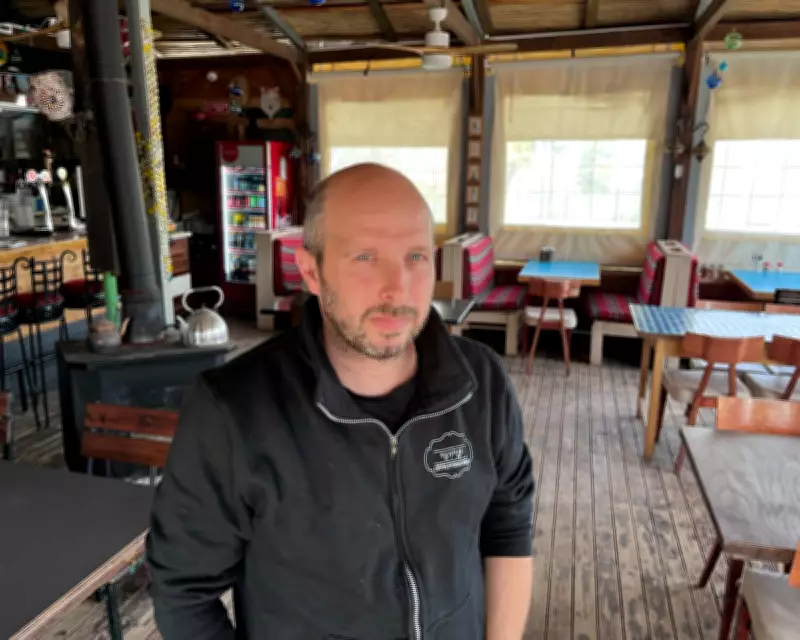
Miry Menashe, co-owner of the Bela cafe in Metula, kept her establishment open despite the dangers. "The people of Metula don't run away from rockets," she asserted. At 41, Menashe emphasized the importance of providing a sanctuary for both residents and soldiers, offering coffee, beer, and meals to foster a sense of continuity. "We want to keep a bit of sanity for us, for the residents, for our soldiers. They come a lot these days so we want them to have a place to relax," she explained.
Shragan Shatil, a 77-year-old resident of 29 years, shared his perspective over coffee. "Last night was tough. The last days have been the toughest. It was very bad. There is usually a break afterwards ... then in the evening it starts again ... Now we are drinking coffee in the sun," he said, highlighting the cyclical nature of the conflict. Shatil speculated that the war might only end when "Mr Trump decides," but even then, Israel could continue its offensive against Hezbollah independently.

Escalating Conflict and Casualties
Israeli military officials reported that Hezbollah's recent attack, dubbed "Operation Chewed Wheat" after a Quranic verse, involved approximately 200 rockets, missiles, and 20 drones. This marked a sharp escalation, timed with Iranian missile salvos. While no fatalities occurred in this specific barrage, property damage was extensive. Overall, the conflict has resulted in 12 deaths and hundreds of injuries in Israel from Iranian strikes.
In response, Israel launched fierce airstrikes on Lebanon, targeting areas across the south and Beirut's suburbs. The offensive, initiated after Hezbollah retaliated for the killing of Iran's supreme leader Ali Khamenei, has led to at least 634 deaths, 1,586 injuries, and nearly a million displaced in Lebanon. Signs point to further Israeli escalation, potentially including a larger ground invasion.
Demands for a Final Resolution
Yaakov Selavan, deputy mayor of the Golan regional council, voiced a common sentiment among northern Israelis: the need to "finish the job [with Hezbollah] once and for all." He advocated for military advancement up to the Litani River, 20 miles into Lebanon. This call for decisive action resonates widely, as tens of thousands were evacuated after Hamas's raid in October 2023, and many fear returning due to ongoing threats.
Daniel Dorfman, 43, owner of the Ayuni restaurant in Metula, had just reopened his business before the war erupted 13 days ago. "We have learned lessons over recent years and that is that we must finish the job. Hezbollah need to be disarmed. I don't know how. Clearly the Lebanese government don't have the power to do it," he stated. Dorfman described Iran as "the head of the octopus" and "the main cause of terrorism in the Middle East," echoing Israeli officials' rhetoric.
Economic and Social Impacts
The conflict has severely impacted northern Israel's economy, particularly in areas reliant on tourism. Selavan noted, "There is a heavy price. The economy is frozen. We are dependent on tourism. It was just coming back before the war, even international tourism. Now that has gone." Israel's cabinet approved increased defence spending and borrowing, raising concerns from the central bank about economic stability amid the blockade of the Strait of Hormuz.
Prof Arie Krampf of the Academic College of Tel Aviv-Yaffo warned, "We don't know exactly how the bill will be paid ... It looks grim for the average Israeli, even if the stock market is rising and the shekel is strong." In Kfar Szold, a border kibbutz, Ravit Rosenthal, a maths teacher and school principal, described widespread fatigue and trauma among staff and students, yet expressed faith in the military's ability to secure safety.

Political Unity and Resilience
Northern towns like Kiryat Shmona strongly support Prime Minister Benjamin Netanyahu and Israel's rightwing coalition, while kibbutzim tend to be more centrist. However, there is little opposition to the current conflict, which has caused chaos across the region, with casualties reported in Iran, Gulf states, and among US servicemen.
Pnina Bornstein, head of Kfar Szold kibbutz, encapsulated the resilient spirit: "We believe we have to be here for our country. This is the border and we are the defence line for everybody. If you live here, you have to be prepared for life in a conflict zone." As warplanes continue to roar overhead, northern Israelis remain steadfast, balancing daily life with a fervent hope for a lasting resolution.