North Korean and Belarusian Leaders Cement Alliance with Friendship Treaty in Pyongyang
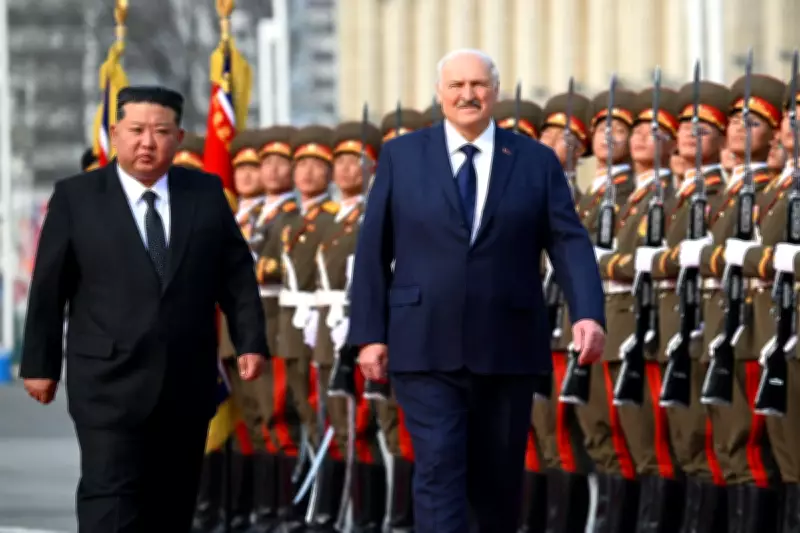
In a significant diplomatic move, North Korean leader Kim Jong Un and Belarusian President Alexander Lukashenko have signed a comprehensive friendship treaty during a summit held in Pyongyang. This event marks the first visit by a Belarusian president to North Korea since the two nations established formal diplomatic relations, highlighting a strategic pivot towards closer cooperation.
Symbolic Gift Exchange Underscores Military and Cultural Ties
The summit was characterized by a notable exchange of gifts that symbolized the deepening bond between the two Russia-aligned states. President Lukashenko presented Kim Jong Un with an assault rifle, a gesture interpreted as a show of solidarity and readiness against perceived adversaries. In return, Kim gifted a sword and a large shell vase, reflecting cultural and historical significance. These exchanges underscore the multifaceted nature of their partnership, blending military support with diplomatic and cultural elements.
Broad Cooperation Across Key Sectors
The friendship treaty outlines extensive collaboration in several critical areas, including:

- Diplomacy: Enhancing political dialogue and joint international stances.
- Agriculture: Sharing expertise and resources to boost food security.
- Education: Promoting academic exchanges and cooperative programs.
- Public Health: Collaborating on healthcare initiatives and disease prevention.
This broad-based agreement aims to fortify both nations against external pressures, particularly from Western-led sanctions.
Strategic Shift Against Western Sanctions
The treaty signals a deliberate shift towards a more coordinated front in opposition to Western sanctions. Both North Korea and Belarus have faced significant international isolation due to their support for Russia's war in Ukraine. By aligning their efforts, they seek to resist economic and political pressure from the United States and its allies, advocating for an anti-West alliance and a multipolar world order.
This partnership is rooted in mutual support for Russia's actions in Ukraine, positioning the three nations as a bloc challenging the current global power dynamics. The summit in Pyongyang serves as a clear message of defiance and unity in the face of Western dominance.
Implications for Global Geopolitics
The deepening ties between North Korea and Belarus could have far-reaching implications for international relations. As both countries strengthen their alliance, it may lead to increased coordination in military, economic, and diplomatic spheres, potentially destabilizing efforts by Western nations to enforce sanctions and promote democratic values. Observers note that this development underscores the growing fragmentation in global politics, with alliances forming based on shared opposition to Western influence.
In summary, the friendship treaty signed by Kim Jong Un and Alexander Lukashenko represents a pivotal moment in the geopolitical landscape, emphasizing a united front against Western sanctions and a commitment to a multipolar world order.