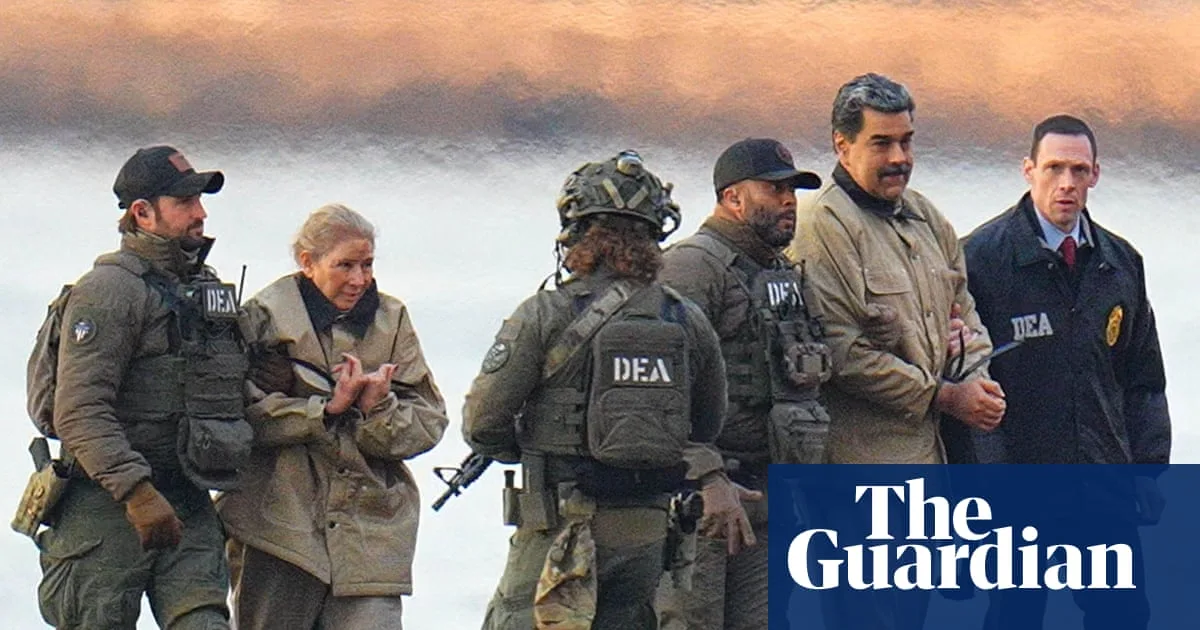
From Bus Driver to US Detainee: The 13-Year Rule of Venezuela's Nicolás Maduro
Nicolás Maduro: From Venezuelan President to US Custody

The political trajectory of Nicolás Maduro, the former bus driver who ruled Venezuela for over 13 years, reached a dramatic and unprecedented conclusion. On Saturday, US special forces seized the 63-year-old leader in Caracas and flew him out of the country. He now faces indictment on narcotics charges in a New York court, marking a stunning fall for the successor to Hugo Chávez's socialist revolution.

The Humble Origins of a Political Survivor

Born on 23 November 1962, Maduro's political journey began in the working-class neighbourhood of El Valle on the outskirts of Caracas. He served as president of his high school student union and, after a trip to Cuba for political education in 1986, returned to work as a bus driver for the Caracas metro. Following in his father's footsteps, he became a union leader and a fervent disciple of Hugo Chávez.

His loyalty and political skill were rewarded after Chávez took power in 1998. Maduro served six years in the National Assembly before being appointed Foreign Minister and later Vice-President. When Chávez died of cancer in 2013, he named Maduro as his political heir. Despite being mocked for his working-class demeanour and lack of his mentor's charisma, Maduro secured a narrow electoral victory that year.

A Presidency Plunged into Crisis and Controvery

Maduro's rule was almost immediately engulfed in turmoil. In 2014, protests led by the political opposition, including figurehead María Corina Machado, were violently suppressed by security forces, resulting in 43 deaths. After his party lost control of the National Assembly in 2015, Maduro neutralised it by creating a pro-government Constituent Assembly in 2017, sparking further deadly protests.

The International Criminal Court opened an investigation into Maduro and his government for alleged crimes against humanity. In 2018, he survived an assassination attempt by explosive drones during a military parade. Economically, his presidency was catastrophic: hyperinflation soared, oil production collapsed to under 400,000 barrels a day, and shortages of essentials led millions of Venezuelans to flee the country.

Election Disputes and a Final Confrontation with Washington

The 2018 presidential election, which saw Maduro run virtually unopposed after the banning of opposition parties, was declared illegitimate by dozens of nations. The Trump administration imposed severe economic sanctions. Although Maduro later offered some concessions, hopes for a free 2024 election were dashed when his strongest opponent, Machado, was barred from running.

After the 2024 vote, the electoral authority declared Maduro the winner without providing detailed counts, while opposition tallies suggested a massive defeat. He was sworn in for a third term in January 2025. The return of Donald Trump to the White House escalated tensions rapidly. A US military build-up in the Caribbean preceded direct action, culminating in Maduro's capture and extradition to face narco-terrorism charges.

Throughout his career, Maduro was often flanked by his wife, Cilia Flores, a powerful political figure in her own right, who is also believed to have been detained. For a leader whose tenacity repeatedly defied predictions, this final chapter in US custody appears to mark an end with no possibility of a comeback, leaving Venezuela to grapple with his complex and devastating legacy.




