Why the Expiration of a US-Russia Nuclear Treaty Risks a New Arms Race
What to know about the New START nuclear arms control treaty that expires today. Mark Trevelyan Wednesday 04 February 2026 10:51 GMT.
Close. Top Kremlin official's chilling nuclear warning as treaty due to expire.
The last remaining nuclear arms control agreement between Russia and the United States, known as the New START treaty, has officially expired. This pivotal moment in international security raises profound concerns about the future of strategic stability between the world's two largest nuclear powers.

Who Signed New START, and What Did It Say?
New START was signed in 2010 by U.S. President Barack Obama and Dmitry Medvedev, an ally of Vladimir Putin who served a single term as Russia's president. At the time, relations between the two nations were undergoing a diplomatic "reset". The treaty came into full force the following year.
It established strict limits on strategic nuclear weapons—the kind each side would deploy to strike the opponent's vital political, military, and industrial centres in the event of a nuclear conflict. Specifically, it capped the number of deployed strategic warheads at 1,550 on each side, with no more than 700 deployed ground- or submarine-launched missiles and bomber aircraft, and 800 launchers.
What Stopped Either Side from Cheating?
The treaty included a robust system of short-notice, on-site inspections, allowing each nation to verify the other's compliance independently. However, in 2023, President Putin suspended Moscow's participation in these inspections due to U.S. support for Ukraine in the ongoing war with Russia.
This move brought a complete halt to the verification process—which had already been paused during the COVID-19 pandemic—forcing both sides to rely solely on their own intelligence assessments. Despite this, both nations publicly committed to adhering to the treaty's numerical limits, which remained in effect until today's expiration.
Why Don’t the Two Sides Just Extend the Treaty?
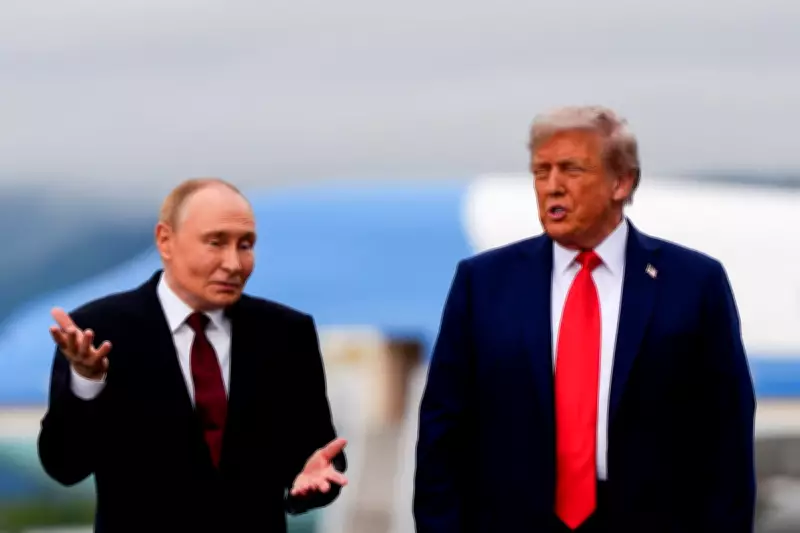
The treaty text explicitly states it can only be extended once, and this occurred in 2021, shortly after Joe Biden assumed the U.S. presidency. As the expiry date approached, Putin proposed last September that both sides informally agree to maintain the warhead limits for an additional year. As of Wednesday, the treaty's final day, U.S. President Donald Trump had not formally responded to this suggestion.
Within the United States, opinions are deeply divided on whether Trump should have accepted the proposal. Advocates argue it would have demonstrated a political commitment to avoiding an arms race and bought crucial time to negotiate a future framework. Opponents contend the U.S. should now free itself from New START's constraints to bolster its arsenal, particularly in response to China's rapid nuclear expansion, and that maintaining the limits could be perceived as a sign of weakness.
Why Does It Matter If There’s No Treaty?
If Moscow and Washington cease observing mutual limits on their long-range nuclear arsenals, it will signify the end of over half a century of arms control agreements. The expiration of New START creates a dangerous void, as no substantive talks have occurred regarding a successor treaty.
Arms control experts fear this significantly elevates nuclear risks, especially during a period of heightened international tension fueled by conflicts in Ukraine and the Middle East. Specialists emphasise that the value of such treaties extends beyond mere numerical caps; they establish a stable, transparent framework designed to prevent arms races from spiralling uncontrollably.
Without a Replacement Deal, What Might Both Sides Do?
Each nation would now be legally free to increase its missile numbers and deploy hundreds more strategic warheads. However, analysts note this presents considerable technical and logistical challenges and would not occur overnight—significant changes would likely require at least a year to implement.
In the longer term, the primary concern is that an unregulated arms race could ensue, with each side continuously augmenting its arsenal based on worst-case assumptions about the other's intentions, creating a perilous cycle of escalation.

What Would It Take to Agree a Replacement to New START?
President Trump has stated he desires a new, improved treaty, but experts warn this would be a protracted and arduous process. A successor agreement would probably need to address additional classes of nuclear weapons, including short- and intermediate-range systems, as well as "exotic" new technologies Russia has developed since New START, such as the Burevestnik cruise missile and Poseidon torpedo.
Beyond the inherent complexity of such negotiations, there is not even consensus on which parties should participate. While Trump has expressed a goal of pursuing "denuclearisation" with both Russia and China, Beijing argues it is unrealistic to expect it to join talks with countries whose arsenals dwarf its own. Russia, meanwhile, insists the nuclear forces of NATO members Britain and France should also be on the table—a proposition both nations firmly reject.