Netanyahu's Putin-Style Energy Warfare Strategy Faces Global Condemnation
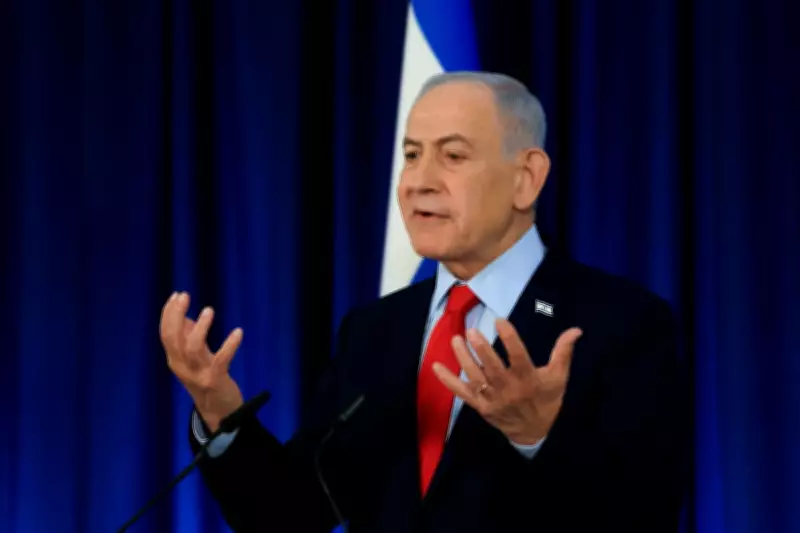
The Israeli military's targeted bombing of Iran's crucial South Pars gas field has drawn alarming parallels to Russia's systematic attacks on Ukrainian energy infrastructure, a strategy widely condemned as potential war crimes. World affairs editor Sam Kiley warns that this approach will inflict unnecessary suffering while failing to achieve its political objectives of regime change in Tehran.
Chilling Parallels to Russian Tactics
On December 5 last year, the British government joined 42 other nations in condemning Russia's deliberate targeting of civilian infrastructure in Ukraine. Neil Holland, the UK representative to the OSCE, stated in Vienna that such actions violate international humanitarian law and may constitute war crimes under the Geneva Conventions.
"Russia's deliberate missile and drone strikes against Ukraine's civilian energy infrastructure constitute a clear pattern," Holland declared, noting the strategy has intensified during the fourth year of conflict. The attacks have caused significant civilian casualties, massive damage to residential and energy infrastructure, and emergency power outages affecting tens of thousands of civilians across multiple regions.

Israel has now employed precisely the same tactics against Iran, attempting to provoke regime change by shattering the nation's industrial capacity and breaking its energy infrastructure. The South Pars gas field provides at least 75 percent of Iran's natural gas and generates approximately 80 percent of the country's electricity.
Global Energy Markets React Violently
The Wednesday bombing of South Pars, which set storage tanks ablaze, triggered immediate retaliation from Iran against Qatar's Ras Laffan industrial city, the world's largest LNG export hub. This escalation sent shockwaves through global energy markets, with European natural gas prices surging by 20 percent following the Iranian counterattack.
South Pars represents a particularly sensitive target as the largest gas field on Earth, jointly owned by Iran and Qatar. The field serves as the foundation of Qatar's wealth and hosts the US Al Udeid airbase, America's largest military installation in the Middle East from which attacks on Iran are coordinated.
Trump's Unusual Rebuke of Israeli Actions
Even former President Donald Trump, typically a staunch supporter of Israeli Prime Minister Benjamin Netanyahu's far-right government, expressed dismay at the escalation. In a Truth Social post, Trump came close to apologizing to Iran while admonishing Israel for the attack.
"Israel, out of anger for what has taken place in the Middle East, has violently lashed out at a major facility known as South Pars Gas Field in Iran," Trump wrote. He emphasized that the United States had no prior knowledge of the attack and that Qatar was completely uninvolved.
Trump issued a stark warning that if Iran attacks the Qatari portion of the gas field again, the US would "massively blow up the entirety of the South Pars Gas Field at an amount of strength and power that Iran has never seen or witnessed before." Despite this warning, Iran proceeded with additional attacks.
Putin Emerges as Unintended Beneficiary
The disruption to global energy markets presents Russian President Vladimir Putin with an unexpected financial windfall. According to Ukrainian President Volodymyr Zelensky, Moscow's oil sales have already generated up to $10 billion in extra revenues for Russia's war effort in Ukraine.
Analysis of figures from the Centre for Research on Energy and Clean Air indicates Russia could gain an additional €2-4 billion annually from gas exports to the European Union alone at current prices. Globally, the Kremlin might receive an extra €8-16 billion over a year from the market disruptions caused by Middle Eastern conflict.
Strategic Miscalculation and Historical Parallels
European nations have thus far refrained from condemning Israel's attacks on Iranian energy systems, despite having labeled similar Russian actions as potential war crimes just months earlier. Their calculation appears to be that the broader conflict itself lacks legal justification.

Netanyahu appears to have overlooked crucial lessons from Russia's four-year campaign against Ukrainian energy infrastructure. Rather than turning against their government, the Ukrainian population hardened their resistance and intensified their hatred of all things Russian. Russia now finds itself on the defensive in the Donbas region.
There is no evidence that bullying Ukrainians through energy deprivation broke their national spirit, and similarly, there are no indications that Iranians will rise against their theocratic government while Israel cuts the fuel essential for their daily survival. The strategy risks strengthening the very regime it seeks to undermine while destabilizing global energy markets and providing financial benefits to Russia's war machine.