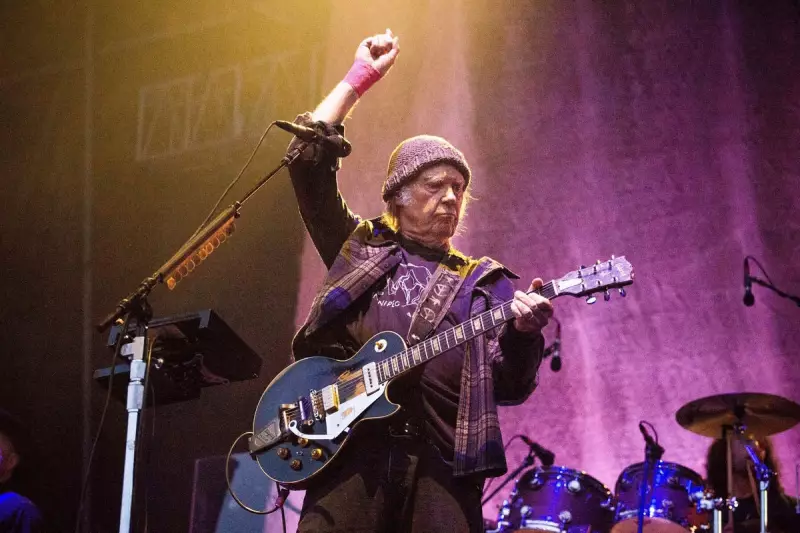
In a striking act of political and cultural solidarity, legendary musician Neil Young has gifted his complete digital music archive to the people of Greenland. This symbolic gesture is framed as a direct response to recent geopolitical tensions and threats from the United States government regarding the Danish territory.
A Musical Shield Against Geopolitical Pressure
Young explicitly stated that he hopes his extensive catalogue of music will 'ease some of the unwarranted stress and threats' emanating from what he described as an 'unpopular and hopefully temporary government' in Washington. This move follows incendiary remarks from the US president, who has publicly claimed that America 'needs' Greenland and has openly discussed a 'framework of a future deal' for the island, sparking international controversy and concern.
Greenland's Sovereignty Asserted
Amidst this backdrop, the Prime Minister of Greenland has firmly reiterated that only Greenland and Denmark can decide its future, a statement that underscores the autonomous region's stance against external annexation pressures. Young's unprecedented gift is seen as a high-profile endorsement of this position, leveraging his global platform to highlight the issue.

A History of Defiance and Legal Battles
This is not Neil Young's first foray into political confrontation with the former US president. His history includes:
- A notable 2020 copyright infringement lawsuit against Donald Trump for the unauthorised use of his songs at political rallies.
- Recent calls for a consumer boycott of Amazon, citing CEO Jeff Bezos's support for the president and contentious immigration policies, which led Young to remove his music from the platform.
By providing free, unrestricted access to his life's work for all Greenlandic citizens, Young transforms his artistic legacy into a tool of diplomatic and cultural resistance. This action blurs the lines between entertainment, activism, and international relations, creating a unique moment where music serves as both a comfort and a political statement.
The donation of his digital archive represents one of the most significant gestures of its kind, positioning artistic intellectual property as a form of soft power in a tense geopolitical landscape. It remains a powerful reminder of how cultural figures can engage with and influence discussions on sovereignty, autonomy, and global politics.