
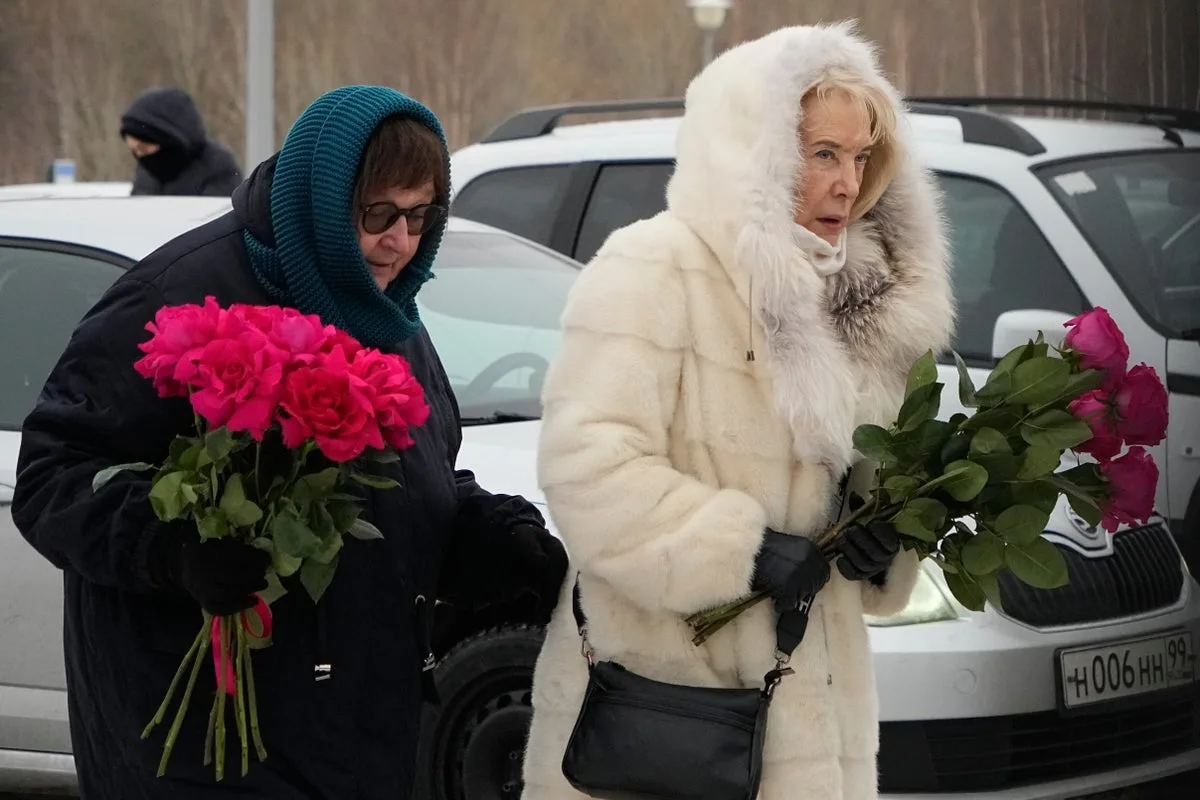
Mourners gathered in Moscow on Monday to mark two years since the death in custody of Russian opposition leader Alexei Navalny, under the shadow of a Kremlin crackdown and just two days after a new analysis reinforced suspicions that he was murdered.
Navalny died in an Arctic penal colony on 16 February 2024 while serving a 19-year sentence that he believed to be politically motivated. His death at the age of 47 left the Russian opposition leaderless and divided.
Navalny’s mother, Lyudmila Navalnaya, and his mother-in-law, Alla Abrosimova, were among the mourners laying flowers on his grave. Representatives from several European embassies also paid their respects, watched by a conspicuously high security presence.
The anniversary coincides with the release of a joint statement by five European countries – the UK, France, Germany, Sweden and the Netherlands – which said that Navalny was poisoned by the Kremlin with a rare and lethal toxin found in the skin of poison dart frogs. Analysis in European labs of samples from Navalny’s body “conclusively confirmed the presence of epibatidine,” they said, adding: “Russia had the means, motive and opportunity to administer this poison.”
The Kremlin has denied the allegations, saying that Navalny died of natural causes. Presidential spokesperson Dmitry Peskov said on Monday that the Kremlin does “not accept such accusations” and considers them “biased and unfounded.”
Navalny’s widow, Yulia Navalnaya, said she had been “certain from the first day” that her husband had been poisoned, “but now there is proof.” She described Russian leader Vladimir Putin as “a murderer” who “must be held accountable.”




