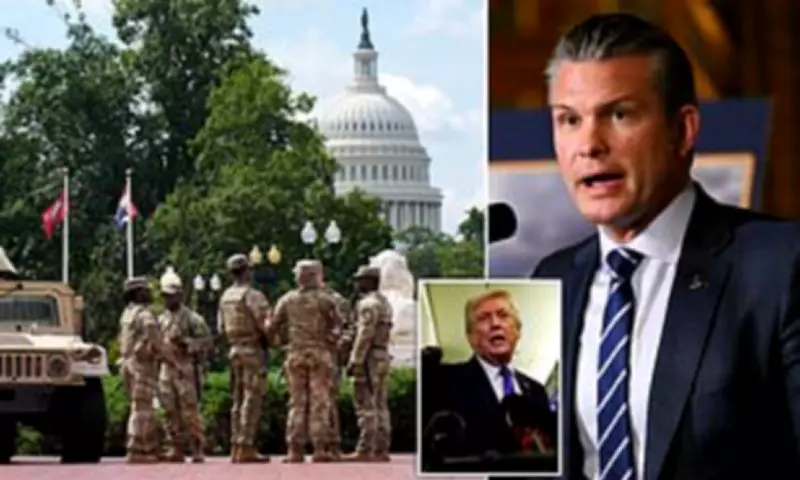
In a discreet and unannounced move, members of the United States National Guard have been quietly departing major American cities and returning to their home bases. This follows the extensive deployments ordered by the Trump administration during a period of heightened federal activity.
Federal Mission Wound Down Without Public Announcement
According to US Northern Command, the federal protective mission that saw thousands of troops surged to urban centers has now been systematically wound down. Notably, this significant drawdown occurred without any public announcement from either the Pentagon or the White House, marking a quiet conclusion to a highly visible operation.
Scope of the Original Deployments
At the peak of the National Guard's urban presence, deployment numbers reached substantial levels across multiple cities:

- Los Angeles: 5,000 troops
- Chicago: Approximately 500 troops
- Portland: Around 200 troops
All of these soldiers have now been sent home, concluding their federal mission in these metropolitan areas.
Legal Authority and Mission Parameters
The troops deployed to Los Angeles, Chicago, and Portland were dispatched by President Trump under his Title 10 authority. This legal provision permits the federal government to utilize National Guard soldiers for specific, non-law-enforcement activities. In these three cities, soldiers were strictly authorized to perform two primary functions: defending federal buildings and supporting federal agent operations. Their role was carefully circumscribed to avoid direct law enforcement duties.
Selective Withdrawals Leave Some Troops in Place
Importantly, the Pentagon's withdrawal authorization applied specifically to troops deployed under Title 10 authority in those three cities. National Guard soldiers operating under different legal authorities in other locations—including Washington, DC, New Orleans, and Memphis—were not included in this drawdown and remain deployed.
According to a Washington Post report that first revealed the withdrawals, approximately 2,500 National Guard troops are expected to remain stationed in the nation's capital until the end of the current year. This sustained presence in Washington, DC, contrasts sharply with the complete withdrawals from the West Coast and Midwest cities.
Timeline of Deployments and Drawdown
President Donald Trump first deployed the National Guard to Washington, DC, in August 2025, initiating what would become a widespread federal presence in multiple urban centers. Subsequently, the president ordered thousands of additional troops to Los Angeles, Chicago, Portland, New Orleans, and Memphis, creating a significant domestic military footprint.
The Pentagon quietly authorized the drawdown of troops from Los Angeles, Chicago, and Portland at the end of January, setting in motion the return of these soldiers to their home states and bases.
Supreme Court Intervention and Legal Constraints
In December, the Supreme Court delivered a significant blow to the Trump administration's National Guard deployment strategy. The justices issued a temporary ruling against the deployment of troops in Chicago, establishing an important legal precedent. The court ruled that President Trump may only authorize National Guard deployments within the United States under "exceptional" circumstances.
This judicial decision has potentially far-reaching implications, as it could substantially limit any president's ability to authorize additional troop deployments domestically in the future. The ruling establishes a higher threshold for justifying such military presence in American cities.
Impact and Controversy Surrounding Deployments
President Trump has publicly credited the National Guard deployment in Washington, DC, with making the city safer and contributing to significantly lower crime rates. Local police data appears to support this claim, showing that crime across effectively all categories has dropped substantially since the National Guard arrived in the capital in August 2025.

Beyond crime reduction, National Guard troops in Washington, DC, have been observed performing various civic duties as part of their orders. These activities have included clearing roads after snowstorms and picking up trash, demonstrating a broader utility beyond their primary protective functions.
Substantial Financial Costs of Domestic Deployments
The Congressional Budget Office (CBO) has provided detailed estimates revealing the substantial financial burden of these federal troop deployments to US cities. According to their calculations, federal troop deployments cost approximately $496 million in 2025 alone.
The CBO further estimates that the current burn rate for ongoing deployments will cost around $93 million per month. More specifically, their projections indicate that a 1,000-troop National Guard deployment to any single city will cost at least $18 million monthly. These figures highlight the significant economic implications of maintaining substantial military presences in domestic urban environments.
The quiet withdrawal of National Guard troops from major American cities represents a significant shift in federal domestic policy, occurring without fanfare but carrying substantial implications for presidential authority, urban security, and federal budgeting. The selective nature of the withdrawals—leaving troops in some cities while completely pulling them from others—suggests a nuanced approach to domestic military deployment that may set precedents for future administrations.