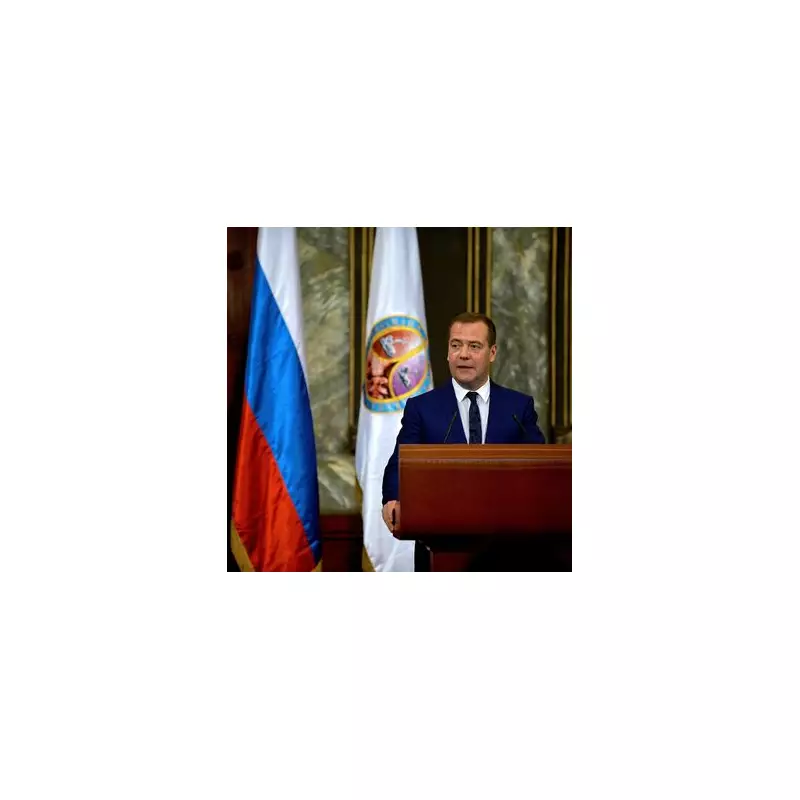
Former Russian President Dmitry Medvedev has launched a vile and threatening tirade against Ukrainian leader Volodymyr Zelensky, telling him he will have to spend his life in hiding. The outburst follows Moscow's claims that Ukraine targeted one of Vladimir Putin's residences with drones.
A Chilling Social Media Threat
In a post made on Tuesday, 30 December 2025, Dmitry Medvedev, who now serves as the deputy chair of Russia's Security Council, resorted to extreme insults and direct threats. He branded President Zelensky a "stinking Kyiv b*****d" and suggested the Ukrainian leader's life was in grave danger.
Medvedev stated that Zelensky would "have to stay in hiding for the rest of his worthless life". This is not the first time the senior Russian official has used social media to issue provocative and aggressive statements, but the language in this instance marks a significant escalation in rhetoric.

The Alleged Drone Attack and Ukrainian Denial
The threatening remarks came in direct response to an incident that Russia says occurred recently. Moscow alleges that Ukraine launched a drone attack on one of President Vladimir Putin's official residences. The Kremlin has used this claim to justify its latest verbal assault on the Ukrainian leadership.
However, President Zelensky and his government have firmly dismissed these reports. A spokesperson for Kyiv labelled the Russian narrative as deliberate disinformation, part of an ongoing propaganda effort to justify aggression and destabilise Ukraine's position on the world stage.
Medvedev's Role and the Escalating War of Words
Dmitry Medvedev, once seen as a potential moderate, has reinvented himself as one of the most hawkish and vocal figures in Putin's inner circle since the full-scale invasion began. His position on the Russian Security Council grants his statements considerable weight, making them official provocations rather than mere personal rants.
Analysts suggest this kind of rhetoric is designed to intimidate, create psychological pressure, and test international reactions. The direct threat against a sitting head of state breaks diplomatic norms and underscores the deeply hostile nature of current Russia-Ukraine relations. The international community is now watching closely to see how Ukraine and its allies will respond to this latest inflammatory development.