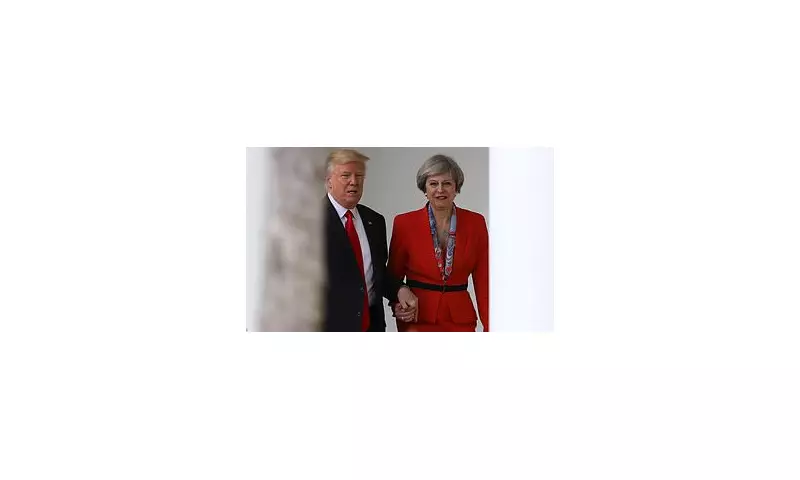
In a revealing insight into the private dynamics of international diplomacy, former Prime Minister Theresa May steadfastly refused to give her personal phone number to then-US President Donald Trump during her time in Downing Street. This intriguing disclosure comes from Fiona Hill, who served as one of Baroness May's most senior aides between 2016 and 2017, a period that overlapped with Mr Trump's first term in the White House.
A Public Facade and a Private Snub
Publicly, both leaders consistently praised the enduring 'special relationship' between the United Kingdom and the United States, a cornerstone of transatlantic foreign policy for decades. However, behind the scenes, a different story was unfolding. Ms Hill, appearing on BBC Radio 4's Today programme, candidly shared the anecdote about the presidential request. "Actually he did ask for her number and, Theresa being Theresa, she refused to give it to him," she stated, characterising the former PM's typically reserved and formal approach to statecraft.
The Context of Cringey Communications
This revelation emerged during a broader discussion about Mr Trump's recent decision to share private messages from various world leaders on his Truth Social platform. The messages, described as 'cringey' by commentators, included effusive praise from figures like NATO Secretary-General Mark Rutte and an invitation to dinner from French President Emmanuel Macron. This episode has cast a spotlight on the unconventional and often personalised nature of diplomatic communications during the Trump administration.

Sam White, a former chief of staff to Labour leader Sir Keir Starmer and an adviser to ex-Chancellor Alistair Darling, provided expert analysis on why leaders might feel compelled to establish such direct channels. "He [Mr Trump], of course, is a one-man show. You can do a deal with his deputies but they may not even know what's on his mind," Mr White explained to BBC Radio 4. "So I can imagine the temptation of world leaders to say 'I need to have some direct channel to him, less formal than a call where everyone is listening to it and taking notes'. He's someone who likes a certain amount of flattery in his communications."
The Risks of Informal Diplomacy
Mr White further noted the domestic political risks for leaders engaging in such informal, sycophantic exchanges. "These things are not going to go down well with their domestic electorates when they are using such cringey language," he observed. To illustrate the potential pitfalls of overly accessible communication lines, he recounted an incident from the 2007-2008 global financial crisis involving then-Chancellor Alistair Darling and Christine Lagarde, who was the French Finance Minister at the time.
"I remember back in the global financial crisis... Christine Lagarde managed to get hold of Alistair Darling's mobile number," Mr White added. "And she was texting him so much that at one point he did query whether he needed to have his number replaced." This anecdote underscores the delicate balance leaders must strike between maintaining open lines of communication and protecting their personal and political boundaries.
May's Stance in Historical Perspective
Theresa May's refusal to provide her personal contact details stands in stark contrast to the approaches of other global figures during the Trump era. While some sought to cultivate a direct and informal rapport, May maintained a characteristically formal and protocol-driven distance. This decision reflects not only her personal style but also a calculated diplomatic strategy, prioritising structured, official channels over the potential unpredictability of direct, unmediated contact. The episode adds a new layer to the historical understanding of UK-US relations during a particularly turbulent period in transatlantic politics.