The global political landscape was upended in the early hours of Saturday, 3rd January 2026, following an unprecedented military operation led by the United States. Venezuelan President Nicolás Maduro and his wife, Cilia Flores, were captured at their home on a military base and extracted from the country.
A Dramatic Seizure and Swift Extradition
The audacious operation culminated with Maduro's arrival in New York aboard a US federal aircraft on Saturday evening. He was taken to the Stewart Air National Guard Base in Newburgh, ahead of a scheduled court appearance at Manhattan federal court. The Venezuelan leader faces a Justice Department indictment accusing him of participating in a narco-terrorism conspiracy.
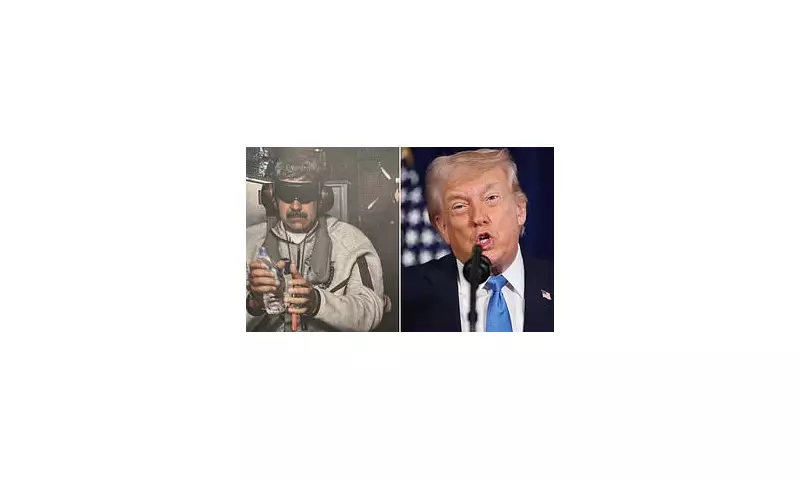
Former US President Donald Trump, who authorised the mission, stated that the United States would temporarily administer Venezuela and utilise its vast oil reserves for sale to other nations. He later shared a provocative image on social media showing a blindfolded Maduro wearing a grey sweatsuit aboard the USS Iwo Jima.

World Leaders React with Fury and Praise
The international response has been sharply polarised, exposing deep geopolitical fissures. In the UK, Prime Minister Sir Keir Starmer pointedly refused to either back or condemn the US action during an interview with the BBC's Laura Kuenssberg.
Emphasising his lifelong advocacy for international law, Starmer stated he needed to 'establish all the facts' and 'establish the full picture' before making a judgement on the legality of the operation. His cautious stance contrasted with more forthright global reactions.
Support came from Israeli Prime Minister Benjamin Netanyahu, who congratulated Trump for 'bold and historic leadership,' and Argentina's Javier Milei, who hailed the ousting as 'excellent news for the free world.' Ecuador's President Daniel Noboa celebrated on social media, suggesting the time had come for 'narco-Chavista criminals.'
Conversely, condemnation was swift from several quarters. Russia denounced an 'act of armed aggression,' while Mexico's Foreign Ministry strongly rejected the 'clear violation' of the UN Charter. Spain's Pedro Sánchez said his government would not recognise an intervention violating international law. The United Nations Secretary-General, Antonio Guterres, expressed deep concern, calling the events a 'dangerous precedent.'
In a pointed remark, Ukraine's Volodymyr Zelensky wryly suggested the US now knew 'what to do next' in dealing with dictators, a clear reference to Russia's Vladimir Putin.
Venezuelan Diaspora Erupts in Celebration
The news triggered spontaneous celebrations among the vast Venezuelan diaspora, one of the largest migration exoduses in modern history. Since 2014, approximately 7.7 million Venezuelans—around 20% of the population—have fled economic collapse.
Jubilant crowds gathered in cities from Madrid to Bogotá and Santiago. 'We are free. We are all happy that the dictatorship has fallen,' said Khaty Yanez, a Venezuelan in Chile. In Madrid's Puerta del Sol, thousands applauded as they watched Trump's press conference.
The operation brings a dramatic end to a prolonged pressure campaign against Maduro's autocratic regime but opens a profound new chapter of legal and diplomatic uncertainty regarding sovereignty and the enforcement of international law.