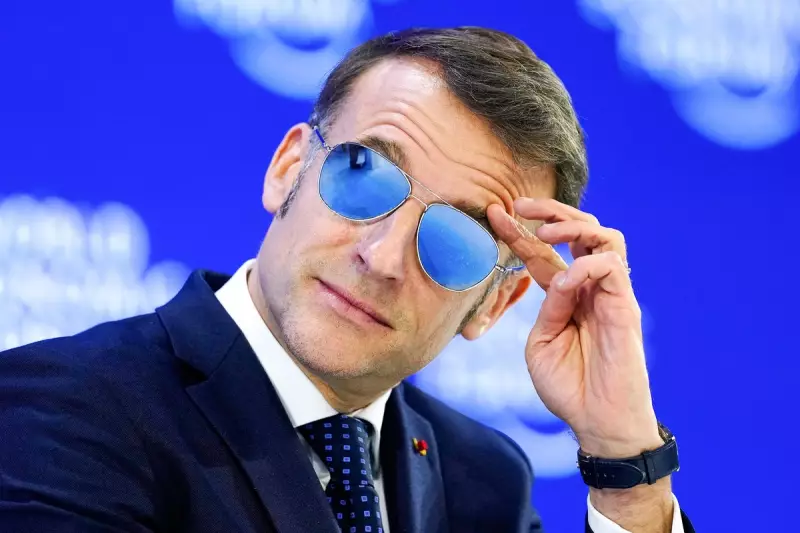
French President Emmanuel Macron made a distinctive appearance at the World Economic Forum in Davos, sporting a pair of aviator sunglasses that quickly captured global attention. The eyewear was not merely a fashion statement but a practical necessity due to a minor medical issue.
The Reason Behind the Sunglasses
Macron addressed the unusual look directly, explaining it stemmed from a "completely harmless" eye condition. He had first mentioned this days earlier at a military base in southern France, where he apologised for the "unsightly appearance" of his eye. The president assured the public and media that the condition was trivial and posed no health concerns, allowing him to participate fully in the high-profile international forum.
A Strategic Speech on European Sovereignty
While wearing the sunglasses during his keynote address, Macron delivered a robust message on European defence and economic independence. He argued forcefully that the European Union must not submit to "the law of the strongest" and should be prepared to deploy its "anti-coercion instrument" against external pressures, specifically referencing the United States.

This pointed remark was widely interpreted as a response to former US President Donald Trump's previous threats to impose tariffs on Greenland, highlighting ongoing transatlantic tensions. Macron emphasised the need for the EU to assert its strategic autonomy and protect its interests in an increasingly competitive global landscape.
No Planned Dialogue with Trump
In a significant diplomatic note, Macron confirmed to reporters that he had no plans to engage in discussions with Donald Trump during the Davos summit. This absence of planned dialogue underscored the strained relations and differing policy approaches between the two leaders, particularly regarding trade and international cooperation frameworks.
Broader Context: France's Military Challenges
Beyond the immediate spectacle of the sunglasses, Macron's appearance at Davos was framed within his earlier comments on France's pressing military priorities. At the southern French military base, he had outlined critical challenges, including an accelerated rearmament programme and sustained support for Ukraine amidst ongoing conflicts.
These themes of national and European resilience formed a cohesive narrative, linking personal circumstance with geopolitical strategy. Macron's Davos intervention thus served as both a clarification of his personal condition and a reaffirmation of his government's commitment to bolstering European sovereignty in defence and trade.
The combination of a minor health disclosure and a major policy declaration created a memorable moment at the forum, illustrating how leaders navigate personal visibility while advancing complex international agendas.