Macron's Strategic Cyprus Visit Amid Escalating Regional Tensions
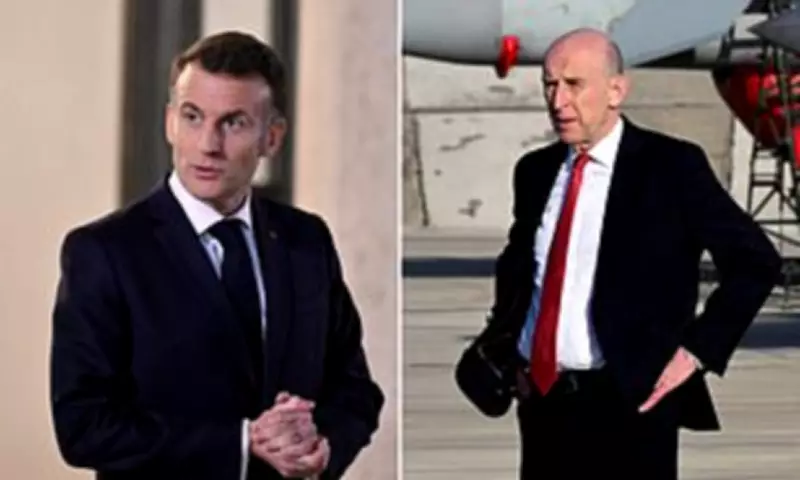
French President Emmanuel Macron is set to visit Cyprus on Monday, a move that coincides with France deploying significant naval assets to the Mediterranean region. This visit stands in stark contrast to the position of UK Labour leader Sir Keir Starmer, who has opted to remain in Britain. Macron's itinerary includes high-level meetings with Cypriot President Nikos Christodoulides and Greek Prime Minister Kyriakos Mitsotakis in the city of Paphos.
Demonstrating Solidarity and Enhancing Security
The primary objective of Macron's trip, as outlined by the Elysee Palace on Sunday, is to demonstrate France's unwavering solidarity with Cyprus. As a fellow European Union member state, Cyprus enjoys a strategic partnership with France. The discussions will focus on concrete measures to strengthen security around Cyprus and throughout the eastern Mediterranean. This initiative follows a series of concerning drone attacks targeting the region.
On March 1, RAF Akrotiri, a British military base on Cyprus, was struck by drone attacks. The incident resulted in powerful blasts that necessitated the evacuation of British personnel families. Cyprus faced another assault by Iranian-made drones just this past Monday, prompting Macron to take decisive action. In response, he ordered the deployment of France's flagship aircraft carrier, the Charles de Gaulle, to the Mediterranean.

Complementing this move, France has also dispatched a frigate and advanced air defence units to the island nation. Cyprus hosts approximately 2,000 British military personnel and their families, underscoring its strategic importance. The Elysee emphasised that France's stance in the region is strictly defensive, aimed at preserving stability.
Broader Maritime Security Concerns
The visit will also serve as a platform for Macron to highlight the critical importance of guaranteeing freedom of navigation and maritime security in key waterways. Specifically, discussions will cover the Red Sea and the strategically vital Strait of Hormuz. France intends to underscore the role of the European Union's Aspides maritime operation in these efforts.
Since the commencement of the US-Israeli conflict with Iran on February 28, there have been numerous attacks on commercial and military vessels navigating the Strait of Hormuz. This narrow chokepoint in the Gulf is essential for global energy supplies, making its security a paramount concern for international stakeholders.
Regional Coordination and International Response
Konstantinos Letymbiotis, a spokesman for the Cypriot government, stated that the visit will enable the leaders of Cyprus, Greece, and France to assess the high level of coordination between their nations. Letymbiotis also acknowledged the role of Italy, which, like Britain, has deployed a warship to Cypriot waters as part of the collective security effort.
On Sunday, Macron revealed he had engaged in diplomatic discussions with the Qatari Emir, Sheikh Tamim bin Hamad Al Thani, and the President of Azerbaijan, Ilham Aliyev. With Qatar, Macron highlighted France's provision of defensive military support, particularly in the aerial domain, which he stated is deployed for the benefit of Qatar. Both leaders share the conviction that lasting regional stability must be achieved through de-escalation and negotiation, rather than continued conflict.
In his conversation with President Aliyev, Macron offered France's support and solidarity following a drone strike on Azerbaijan. This attack, originating from neighbouring Iran, has raised fears that the Middle East conflict could potentially spill over into the Caucasus region, further destabilising the area.
The United Kingdom's Delayed and Limited Reinforcement
The Royal Navy faced considerable embarrassment last Thursday as it became apparent that several European nations were deploying warships to the eastern Mediterranean that would arrive ahead of Britain's HMS Dragon. Spain and the Netherlands have confirmed that their frigates will assist in protecting Cyprus, where RAF Akrotiri remains in a vulnerable position.

While the Royal Air Force delivered a Wildcat helicopter to Cyprus on Friday, the most notable British reinforcement to arrive on the island was Defence Secretary John Healey. Healey visited the military base on Monday, accompanied by a journalist from The Guardian. During his visit, Healey refused to rule out the possibility of British troops being drawn into the US and Israeli attacks on Iran. However, he declined to speculate on any future military commitments.
His visit was punctuated by a stark reminder of the ongoing threat when he was forced to take cover following another warning of incoming Iranian drones. This alert came after an attack on the base on Sunday evening. According to Cypriot officials, that attack, which damaged the runway and a hangar, was carried out by Iran-backed Hezbollah forces operating from Lebanon. The apparent targets were US bombers stationed in a separate section of the base.
Investigations into Drone Technology and Alleged Russian Involvement
It is understood that the Iranian drone that struck RAF Akrotiri on Sunday was launched from Lebanon and was equipped with Russian military hardware. Components of the recovered drone have been sent by British military intelligence to a laboratory in the UK for detailed forensic investigation, as reported by The Times.
This development follows claims from intelligence sources that Russia is providing Iran with sensitive intelligence regarding the locations of US military assets in the Middle East, including warships and aircraft. US President Donald Trump has stated he received no indication of such Russian assistance, quipping that if Russia is helping, they are not doing a very effective job given Iran's current struggles.
However, three officials familiar with the intelligence have asserted that Russia has been actively assisting Iran since the war began. One source described the alleged Russian support as a comprehensive effort to help Tehran target American forces in the region. Echoing these concerns, the UK's Chief of the Defence Staff, Sir Richard Knighton, stated he had no doubt that Russia has been sharing intelligence with Iran.
Adding weight to these suspicions, Russia's ambassador to the UK, Andrey Kelin, told Sky News on Saturday that Moscow is not neutral in the conflict and is supportive of Iran. This admission further complicates the geopolitical landscape and underscores the multifaceted nature of the security challenges in the eastern Mediterranean and the wider Middle East.