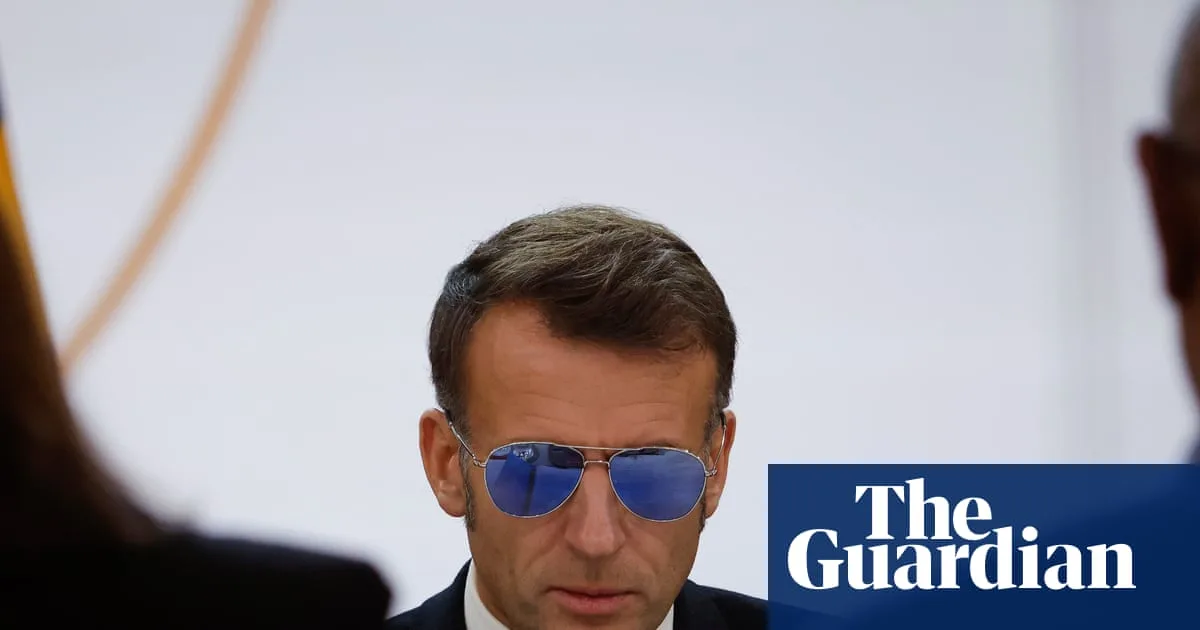
Macron Condemns Trump's 'Bullying' as EU Leaders Prepare Economic Retaliation Over Greenland
French President Emmanuel Macron has launched a scathing critique of Donald Trump's "bullying" behaviour, as European Union leaders rally to formulate a robust response to the US president's escalating threats over Greenland. The dramatic deterioration in transatlantic relations unfolded just hours before Trump's anticipated arrival at the World Economic Forum in Davos, Switzerland.
Rule of Law Versus Brutality
In a thinly veiled takedown from the prestigious economic summit, Macron urged the international community to prioritise "the rule of law over brutality" and resist what he characterised as "the new colonial approach." The French leader declared: "We prefer respect to bullies, we prefer science to conspiracies, and we prefer the rule of law to brutality." His comments came as Trump doubled down on demands for Danish sovereign territory Greenland and threatened tariffs against allies opposing the move.
NATO Alliance on the Brink
The unprecedented breakdown has raised grave concerns about the future of the North Atlantic Treaty Organisation. Former NATO secretary general Anders Rasmussen, who also served as Denmark's prime minister, warned that the alliance now stands "on the brink of collapse" due to Trump's behaviour. Rasmussen told Times Radio: "It's extremely serious. Actually, if that threat [taking over Greenland] comes to fruition, it will be the end of NATO. It doesn't make sense to have a collective defence organisation where the major ally attacks another ally with the aim to take territory."
UK's Diplomatic Dilemma
Prime Minister Sir Keir Starmer's hopes of acting as a bridge between America and Europe appear to have evaporated after Trump lashed out at what he called the "stupid" deal to cede the Chagos Islands to Mauritius. This represents the most significant strain on the special relationship since Harold Wilson refused to send British troops to Vietnam in the 1960s. Chancellor of the Duchy of Lancaster Darren Jones admitted: "It's not normal for geopolitical discussions to be handled in this way," while insisting Starmer's approach was yielding results.
EU's Economic Countermeasures
As anger grew in Switzerland ahead of Trump's arrival, EU leaders made clear their intention to deploy the toughest possible economic response to tariff threats. Macron called for deployment of the bloc's so-called "big bazooka" of economic countermeasures, stating: "The anti-coercion mechanism is a powerful instrument, and we should not hesitate to deploy it in today's tough environment." European Commission President Ursula von der Leyen used her WEF speech to warn that the EU's response "will be unflinching, united and proportional," adding that when "friends shake on a deal, we expect them to honour the deal."
Frosty Exchanges at Davos
The tension manifested in awkward diplomatic exchanges at the summit. During a panel discussion with UK Chancellor Rachel Reeves, Trump's commerce secretary Howard Lutnick declared that "globalisation has failed the West" and asserted that "when America shines, the world shines." In a later attempt at reassurance, Lutnick told Reeves: "We love you, we do," to which she responded, "thank you very much, the feeling is mutual." Meanwhile, Democratic California Governor Gavin Newsom urged European leaders to "stop the bull**** diplomacy" and "stand up to Trump."
European Unity and Response
French Foreign Minister Jean-Noel Barrot told parliament that France supports suspending the EU-US trade deal given Washington's ongoing tariff threats, which he described as "blackmail to obtain unjustifiable concessions." European Union foreign policy chief Kaja Kallas stressed that the bloc would hold its ground on Greenland despite growing US pressure, noting that threatened tariffs would undermine prosperity on both sides of the Atlantic. She emphasised Greenland's increased geostrategic importance and NATO's suitability for ensuring the island's security.
Republican Attempts at Damage Control
Amid the escalating crisis, senior Republicans have sought to mend relationships with allies. Mike Johnson, Speaker of the US House of Representatives and a Trump ally currently visiting London, told MPs and peers in Westminster that his mission was to "help calm the waters." Johnson revealed: "I spoke to President Trump at length yesterday, and I told him that I really felt that my mission here was to encourage our friends and help calm the waters." He expressed agreement with Starmer's approach of finding diplomatic resolutions through calm discussion between friends.
The unfolding crisis represents one of the most significant challenges to Western unity in decades, with European leaders demonstrating unprecedented resolve in confronting what they perceive as American bullying tactics that threaten both economic stability and the foundational security architecture that has maintained peace since the Second World War.






