
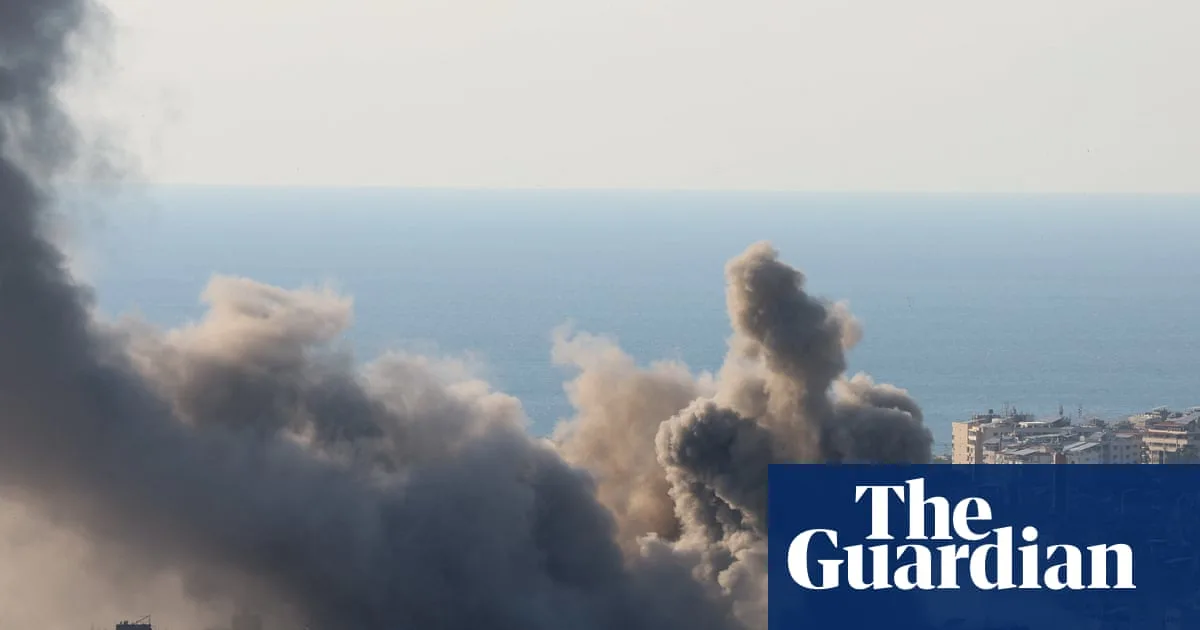
A leaked US embassy cable reveals that Israeli officials expressed serious doubts about the ability of Lebanon and Syria to contain Hezbollah before Israel launched airstrikes on Beirut. The 27 February cable, sent to Washington a day before joint US-Israeli strikes on Iran, indicated that Israel believed Hezbollah was rebuilding its military capabilities faster than the Lebanese armed forces could counter them.
The cable, written under the auspices of US Ambassador Mike Huckabee, was intended as a briefing for Secretary of State Marco Rubio. It stated that Israeli officials had lost confidence in the Lebanese state taking action against Hezbollah and doubted the group would give up its weapons. Israeli officials also questioned the Lebanese government's commitment to confronting Hezbollah and taking control of all Lebanese territory.
Regarding Syria, the cable noted Israeli concerns that President Ahmed al-Sharaa lacked the ability to control his security forces. Israel expressed grave alarm over Turkish military entrenchment in Syria, warning it could create a strategic threat to Israel's north. The cable claimed Turkish officials had incited against Israel in Syria even while maintaining de-confliction agreements with Israeli national security officials.
The cable also highlighted that Iranian funding continued to reach Hezbollah through Turkey and elsewhere, despite a November 2024 ceasefire. The Israel Defense Forces had already been forced to resume military attacks on Hezbollah as a result. The ceasefire was already under strain before the Iran strikes, with Israeli forces maintaining five military outposts north of the UN-demarcated blue line inside Lebanese territory.
Three days after the cable was sent, Israel launched airstrikes against Hezbollah-dominated areas in southern Beirut. Within 72 hours, Hezbollah fired rockets into northern Israel for the first time since the 2024 ceasefire, prompting further Israeli bombings in Beirut.




