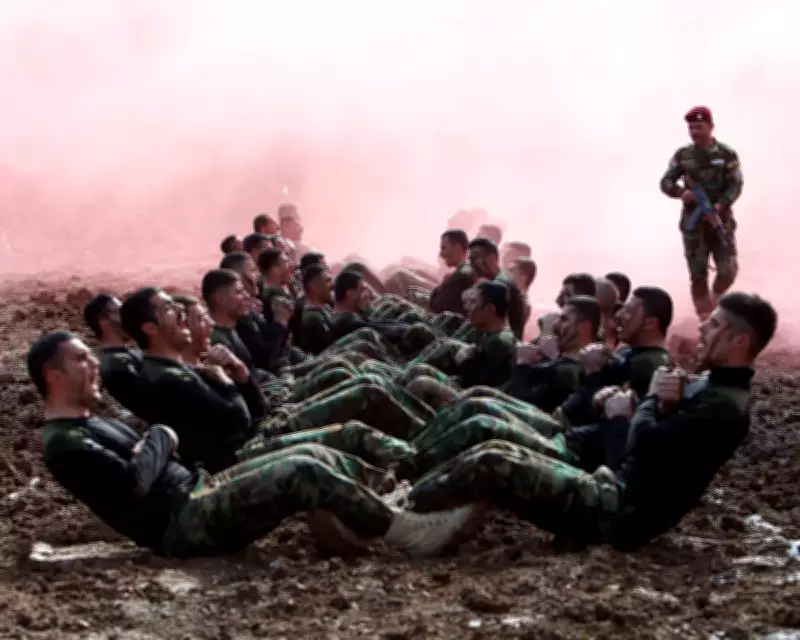
Kurdish Peshmerga Forces Demonstrate Capabilities Amid Rising Tensions
Members of the Kurdish peshmerga special forces have recently showcased their advanced skills in training exercises, highlighting their readiness for potential military engagements. With robust air support and the presence of US military advisers on the ground, these forces are positioned to cross international borders and secure territory in Kurdish-dominated regions within Iran. This development underscores the strategic role of the peshmerga in regional conflicts, particularly as geopolitical pressures mount.
Who Are the Kurds and Why Are They Central to US Strategy?
The Kurds represent one of the largest ethnic groups globally without a sovereign state, with an estimated population ranging from 30 to 40 million people. Primarily residing in mountainous areas that span the borders of Armenia, Iraq, Iran, Syria, and Turkey, their historical roots trace back to the ancient Medes. A century ago, the collapse of the Ottoman Empire left them stateless, a condition that has persisted amid the turbulent politics of the Middle East.
Throughout their history, Kurds have often relied on their homegrown militia, the peshmerga, for defence, leading to the adage that they have "no friends but the mountains." This reflects a legacy of repression and exploitation by various regional powers, including authoritarian regimes that have displaced and killed Kurdish communities. Despite these challenges, Kurds maintain a distinct cultural identity, with their own language, music, cuisine, and a strong sense of nationalism that emerged in the late 19th century.

Historical Context and Recent Conflicts
In Turkey, a prolonged conflict with the PKK, a leftist group initially seeking independence and later autonomy, has resulted in over 40,000 deaths and significant displacement. In Iraq, under Saddam Hussein, Kurds faced brutal attacks, including chemical weapon assaults, though they later established a semi-autonomous zone after the 1991 Gulf War. In Syria, Kurdish efforts to create an enclave during the civil war ultimately failed, despite their crucial role as ground fighters in the US-led coalition against Islamic State, both in Syria and Iraq.
This campaign against Islamic State not only cost many Kurdish lives but also solidified the peshmerga's reputation as an effective fighting force. Known for their terrain knowledge, mobility, and high motivation, they compensate for lighter weaponry, making them formidable against tougher adversaries. Their collaboration with US officials and military personnel during this period has refined tactics that could now be deployed in potential operations against Iran.
Potential Cross-Border Operations and Strategic Implications
Analysts suggest that with air support and US military advisers, the peshmerga could cross into Iran and hold territory in Kurdish-dominated areas. However, advancing significantly beyond the border zone is considered unrealistic. Iran's Kurdish regions have a long history of resistance to central authority, dating back to the 1979 revolution, and were flashpoints during major protests in 2022 and late 2025, which led to thousands of deaths.
The Trump administration's reported interest in mobilising Kurdish fighters from Iranian opposition groups aims to undermine Tehran's rulers, leveraging the peshmerga's capabilities. This strategy builds on existing connections and could reshape regional dynamics, though it risks further destabilising an already volatile area.
In summary, the Kurdish peshmerga's potential involvement in cross-border operations highlights their strategic importance in Middle Eastern conflicts, driven by a complex history of statelessness, resilience, and evolving alliances with global powers like the United States.