Prosecutors Demand 45-Year Sentences in Kosovo War Crimes Trial
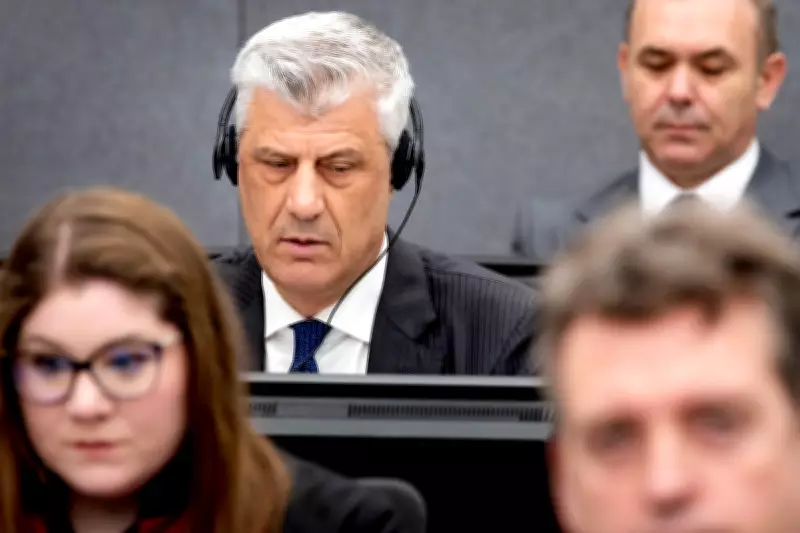
Closing statements commenced on Monday in the high-profile war crimes trial of Kosovo's former president, Hashim Thaci, and three other defendants at a specialist tribunal in The Hague. Prosecutors asserted there is "overwhelming evidence" that the accused are guilty of the murder and torture of individuals deemed traitors during Kosovo's 1998-99 war for independence from Serbia.
Detailed Allegations and Court Proceedings
Prosecutor Kimberly West informed judges that witnesses and victims had "so yearned for the truth to come out" they were willing to testify despite a "climate of intimidation." The Kosovo Specialist Chambers, based in the Netherlands but operating under Kosovo's legal system with EU backing, employs largely international staff due to security concerns. In 2022, the court convicted two leaders of a Kosovo war veterans' association for witness intimidation by leaking confidential documents.
A separate trial for Thaci on witness intimidation charges is scheduled to begin later this month. Testimonies provided what prosecutors described as compelling proof that Thaci, alongside co-defendants Kadri Veseli, Rexhep Selimi, and Jakup Krasniq, implemented a policy targeting political opponents and civilians perceived as collaborators while serving as commanders of the Kosovo Liberation Army (KLA).

Charges and Historical Context
Each defendant faces multiple charges, including murder, torture, and persecution, allegedly committed across Kosovo and northern Albania from 1998 through September 1999. Prosecutors have requested a 45-year prison sentence for all four men. Thaci, known by the wartime nickname "The Snake," pleaded not guilty when the trial opened in 2023, a stance echoed by his co-defendants in earlier pretrial hearings.
Thaci, a former student who returned from political exile in Switzerland to join the independence struggle, was once embraced by Western leaders. He attended 1999 peace talks in France as the KLA's political director and was viewed as a key figure in guiding Kosovo toward statehood. However, many Kosovars regard the court as unjust, arguing it attempts to equate Serbia's actions with their suffering.
Broader Impact and Public Sentiment
The war resulted in approximately 13,000 deaths, predominantly ethnic Albanians, and displaced about 1 million Kosovar Albanians. A 78-day NATO airstrike campaign ultimately halted the conflict. The trial's outcome is poised to have significant implications for Kosovo's historical narrative and its ongoing relations with international justice bodies.