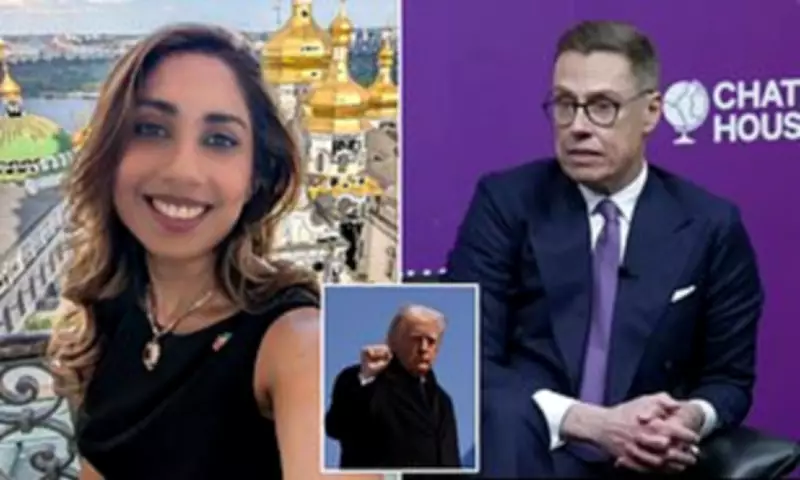
Australian Journalist's 'Reverse Trump' Strategy Wins Praise from Finnish Leader
An Australian geopolitical reporter has left Finnish President Alexander Stubb visibly impressed after proposing a straightforward solution to redirect Donald Trump's attention toward Russia's ongoing war in Ukraine. During President Stubb's address at Chatham House in London on Tuesday, The Nightly's Writer-at-Large Latika M Bourke suggested that European leaders could use the escalating Middle East crisis as a strategic bargaining chip.
The Simple Proposal That Caught a President's Attention
'Why doesn't Europe go to Trump and say, "If you want assistance in the Gulf, here's what we want you to do on Ukraine?"' Bourke asked President Stubb during the London event. Her suggestion came against the backdrop of Trump's recent social media tirade where he turned on traditional allies including Australia, claiming they had rejected his plea for help securing the Strait of Hormuz.
The vital shipping route has been effectively closed for three weeks since conflict erupted, leaving numerous tankers idle and forcing producers to halt pumping operations while facilities were emptied. This disruption has created significant geopolitical leverage that Bourke believes Europe could strategically employ.

President Stubb's Enthusiastic Response
President Stubb's reaction to Bourke's proposal was notably positive. 'I think it's actually a really good idea,' the Finnish leader responded. 'So, I'm available for advice. Can my team take your phone number, please?'
He elaborated further, indicating serious consideration of the strategy: 'No, but I mean, yeah, I'll think about it. I'll talk about it with my colleagues. Some of them are here in London today.'
The 'Reverse Trump' Concept Explained
Bourke, who specializes in geopolitics and serves as an expert associate at the Australian National University's National Security College outside her journalism work, later described her suggestion as a 'reverse Trump' approach on social media. This references Trump's well-documented belief that support from allies must be strictly reciprocal and transactional.
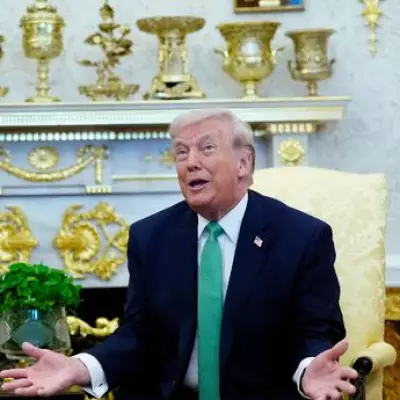
The timing of Bourke's proposal was particularly significant given Trump's recent Truth Social posts where he declared: 'We no longer 'need,' or desire, the NATO countries' assistance - WE NEVER DID. Likewise, Japan, Australia, or South Korea.' He added: 'In fact, speaking as President of the United States of America, by far the Most Powerful Country Anywhere in the World, WE DO NOT NEED THE HELP OF ANYONE.'
Broader Geopolitical Context
Trump claimed America's allies 'don't want to get involved' in the Iran conflict despite his appeals for help securing the Strait of Hormuz as oil prices continue to spiral. The Australian government under Prime Minister Anthony Albanese has rebuffed this claim, stating there hadn't been any formal request to deploy ships to the strategic waterway and that such deployment wasn't under consideration.
Meanwhile, Trump signed a one-month sanction waiver last week that permits countries to purchase Russian oil currently floating in tankers unable to dock anywhere due to sanctions. This move has concerned European leaders including Ukrainian President Volodymyr Zelensky, who has repeatedly warned against easing sanctions on Russian oil and called for maintaining pressure on Moscow.
Potential Consequences of Recent Policy Shifts
President Stubb expressed concern during his London address that Trump's relaxation of restraints on Russia, intended to address fuel supply concerns following joint strikes on Iran with Israel, could have damaging ripple effects on Putin's war effort in Ukraine.
'The Russian economy was actually doing extremely badly a couple of weeks back, now it's bouncing back,' Stubb observed. He added cautiously: 'I hope the peace negotiations on Ukraine don't collapse like the negotiations between Iran and the US did. But time will tell.'

The exchange between Bourke and Stubb highlights how journalists covering international relations can sometimes influence diplomatic thinking, particularly when they propose pragmatic solutions to complex geopolitical standoffs. Bourke's 'reverse Trump' strategy represents a creative attempt to work within the former president's transactional worldview to achieve European security objectives regarding Ukraine.