
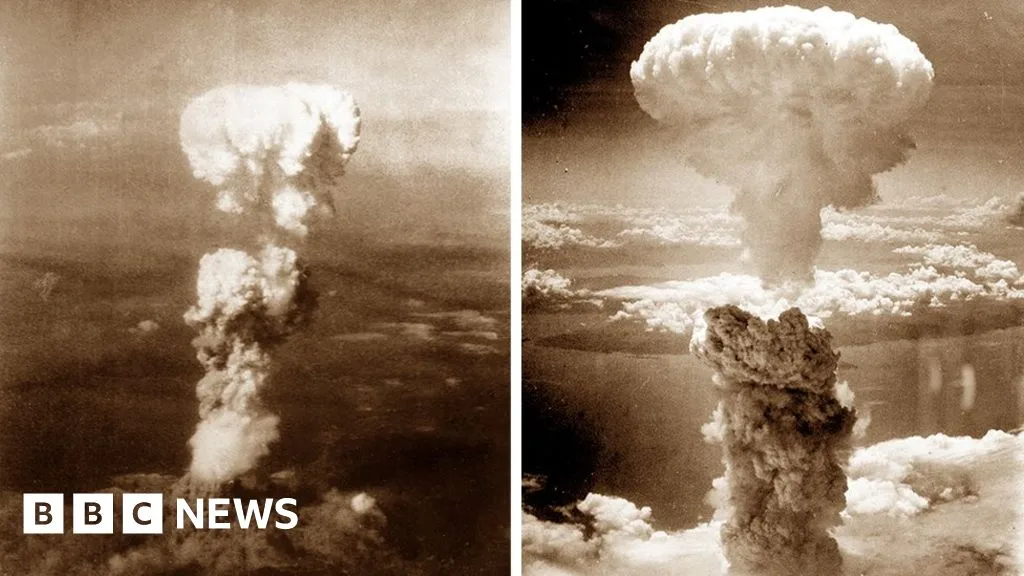
It is 75 years since the US dropped an atomic bomb on the Japanese city of Nagasaki on 9 August 1945, leading to the end of World War Two. At least 74,000 people died in the blast, with thousands more succumbing to radiation sickness in the weeks, months and years that followed.
The bomb, known as "Fat Man", was dropped by an American B-29 bomber at 11:02 local time. Three days earlier, a similar bomb had been dropped on Hiroshima, killing an estimated 140,000 of its 350,000 population.
Reiko Hada was nine years old when the bomb exploded in Nagasaki. She described witnessing "a blazing light" and then "a loud roar" before blacking out. In the aftermath, she saw people with "eyes popped out, their hair dishevelled, almost all naked, badly burned with their skin hanging down". She helped give water to the dying.
The bombings brought about Japan's unconditional surrender on 14 August 1945. Emperor Hirohito cited the use of "a new and most cruel bomb" as the reason for surrender, warning that continued fighting would lead to "the total extinction of human civilisation".
British Prime Minister Clement Attlee thanked the US for its efforts, stating that without them "the war in the East would still have many years to run". The survivors, known as "hibakusha", continue to bear the psychological and physical scars of the attacks.




