The Enduring Legacy of Dawson Leery: James Van Der Beek's Iconic Role
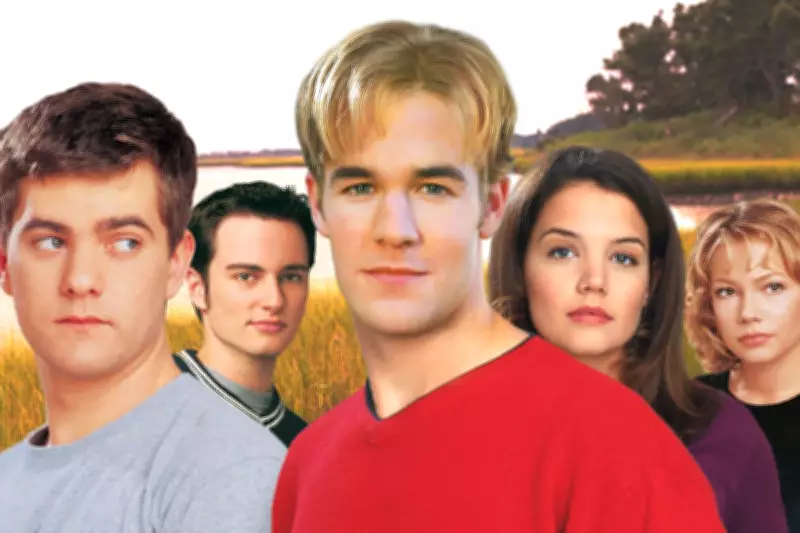
For a certain generation, Sunday mornings on Channel 4 were defined by one thing: the exasperating presence of Dawson Leery on Dawson's Creek. The whiny, manipulative anti-hero, portrayed with unforgettable intensity by James Van Der Beek, became the Tony Soprano of fictional teenage nonsense—a character we loved to hate. Van Der Beek's recent death from cancer at age 48 has reignited a flood of memories about this seminal role, reminding us why his performance as Dawson hit so hard.
A Character Designed for Exasperation
James Van Der Beek spent much of his career shadowed by Dawson Leery, a fact he initially resisted but later embraced with self-mocking humour. On the show, Dawson was a boy chronically high on his own fumes—a virginal manipulator of fragile young women, a bafflingly wrong-headed film bro with an Amistad poster on his wall, and the owner of an ugly cry that became an early internet GIF sensation. Unlike his co-stars, such as Oscar nominee Michelle Williams, Van Der Beek seemed forever fossilised in that late-1990s era, an eternal teenager who inspired perverse thrills when Katie Holmes's Joey chose Joshua Jackson's Pacey over him.
The sheer bigness of Dawson's Creek in the UK cannot be overstated. From its debut in 1998, it commanded column inches, tie-in books, Mizz magazine covers, and Smash Hits pull-out posters. Its sun-dappled coastal setting, beautiful leads, and the wordy neuroses of creator Kevin Williamson's dialogue felt expensive, all-American, and sophisticated—a stark contrast to homegrown teen icons like Sonia from EastEnders.

The Archetypal Teen Drama and Its Lasting Impact
Dawson's Creek sat earnestly between the early-1990s glam of Beverly Hills 90210 and the Y2K opulence of The OC and Gossip Girl, borrowing the self-referential wit of Williamson's hit movie Scream. It embraced silly adolescent tropes—love triangles, prom dates, flings with teachers—while having characters acknowledge they were inside a living soap opera. For many viewers, loving Dawson's meant also loving Friends, Buffy the Vampire Slayer, and The X-Files, as it epitomised a time when American television felt grand and cinematic.
Rewatching the show reveals its evolving soulfulness. Joey transforms from a dazzling dreamgirl at age 12 to a tedious wet blanket by 21, while Jen's relationship with her grandmother emerges as the series' most important love story in later viewings. The theme song, with its loud and risible "I don't wanna wait!" refrain, became a generational earworm, embedding itself in cultural memory.
Dawson Leery: The Anti-Hero We Needed
Dawson was the show's star but not its hero—his penchant for strops and guilt trips drove all its soapy contrivances. Van Der Beek had the toughest job on the series, making Dawson as jagged and unpleasant as possible, yet it was thrilling to loathe him. Think of Dawson Leery as Carrie Bradshaw in Nineties plaid or the Tony Soprano of teenage nonsense. No one wanted to identify with Dawson; doing so felt like marking yourself with a scarlet letter, implying you were covertly mean, judgmental, insecure, or self-righteous.
Yet, Dawson was arguably the least fantastical character on the Creek—just a grumpy, cocky, casually cruel teenage boy. Van Der Beek's legacy, whether or not he found another role to match Dawson's reach, is a fun and important one: he was the first boy who made so many of us want to hurl things at the TV. In tribute, perhaps we should all hop in a row boat and be annoying, just like Dawson.