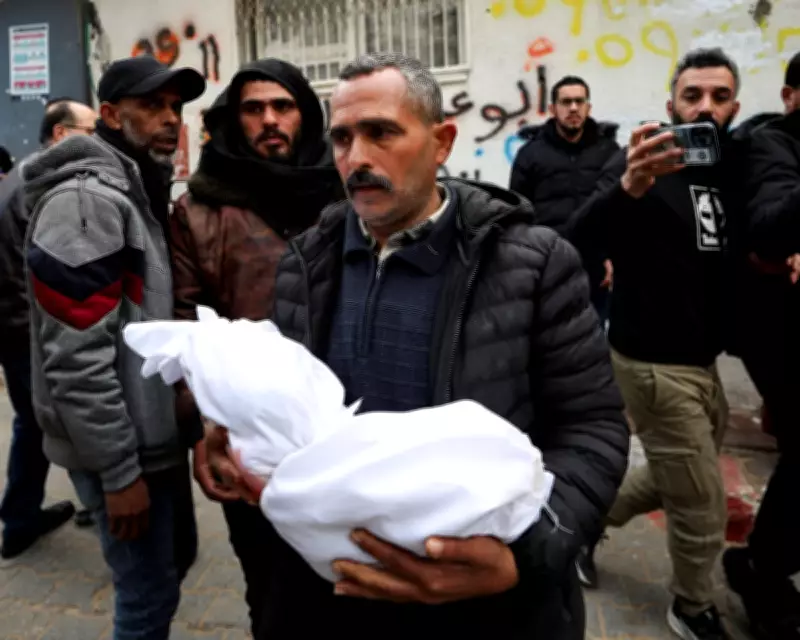
Palestinian officials have confirmed that Israeli military strikes have resulted in the deaths of eighteen individuals in the Gaza Strip, with four children among the fatalities. The attacks, involving tank shelling and airstrikes, targeted areas including Gaza City and the southern city of Khan Younis, escalating tensions in the region.
Rafah Crossing Evacuations Suspended Amidst Violence
In a concurrent development, the evacuation of patients through the Rafah border crossing to Egypt has been halted by Israeli authorities, according to Gazan health officials. This suspension comes merely two days after the crossing was reopened, allowing a limited number of Palestinians to cross for the first time in several months for medical treatment.
The Palestinian Red Crescent reported that patients had arrived at a hospital in Khan Younis in preparation for crossing, only to be informed that the evacuations were postponed. "They called the patients and said today there is no travel at all, the crossing is closed," stated Raja’a Abu Teir, a Palestinian patient awaiting evacuation, at the hospital where several individuals were left waiting in ambulances.

Conflicting Accounts on Crossing Status
The Israeli military agency responsible for access to Gaza, Cogat, asserted on Wednesday that the Rafah crossing remains open. However, they cited a lack of necessary coordination details from the World Health Organization to facilitate the patient crossings. The WHO has not provided an immediate response to requests for comment on this matter.
Prior to the suspension, sixteen patients from Gaza and forty of their escorts managed to cross into Egypt on Tuesday, as reported by medics in Gaza. Additionally, a Hamas police source indicated that at least forty people crossed from Egypt to Gaza late on Tuesday, highlighting the brief window of movement.
Ceasefire Context and Ongoing Violence
The reopening of the Rafah crossing was a stipulated requirement under the October ceasefire, which outlined the initial phase of a plan by former US President Donald Trump to halt hostilities between Israel and Palestinian Hamas militants. In January, Trump declared the commencement of the second phase, aimed at negotiating the future governance and reconstruction of the devastated territory.
Despite these efforts, key issues remain unresolved, including the withdrawal of Israeli forces from over fifty percent of Gaza they occupy and the disarmament of Hamas. The fragile ceasefire has been marred by near-daily violence, underscoring the persistent instability in the region.
Casualty Figures and Humanitarian Impact
Since the ceasefire began, Gaza health officials report that Israeli fire has killed at least 530 people, the majority of whom are civilians. In the same period, Palestinian militants have killed four Israeli soldiers, according to Israeli authorities. These figures highlight the ongoing humanitarian toll and the challenges in achieving lasting peace.
The recent strikes and the suspension of patient evacuations further exacerbate the dire situation in Gaza, where access to medical care and safety remains precarious for many residents.