Israeli Strikes Kill 12 Medics in Lebanon, Healthcare System Under Siege
In a devastating escalation of violence, Israeli missile strikes have targeted a medical centre in southern Lebanon, killing twelve healthcare workers and raising grave concerns about the systematic destruction of the country's healthcare infrastructure. The attack, described by survivors as feeling like an earthquake, has left the region's medical response capabilities in tatters.
Scene of Devastation in Burj Qalaouiyah
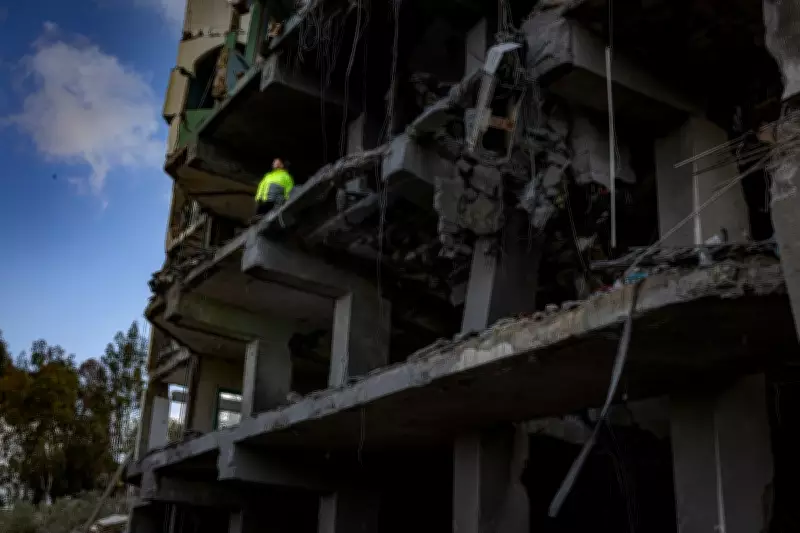
The Israeli strike on the four-storey healthcare facility in Burj Qalaouiyah, located approximately 11 kilometres from Lebanon's south-eastern border with Israel, was so powerful that it gouged a multi-storey crater in the ground and left the building's concrete floors shattered. The medical centre, operated by the Hezbollah-linked Islamic Health Authority, served twenty surrounding villages with emergency ambulance services, an emergency room, pharmacy, first aid centre, and general clinic.
"The bodies were everywhere, in pieces," said Ali Shaimi, a 51-year-old first responder who arrived at the scene shortly after the attack. "The faces of the medics were so disfigured you couldn't work out who was who." Shaimi described rushing to tend to the wounded, only to realise there were no survivors among his colleagues who had been finishing dinner when the missile struck without warning.
Healthcare System Under Systematic Attack
According to Lebanese health authorities, the attack on the Burj Qalaouiyah medical centre represents just one incident in a broader pattern of healthcare targeting. Over the past two weeks of intensified conflict, Israeli strikes have killed at least 850 people and wounded 2,100 more across Lebanon, with healthcare workers bearing a disproportionate burden of the casualties.
Lebanese Health Minister Rakan Nassereddine expressed deep concern that the strikes on medical facilities were neither isolated nor accidental. "Unfortunately, ambulances are being attacked. Nurses are being attacked," he stated. "We have a number of hospitals that have been attacked or are under threat and five are now out of service. This is against the Geneva Convention."
International Law Violations and War Crimes Allegations
The targeting of medical facilities represents a clear violation of international humanitarian law, which grants special protection to healthcare workers and medical infrastructure during armed conflicts. Human Rights Watch has previously documented similar attacks during the 2024 war between Israel and Lebanon, concluding that they amounted to war crimes and calling for international investigations.
Israeli military spokesperson Avichay Adraee warned that the army would strike ambulances and medical facilities allegedly used unlawfully by Hezbollah for military purposes, though no evidence was provided to support these claims. A Hezbollah official categorically denied using ambulances or medical facilities for military purposes, accusing Israel of terrorising civilians through such attacks.
Regional Conflict Escalation and Healthcare Collapse
Lebanon was drawn into the broader regional conflict earlier this month when Iran-backed Hezbollah launched attacks against Israel following massive US and Israeli strikes that killed Iran's supreme leader. The subsequent Israeli bombardment has forced more than 800,000 people to flee their homes and has systematically degraded Lebanon's healthcare capacity.
Ghassan Abu Sittah, a prominent British Palestinian plastic surgeon currently treating gravely wounded children in Lebanon, expressed fears that Israel would replicate its Gaza strategy in Lebanon. "My fear is that the Israelis will do what they were doing in Gaza, and what they did in the previous war, which is start to take out one hospital after the other to increase the pressure by reducing the capacity of the health system," he warned. "By the end of the last war in Lebanon we had lost access to eight hospitals. That's my biggest fear. The system collapses."
Mounting Casualties and International Concern
The World Health Organisation confirmed that Friday's attack killed at least twelve doctors, paramedics, and nurses in Burj Qalaouiyah, while two additional paramedics were killed in a separate attack on a health facility in Al-Souaneh. WHO Director General Tedros Adhanom Ghebreyesus described these developments as tragic within the escalating Middle East crisis.
According to Lebanon's Ministry of Health, thirty-two healthcare workers have been killed and nearly sixty injured since the conflict intensified two weeks ago. Additionally, thirty ambulances and thirteen medical centres have been attacked, with dozens killed in these strikes. The Israeli military stated it was aware of reports regarding the strike in Borj Qalaouiye and that the incident remains under review.
The floor of the destroyed medical centre in Burj Qalaouiyah remains littered with smashed test tubes, destroyed medicines, and the shredded belongings of the medics killed in the attack. Abbas Hijazi, a 36-year-old rescuer who witnessed the explosion from a building across the street, described the scene with profound hopelessness. "We saw them just two hours before, they are eating. These were our colleagues and friends. We saw and worked with them every day," he said. "It was one of the hardest scenes I have seen."