Israeli Official Warns Iran Will Not Surrender Despite Intense Pressure
A senior Israeli official has asserted that Iran will not surrender, even if the United States and Israel inflict total destruction upon the country. The official further claimed that it is not in the world's interest to fight until the beleaguered regime collapses, highlighting the complexities of the ongoing conflict.
Continuous Bombardments and Iranian Resilience
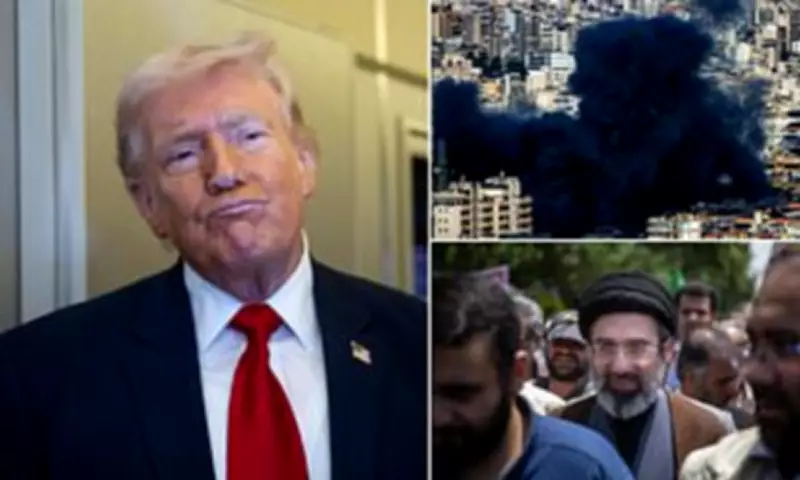
Iran has faced relentless bombardments from US and Israeli forces since the war erupted, with explosions creating a 'river of fire' across Tehran and resulting in the deaths of many regime elites, including Ayatollah Ali Khamenei. Despite this devastation, the Islamic Republic shows no signs of capitulation. Instead, Iran has launched waves of missiles at Israel and US allies in the Gulf, while naming the Ayatollah's hardline son, Mojtaba Khamenei, as his successor.
These attacks on Middle Eastern neighbours persist despite former US President Donald Trump's demand for the regime's 'unconditional surrender'. Trump, writing on social media, stated: 'There will be no deal with Iran except unconditional surrender. After that, and the selection of a great and acceptable leader, we and many of our wonderful and very brave allies and partners, will work tirelessly to bring Iran back from the brink of destruction, making it economically bigger, better, and stronger than ever before. Iran will have a great future.'

Strategic Concerns and Ceasefire Possibilities
However, an Israeli official familiar with war planning and strategy told the Washington Post that Iran's surrender is unrealistic. The official remarked, 'I'm not sure it's in our interest to fight until the regime is toppled. Nobody wants a never-ending story.' They added, 'Of course, we wish to topple the regime, but that’s not the only endgame. Iran won’t surrender, but it can send messages to accept a ceasefire with US conditions.'
The official claimed that the Israeli-US bombing campaign has nearly achieved its military objectives, closing in on the destruction of Iran's nuclear programme, weapon facilities, and top military ranks. Yet, they warned that they 'don't see anyone who can replace the regime,' underscoring the potential power vacuum and instability that could follow.
Regional Escalation and Humanitarian Impact
The war continues to rage, with several explosions reported in Doha, Qatar, and new attacks hitting Saudi Arabia, the United Arab Emirates, and Kuwait. Iran showed no signs of surrendering as it unleashed a significant overnight attack, with Bahrain experiencing the highest number of casualties since the conflict began. Bahrain's Interior Ministry stated that 32 people were injured in an Iranian attack on the island of Sitra, after its Bapco refinery was struck by drones.
All wounded were Bahraini citizens, including four serious cases involving children. A 17-year-old girl suffered severe head and eye injuries, and a two-month-old baby was among those harmed. The ministry reported damage to houses in Sitra due to the drone attacks. Bapco confirmed the strike on its 405,000-barrel-per-day refinery but noted no fatalities, declaring force majeure due to the extraordinary circumstances.
Global Economic Ramifications and Political Pressures
Meanwhile, the conflict threatens to trigger a worldwide economic crisis, with soaring oil prices posing a significant risk. Experts warn that petrol could reach £2 a litre for the first time in the UK, amid a staggering spike in global oil costs. The price of a barrel of oil has rocketed over $100 for the first time in years, as Iran has effectively shut the Strait of Hormuz, through which around a fifth of the world's oil travels.
US President Donald Trump has dismissed the soaring oil and gas prices, calling them a 'small price to pay' for taming Tehran. However, he faces growing pressure to end the conflict due to the economic strain on American allies in the Gulf and the broader global impact. Trump claimed the war would only end once he and Israeli Prime Minister Benjamin Netanyahu make a 'mutual' decision, stating, 'I think it’s mutual… a little bit. We’ve been talking. I’ll make a decision at the right time, but everything’s going to be taken into account.'

Netanyahu has emphasized Israel's desire 'to destabilize the regime, to enable change,' repeatedly urging Iranians to rise up against their leadership. As thousands of pro-Iranian regime supporters gathered in Tehran to support their new Supreme Leader, the conflict's human and economic toll continues to mount, with no clear resolution in sight.