Israel Targets Iranian Leadership as Conflict Enters Fifth Day
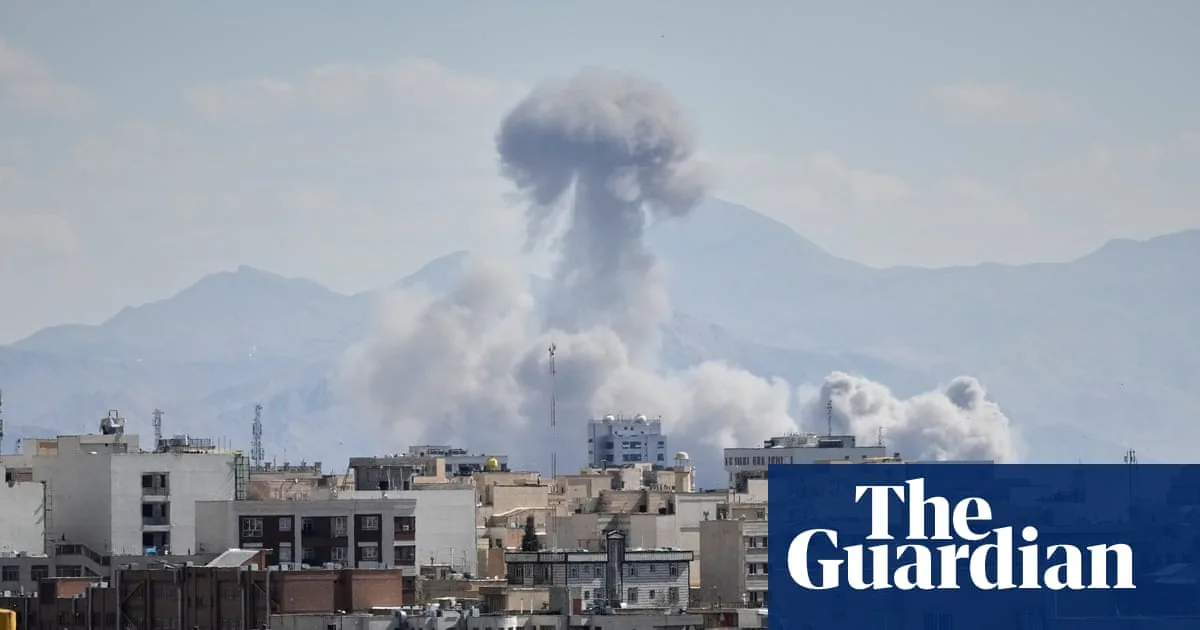
Explosions echoed through Iran's capital on Wednesday as the military confrontation between Israel, the United States, and Iran entered its fifth consecutive day. Israel conducted targeted strikes against Iranian security forces and leadership positions, while the Islamic Republic responded with extensive missile barrages and coordinated drone attacks across Israel and the wider Persian Gulf region.
Tehran Blasts and Regional Escalation
According to Iranian state television, the blasts in Tehran occurred at dawn. Simultaneously, Israel's military confirmed that its air defense systems had been activated to intercept incoming Iranian missiles targeting Israeli territory, with explosions reported around Jerusalem. The conflict has rapidly expanded beyond direct engagements between the two primary adversaries.
Air raid sirens sounded across Bahrain, home to the U.S. Navy's 5th Fleet, while Qatar's Ministry of Defense reported that Iran launched two ballistic missiles toward the country, with one striking Al-Udeid Qatari Base without causing casualties. Lebanon experienced multiple strikes, where Israel stated it was retaliating against Hezbollah militants after the Iran-backed group fired on Israeli positions. Lebanese state media reported at least five fatalities from an Israeli strike on a residential complex in Baalbeck, with the Health Ministry indicating over 50 deaths and 300 injuries nationwide.
Economic Impact and Diplomatic Fallout
The conflict has triggered significant economic repercussions, particularly through Iran's strategic control over tanker movements through the Strait of Hormuz. This narrow passage, through which approximately one-fifth of global oil shipments travel, has become a focal point of tension. Consequently, Brent crude prices surged to over $82 per barrel, marking a more than 13% increase since the conflict's inception and reaching the highest price point since July 2024.
Global stock markets have faced substantial pressure amid concerns that soaring oil prices could severely impact the world economy and diminish corporate profits. The diplomatic sphere has also been affected, with the American Embassy in Saudi Arabia and the U.S. Consulate in the United Arab Emirates coming under drone attacks on Tuesday. In response, the U.S. State Department authorized the evacuation of non-emergency government personnel from Saudi Arabia on Wednesday.
Military Assessments and Casualty Figures
U.S. Navy Admiral Brad Cooper, head of U.S. Central Command, provided a detailed assessment of the conflict's scale. He revealed that Iran has launched more than 500 ballistic missiles and 2,000 drones to date. Cooper described the initial American strikes as "nearly double the scale" of the opening attacks during the 2003 U.S.-led invasion of Iraq.
"We've already struck nearly 2,000 targets, with more than 2,000 munitions. We have severely degraded Iran's air defenses and destroyed hundreds of Iran's ballistic missiles, launchers and drones," Cooper stated in a prerecorded message shared online. "In simple terms, we are focused on shooting all the things that can shoot at us."
The human cost continues to mount. According to the Red Crescent Society, U.S.-Israeli strikes have killed at least 787 people in Iran. This includes individuals whom U.S. President Donald Trump suggested he had considered as potential future leaders of the country. Additional casualties include an 11-year-old girl killed by falling shrapnel in Kuwait, three fatalities in the United Arab Emirates, one in Bahrain, and six U.S. Army Reserve soldiers killed by a drone strike in Kuwait on Sunday.
Leadership Targeting and Political Objectives
Israel's military operations have specifically focused on Iranian leadership structures. On Wednesday, Israel conducted strikes across Tehran targeting Iranian security forces, following Tuesday's attack on a building in Qom associated with the clerical panel responsible for selecting Iran's next supreme leader.
Israeli Defense Minister Israel Katz emphasized this strategy in a social media post, stating: "Every leader appointed by the Iranian terror regime to continue and lead the plan to destroy Israel, to threaten the United States and the free world and the countries of the region, and to suppress the Iranian people — will be a target for elimination."
The Israeli military also targeted buildings in Tehran linked to the Basij, the volunteer force of Iran's paramilitary Revolutionary Guard that conducted violent crackdowns on protesters earlier this year. Israeli military spokesman Brigadier General Effie Defrin confirmed that Tuesday's strike in Qom targeted a building where clerics were expected to meet to discuss selecting a new supreme leader, though damage assessments remain ongoing.
Regional Militant Activity and Strategic Questions
Beyond state actors, Iranian-linked militant groups have intensified their activities. In Iraq, Saraya Awliya al-Dam claimed responsibility for a drone attack on Jordan on Wednesday, where air raid sirens sounded nationwide. This Shiite militia, one of several operating in Iraq, also claimed responsibility for recent attacks on American targets in Baghdad and Irbil.
While Iran has launched regular salvos of missiles and drones at Israel, most have been intercepted, with eleven fatalities reported in Israel since the conflict began. The expanding nature of the warfare raises profound questions about potential conclusions and long-term objectives.
The Trump administration has outlined multiple goals, including destroying Iran's missile capabilities, neutralizing its naval forces, preventing nuclear weapon acquisition, and curtailing support for allied armed groups. Although initial strikes resulted in the death of Iranian Supreme Leader Ayatollah Ali Khamenei, senior administration officials have since clarified that regime change is not the primary objective.
President Trump appeared to temper expectations about ending Iran's theocratic rule on Tuesday, suggesting that "someone from within" the Iranian regime might be the optimal choice to assume power once the U.S.-Israel campaign concludes. As Iran's leaders scramble to replace Khamenei after his 37-year rule—only the second such transition since the 1979 Islamic Revolution—potential candidates range from hard-liners committed to confrontation with the West to reformists advocating diplomatic engagement.