Israel Joins Trump's Controversial Board of Peace Initiative
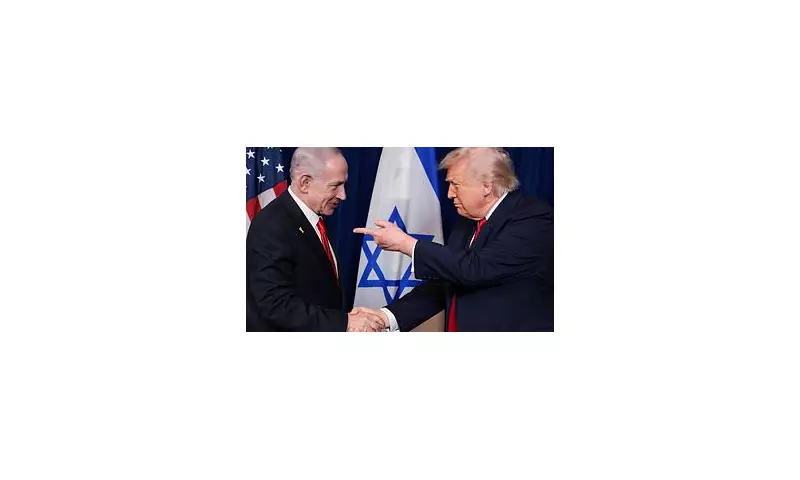
Israel has officially become the latest country to join former US President Donald Trump's newly established Board of Peace, an international organisation designed to address and resolve global conflicts. The decision comes after initial hesitation from Israeli officials regarding the composition of the board's executive committee.
Initial Reservations Over Executive Committee
A statement released by Israeli Prime Minister Benjamin Netanyahu's office confirmed the nation's participation, following earlier criticism of the board's executive committee makeup. The inclusion of Turkey, a regional rival to Israel, had raised particular concerns within Netanyahu's administration before the final decision to join was made.
Broad Mandate Beyond Original Gaza Focus
The Board of Peace was originally conceived with a specific focus on overseeing the reconstruction of Gaza following recent conflicts. However, the organisation's founding charter reveals a much broader mandate that extends well beyond Palestinian territories. According to the preamble distributed to invited nations, the board aims to 'promote stability, restore dependable and lawful governance, and secure enduring peace in areas affected or threatened by conflict'.

The charter further specifies that the organisation will 'undertake such peace-building functions in accordance with international law', suggesting a comprehensive approach to conflict resolution across multiple global hotspots.
Trump's Central Role and Authority
According to the founding documents, Donald Trump will serve as chairman of the Board of Peace while simultaneously representing the United States as a separate member. The charter grants the chairman extensive powers, including exclusive authority to create, modify, or dissolve subsidiary entities as necessary to fulfil the organisation's mission.
The chairman will also appoint members of the executive board, described as 'leaders of global stature', who will serve two-year terms subject to removal by the chairman. Remarkably, the charter states that the chairman can only be replaced through 'voluntary resignation or as a result of incapacity'.
A US official confirmed that Trump could maintain the chairmanship even after leaving the White House, 'until he resigns it', though future US presidents could appoint different American representatives to the board.
Executive Board Composition
The executive board, chaired by Trump, includes an international roster of prominent figures:
- US Secretary of State Marco Rubio
- US Middle East envoy Steve Witkoff
- Trump's son-in-law Jared Kushner
- Former UK Prime Minister Tony Blair
- Billionaire investor Marc Rowan
- World Bank President Ajay Banga
- Trump aide Robert Gabriel
- Former Bulgarian Foreign Minister Nickolay Mladenov
Membership Requirements and Financial Considerations
Nations must receive a personal invitation from the US president to join the Board of Peace, with representation provided by their head of state or government. Standard membership terms last no more than three years, but the charter includes a significant financial provision.
Countries contributing over $1 billion in cash funds within the first year of the charter's implementation are exempt from the three-year term limit. However, a US official clarified that membership itself 'does not carry any mandatory funding obligation beyond whatever a state or partner chooses to contribute voluntarily'.
Global Responses and Controversies
The board has generated mixed reactions internationally, with dozens of countries receiving invitations including both close US allies and traditional adversaries. Notably, invitations have been extended to:
- China
- Russian President Vladimir Putin
- Ukrainian President Volodymyr Zelensky
The inclusion of both Putin and Zelensky despite Russia's ongoing invasion of Ukraine has proven particularly controversial. Zelensky acknowledged it would be 'very hard' to serve alongside Russian representatives, with Ukrainian diplomats reportedly 'working on it'.

International Positions and Reactions
Several nations have confirmed their participation, including:
- Hungary under Prime Minister Viktor Orbán
- The United Arab Emirates
- Argentina under President Javier Milei
- Canada (though explicitly ruling out the $1 billion permanent membership fee)
Meanwhile, significant US ally France has indicated it will not join, prompting an immediate threat from Trump to impose substantial tariffs on French wine exports. The United Kingdom expressed concern about Putin's invitation, with a Downing Street spokesperson stating: 'Putin is the aggressor in an illegal war against Ukraine, and he has shown time and time again he is not serious about peace'.
Operational Structure and Implementation
The Board of Peace will convene annual meetings where decisions will be made by majority vote, with the chairman breaking any ties. The charter enters into force 'upon expression of consent to be bound by three States', suggesting the initiative could become operational relatively quickly as more nations confirm their participation.
This development represents a significant new dimension in international conflict resolution efforts, though the board's structure, membership criteria, and leadership arrangements have already generated substantial debate among global powers about its potential effectiveness and impartiality.