Israel Eliminates Iran's De Facto Leader in Precision Strike Operation
In a dramatic escalation of the Middle East conflict, Israeli forces have assassinated Ali Larijani, Iran's feared national security chief and the country's de facto leader, through a precision airstrike conducted near Tehran. This operation follows the earlier killing of Supreme Leader Ali Khamenei by US and Israeli strikes on the first day of the war.
The Chilling Message and Swift Retaliation
Hours after Ayatollah Khamenei was declared dead, Larijani posted a chilling message on social media, swearing revenge against Israel and the United States. 'Today we will hit them with a force that they have never experienced before,' the top Iranian official declared in his final public threat.
On Tuesday, Israel confirmed its military had successfully assassinated Larijani in what it described as a secretive and highly precise operation. The mission effectively eliminated what Israeli officials called a pivotal figure at the heart of the Iranian dictatorship, who insiders claim was actively preparing to consolidate power amid the escalating Middle East crisis.

Intelligence and Execution
According to detailed reports from Israeli media, the operation to kill Larijani was initially scheduled for Sunday night but was postponed at the last minute due to operational considerations. It wasn't until Monday afternoon that authorities received vital intelligence indicating Larijani would travel to one of his hideout apartments near Tehran alongside his son, rather than remaining at his normal residence.
On Prime Minister Benjamin Netanyahu's direct command, precise strikes were launched against the location, with one Israeli security source confidently telling Channel 12 in the aftermath: 'There is no way he survived this attack.'
Official Confirmation and Iranian Response
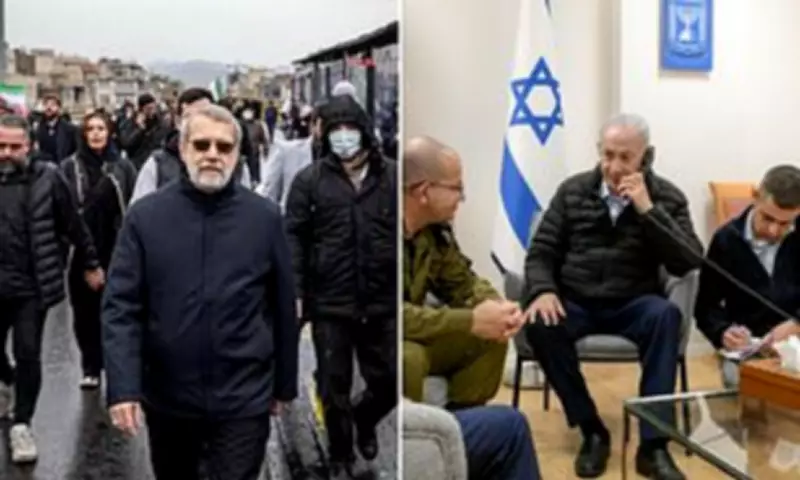
Following the announcement of Larijani's death, the Israeli Prime Minister's X account published a photograph of Netanyahu on the phone, captioned as 'ordering the elimination of senior Iranian regime officials.' The Israel Defense Forces released an official statement confirming the operation.
'The IDF announces that overnight, March 17, 2026, the Israeli Air Force, acting on IDF intelligence, and through the integration of unique operational capabilities, conducted a precise strike that eliminated Ali Larijani, the Secretary of Iranian Supreme National Security Council, who operated as the de facto leader of the Iranian terror regime,' the statement read.
Iranian state media initially generated anticipation by suggesting the claims were false and promised to publish a statement by Larijani. However, all that emerged was a handwritten note commemorating Iranian 'martyrs' that was most likely penned before his assassination.
Additional High-Profile Eliminations
In a separate but coordinated operation, Israel's defense minister Israel Katz confirmed that another strike killed Gholamreza Soleimani, commander of the Basij paramilitary force. 'Larijani and the Basij commander were eliminated overnight and joined the head of the annihilation programme, Khamenei, and all the eliminated members of the axis of evil, in the depths of hell,' Katz declared on Tuesday.
The IDF also confirmed it had assassinated Soleimani, who ordered the slaughter of thousands of anti-government protesters in January. He and his deputy, Seyyed Karishi, were killed in a makeshift tent area specifically designed to make tracking more difficult than targeting known headquarters.
Larijani's Central Role and Defiant Final Days
Larijani's death represents a devastating blow to Iran's leadership structure, as he served as a figure central to both its war machine and lethal internal suppression. The 67-year-old moved swiftly between the religious establishment and matters of foreign diplomacy, maintaining influence across multiple spheres of Iranian power.
Only last week, he appeared defiantly on Iranian state television, warning former US President Donald Trump to 'take care not to be eliminated' before taunting him for what he called a 'grave miscalculation.' During the Quds Day march in Tehran, the military overlord dismissed Israeli-US attacks on the capital as being 'out of desperation.'

'These attacks are out of fear, out of desperation. One who is strong wouldn't bomb demonstrations at all. It's clear that it has failed,' Larijani declared during his final public appearance.
Power Vacuum and Leadership Uncertainty
While Larijani filmed himself walking defiantly among crowds of people on Friday, Iran's new Supreme Leader, Ayatollah Mojtaba Khamenei, has yet to make a public appearance since his appointment. Rumours are swirling that the hardline cleric was flown to Moscow for treatment of serious injuries following an airstrike, with some speculation suggesting he may even be dead.
Although his father served as the country's constitutional commander-in-chief and religious authority, it is widely agreed that true power lay at the hands of Larijani. A former parliamentary speaker and commander in the Islamic Revolutionary Guard Corps, he was responsible for the mass slaughter of civilian protesters earlier this year, with some reports indicating 30,000 citizens were killed in the bloodshed.
Background and Political Trajectory
Born in Najaf, Iraq in 1957 to a prominent Shia cleric close to the Islamic Republic's founder Ayatollah Ruhollah Khomeini, Larijani's family has been influential within Iran's political system for decades. A veteran of the IRGC during the Iran-Iraq war, he later headed state broadcasting IRIB for a decade from 1994 before serving as parliamentary speaker from 2008 to 2020.
In 1996, he was appointed as Khamenei's representative to the Supreme National Security Council. Larijani ran in the 2005 presidential elections, losing to populist candidate Mahmoud Ahmadinejad, with whom he later had disagreements over nuclear diplomacy. He was subsequently disqualified from running for president in both 2021 and 2024.
As Ali Vaez, the International Crisis Group's project director for Iran, noted before the Middle East war began: 'Larijani is a true insider, a canny operator, familiar with how the system operates.'
Strategic Implications
The twin deaths of Larijani and Soleimani provide evidence of the deep grip Israel maintains on the machinations of the Islamic regime's top brass, with intelligence penetrating their every movement as the United States dominates from the skies above. It remains unclear who, if anyone, possesses the ability to replace Larijani's multifaceted role within the Iranian power structure.
While he would never have succeeded Khamenei as supreme leader—a role reserved for clerics—Larijani was actively hoping to consolidate power following the ayatollah's death. He had been given responsibility for negotiations with the West in the weeks before the war started and on March 1 announced he would be heading an interim committee for running the country.