Israel Confirms Airstrike on Key Lebanese Bridge in Hezbollah Conflict
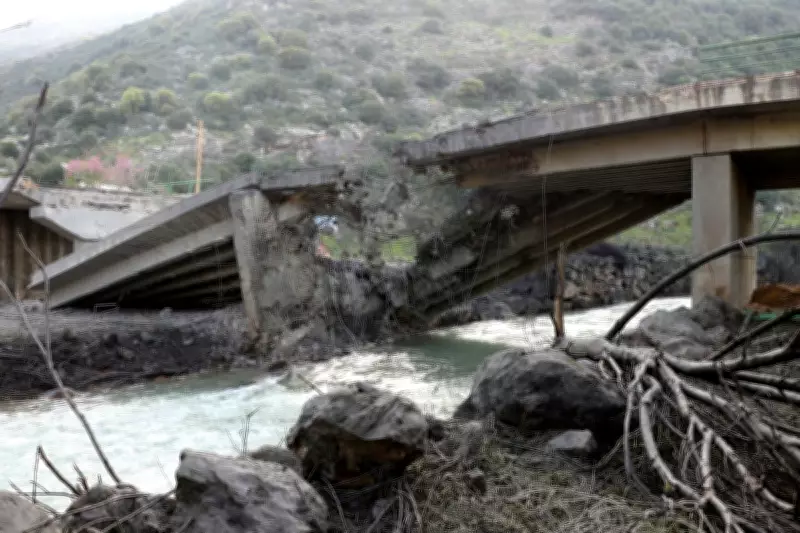
The Israeli military has publicly acknowledged carrying out an airstrike on a vital bridge in southern Lebanon, representing what appears to be the first admission of targeting civilian infrastructure in the ongoing conflict with Hezbollah. Military officials stated that the Tayr Filsay bridge, which spans the Litani River, was being actively used by Hezbollah militants to facilitate movement between northern and southern Lebanon. They further claimed that rocket launchers were positioned in the vicinity for attacks against Israel, necessitating the strike to prevent threats to Israeli civilians.
Legal and Evidentiary Questions Surround the Attack
While international law generally prohibits attacks on civilian structures, exceptions exist if such infrastructure is repurposed for military operations. The Israeli military did not provide concrete evidence to substantiate its claims about the bridge's military use, nor did it disclose whether legal guidance was sought prior to the operation. Additionally, no information was released regarding potential casualties resulting from the strike, leaving questions unanswered about the human cost of this escalation.
Expansion of Israeli Targeting into Beirut's Suburbs
This development follows an earlier incident reported by Lebanese state media, where a drone struck a residential apartment in Beirut's Burj Hammoud district, located on the northern outskirts of the capital. This attack marked the first time in the conflict that Beirut's predominantly Christian northern suburbs have been hit, suggesting a potential broadening of Israeli targeting beyond traditional conflict zones. The strike on civilian areas indicates a worrying trend of expanding hostilities.

Background and Escalation of the Conflict
Israel has been conducting daily strikes on Lebanon since 2 March, when Hezbollah launched rockets at Israel in retaliation for the killing of Iran's supreme leader in Tehran on the first day of the US-Israeli war with Iran. The conflict has resulted in nearly 700 fatalities in Lebanon and the displacement of hundreds of thousands of people. Israeli military statements have emphasized targeting Hezbollah militants and Iranian forces, but the impact on civilian infrastructure and populations continues to grow.
International Diplomatic Responses and Military Preparations
In response to the escalating violence, Australia's Foreign Minister Penny Wong announced on Friday that non-essential diplomats in Lebanon had been directed to leave, following similar directives for diplomats in Israel and the United Arab Emirates issued a day earlier. Meanwhile, Israeli Prime Minister Benjamin Netanyahu vowed in a late-night press conference on Thursday to continue hitting Lebanon, with Defence Minister Israel Katz stating earlier that day that the military was preparing to expand its operations in the country.
Ground Operations and Recent Hostilities
Over the past week, the Israeli military has deployed additional ground forces into Lebanon, conducting raids on villages near the border with Israel. These maneuvers are described as defensive actions aimed at protecting civilians in Israel's north from attacks. The conflict intensified on Wednesday night when Hezbollah launched approximately 200 rockets at northern Israeli communities, prompting Israeli strikes that have pounded the suburbs of Beirut and southern Lebanon, further destabilizing the region.