Israel Accuses Iran of Deploying Internationally Banned Cluster Munitions
Israeli authorities have formally accused Iran of utilizing cluster munitions throughout their recent ten-day conflict, introducing a particularly lethal and complex dimension to the hostilities. These accusations highlight a significant escalation in weaponry that poses severe challenges to Israel's already strained air defense systems.
The Mechanics and Dangers of Cluster Weapons
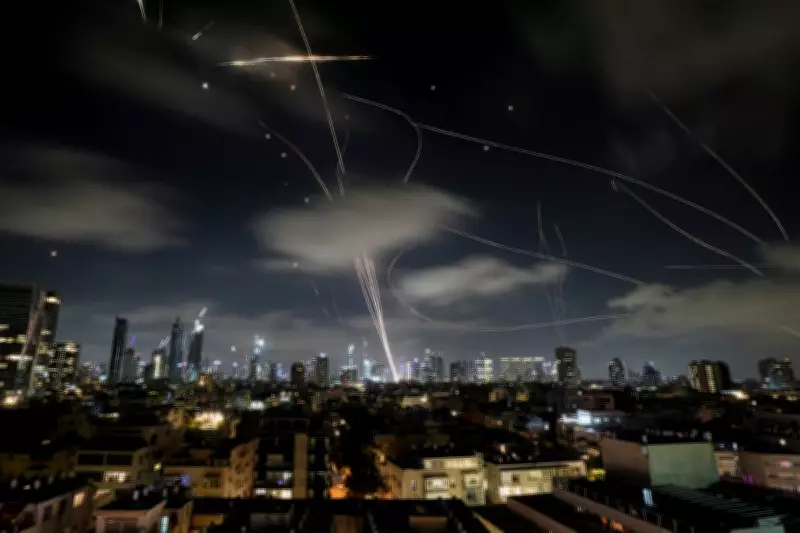
Cluster munitions operate by detonating at high altitudes, scattering dozens of smaller bomblets across a wide area. These submunitions, which can resemble orange fireballs at night, are notoriously difficult for defense systems to intercept and have proven deadly in practice. The weapon trades precision for extensive coverage, with bomblets dispersing over areas ranging from several hundred meters to several kilometers.
Yehoshua Kalisky, a senior researcher at Israel's Institute for National Security Studies, starkly noted, "Cluster bombs don't create real damage to buildings, only people." The bomblets, often weighing less than 3 kilograms (7 pounds), are most dangerous to soft targets like vehicles, storefronts, or individuals caught outside shelters.
International Ban and Historical Context
Over 120 nations have signed the Convention on Cluster Munitions, an international treaty that prohibits these weapons. However, Israel, the United States, and Iran are among the notable countries not party to this agreement. Israel itself employed cluster munitions in 2006 during its conflict with the Iran-allied Lebanese militant group Hezbollah.
The historical use of cluster munitions is extensive. They were first deployed by Nazi Germany, which dropped "butterfly bombs" on the United Kingdom during World War II. The United States has used various types in conflicts in Vietnam, Laos, Iraq, and Afghanistan, and has provided them to Ukraine. Russia has also faced accusations of using cluster bombs during its 2022 invasion of Ukraine, allegations which Moscow has denied.
Specific Threats to Israel's Defense and Civilians
Lt. Col. Nadav Shoshani, an Israeli military spokesman, stated that Iran has been using cluster munitions on a "nearly daily basis" during the current conflict, similar to their use in the 12-day war in June. The Iranian warheads are reported to contain between 20 and 24 bomblets with explosives weighing up to 5 kilograms (11 pounds).
Israel's defense systems face particular difficulties. The Arrow missile-defense system has been effective against ballistic missiles, but if cluster munitions are released before the missile is destroyed, interception becomes nearly impossible. The Iron Dome system, designed for smaller rockets at lower altitudes, is not equipped to handle the dispersed bomblets once they have scattered.
The threat extends beyond immediate explosions. Unexploded bomblets can act like landmines, detonating later and posing a persistent danger. The Open Source Munitions Portal has published images of unexploded submunitions found in Israel recently. In response, Israel's Home Front Command has distributed flyers warning residents not to touch any suspicious objects and to immediately contact authorities.
Analysis of Iranian Capabilities and Intent
N.R. Jenzen-Jones, director of Armament Research Services, analyzed that open-source information on Iran's cluster munitions is limited, primarily consisting of state media reports and military exercise videos. However, videos from the conflict indicate that some Iranian missiles carrying these warheads are designed to open at high altitude, scattering submunitions over an area far larger than typical military targets.
"The design seems to scatter submunitions so widely as to suggest it was designed purely as a weapon of terror, scattering its explosive cargo indiscriminately over a wide area," Jenzen-Jones concluded. Protective coatings on the submunitions that withstand atmospheric reentry heat further indicate a design for less precise, more widespread impact.
Legal and Humanitarian Implications
While cluster munitions are not universally illegal, their use in civilian areas is barred by the Geneva Conventions and prohibited under the international convention signed by over 120 countries. Amnesty International, following the June 2025 conflict, stated that Iran's "deliberate use of such inherently indiscriminate weapons is a blatant violation of international humanitarian law."
The Convention on Cluster Munitions emphasizes that these weapons "pose a particular threat to the civilian population both during and after use, with victims often including a high proportion of children." The failure rate of submunitions is higher than other warheads, leaving behind hazardous unexploded ordnance. During the 2006 Lebanon war, the UN estimated that 30% to 40% of Israeli cluster bombs failed to explode, littering southern Lebanon with hundreds of thousands of dangerous bomblets.
An Israeli military official, speaking anonymously under briefing rules, confirmed that Israel is not currently using cluster bombs. This stance contrasts with the ongoing allegations against Iran, underscoring the contentious nature of these weapons in modern warfare and their devastating impact on civilian populations.