
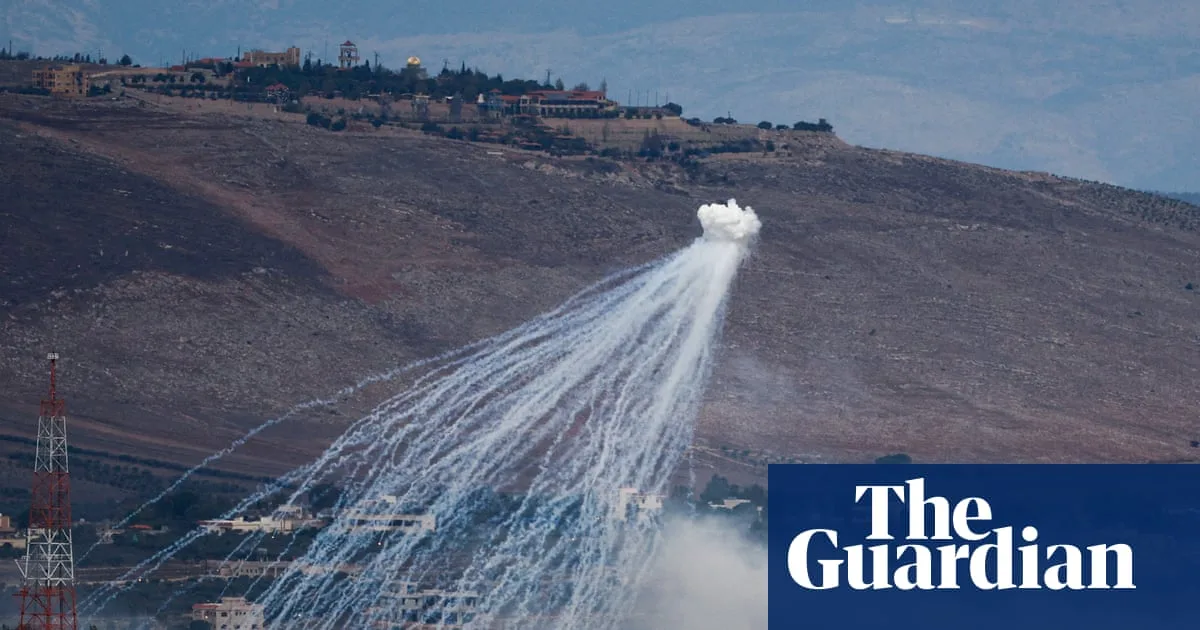
Human Rights Watch (HRW) has accused Israel of using white phosphorus munitions over residential areas in southern Lebanon, potentially violating international law. The rights group said it verified and geolocated eight images showing airburst white phosphorus shells exploding over the town of Yohmor in the early days of the Gaza war.
White phosphorus ignites on contact with oxygen, burning at up to 800°C and producing thick smoke. While militaries use it legitimately for smokescreens or marking targets, its use in civilian areas is controversial due to the risk of severe burns, fires, and toxic fumes.
Ahmad Beydoun, a researcher at Delft University, documented nearly 250 uses of white phosphorus by Israeli forces in southern Lebanon between October 2023 and November 2024. He found that 39% of strikes hit residential areas, 17% agricultural land, and 44% forests or open terrain, calling it a conservative estimate.
According to the Lebanese non-profit Public Works Studio, white phosphorus burned over 2,000 hectares of countryside, including 873 hectares of dense forest. The substance can remain in soil, spontaneously combusting when disturbed, and may contaminate land with phosphoric acid and heavy metals, reducing fertility.
An Israel Defense Forces spokesperson declined to comment on HRW's specific allegations, noting that smoke shells with and without white phosphorus can look similar. Israel's UN ambassador, Danny Danon, said Israel seeks to minimise civilian casualties and had asked residents to evacuate southern Lebanon.
Beydoun suggested Israel may be using white phosphorus to create a buffer zone by scorching the earth and pushing people out. He described it as a practical tool for burning fields, adding that the tactic appears aimed at clearing vegetation and depopulating border areas.




