Iranian IRGC Naval Commander Killed in Israeli Strike on Bandar Abbas
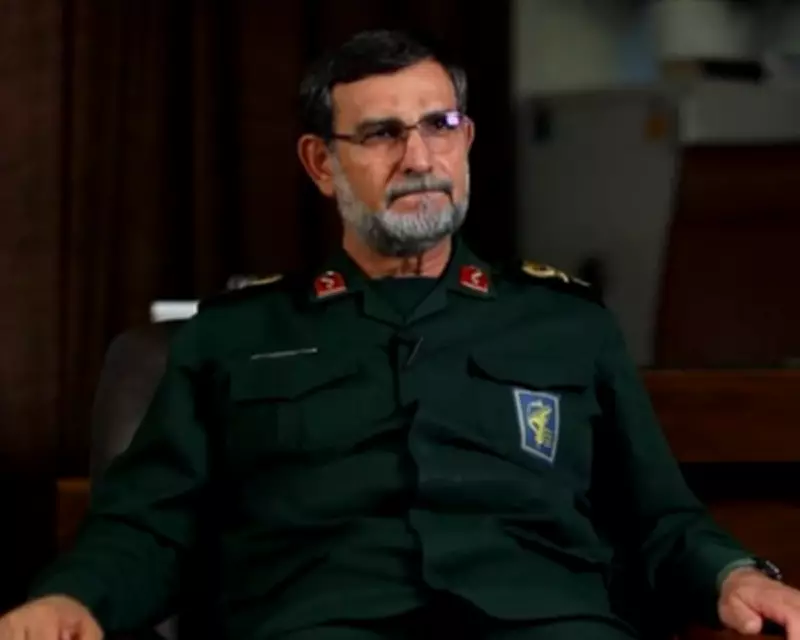
Alireza Tangsiri, the naval commander of the Islamic Revolutionary Guard Corps (IRGC), was killed in an Israeli airstrike on the port city of Bandar Abbas on Thursday. The strike also resulted in the death of Behnam Rezaei, head of the IRGC Navy intelligence directorate, marking a significant blow to Iran's military leadership in the region.
Hardline Veteran with Strategic Influence
Tangsiri was a veteran hardliner who rose through the ranks after serving in the Iran-Iraq war from 1980 to 1988. Appointed as commander of the IRGC's maritime force in 2018, he was instrumental in developing Iran's naval capabilities, particularly focusing on the strategic importance of the Strait of Hormuz. This critical waterway carries approximately one-fifth of the world's oil and gas, making it a focal point for regional tensions.
During naval exercises in the Gulf in January, Tangsiri delivered fiery rhetoric, stating that the 1979 Iranian Revolution represented "a turning point in the history of the Iranian nation and a new dawn for the awakening of the oppressed nations of the world." His tenure was marked by a deep understanding of how to leverage Iran's position in the Persian Gulf to project power.

Unconventional Weapons and Blockade Tactics
Under Tangsiri's leadership, the IRGC Navy advanced its arsenal of unconventional weapons. According to the US Treasury, which sanctioned him in 2019 and again in 2023, Tangsiri oversaw the testing of cruise missiles and sat on the board of a company that developed armed drones. These weapons are now being used to enforce a blockade in the Strait of Hormuz, disrupting global shipping routes.
He also strongly supported the use of fast boats—light, manoeuvrable craft designed to threaten civilian shipping while evading the defence systems of modern warships. This strategy has been central to Iran's ability to maintain pressure in the Gulf region.
Provocative Statements and Regional Tensions
In the days leading up to his death, Tangsiri made provocative statements that heightened tensions. Last week, he dared the United States to launch a ground assault on Kharg Island, Iran's principal hub for oil exports, highlighting the potential impact on global oil prices. On Monday, he posted on social media that Iran had "prepared the graves of child-killing aggressors," reflecting his hardline stance.
International Reactions to the Strike
The Israeli strike has drawn mixed reactions from international officials. Admiral Brad Cooper, commander of US Central Command, stated that Tangsiri's killing "makes the region safer." Meanwhile, Israel Katz, Israel's defence minister, described Tangsiri as responsible for attacks blocking ships in the Strait of Hormuz and framed the strike as a "message" to the IRGC, vowing that Israel "will hunt you down and eliminate you one by one."
This incident underscores the ongoing volatility in the Middle East, with Iran's military strategies and Israel's targeted operations continuing to shape the geopolitical landscape. The loss of Tangsiri may impact Iran's naval operations, but it also risks escalating hostilities in an already tense region.