CIA Cold War Mind Control: Declassified Files Reveal 'Manchurian Candidate' Assassin Plans
During the Cold War, rumours swirled that the CIA was experimenting with mind-control methods to transform ordinary citizens into cold-blooded assassins. Now, a psychiatrist who has meticulously reviewed more than 1,500 declassified government records asserts that these chilling whispers were not mere fiction, but part of a coordinated effort to fracture human minds and manipulate behaviour.
Uncovering a Covert Psychological Warfare Campaign
Speaking on the Alchemy American podcast, Dr Colin Ross detailed Cold War-era intelligence programs that tested whether individuals could be psychologically split into hidden personalities capable of executing secret missions, including murder. 'You have documented projects called MK-Ultra and other variations of mind control that focused on creating splits and multiple personalities, couriers, spies and Manchurian candidates capable of assassinating world leaders,' said Ross, a specialist in trauma-related disorders with decades of research into dissociation and memory.
'They used whoever they could get their hands on, hypnotizing them, using brain electrode implants and electric shock, all in an effort to create the super spy.' The concept, known as the 'Manchurian candidate,' refers to an individual trained to carry out violent acts without conscious awareness, activated by specific commands or triggers.

Historical Documentation and Disputed Connections
Ross explained that the ultimate goal was to create operatives who could perform acts of violence or espionage and later have no memory of their actions, a tactic long feared during the Cold War. He cited Lee Harvey Oswald and Charles Manson as notorious examples of figures he believes may have intersected with intelligence-linked mind-control networks.
Many of the programs Ross discussed, including MK-Ultra, are historically documented, having been exposed during congressional investigations in the 1970s. However, several of the connections he raises involving high-profile figures remain hotly disputed among historians and intelligence researchers.
Evidence from Declassified Records and Congressional Hearings
Ross stated that his conclusions are based on thousands of pages of declassified CIA and military documents obtained through Freedom of Information Act requests and archival research during the 1990s. Additional revelations emerged from congressional hearings in the mid-1970s, when officials disclosed the scale of chemical testing conducted on human subjects as part of behavioural research programs.
According to testimony cited by Ross, the US Army admitted to testing roughly 120 different drugs in mind-control experiments and exposing at least 1,500 people to LSD, with some accounts suggesting the total may have reached 4,000. These admissions came during investigations by the Senate's Church Committee, which uncovered widespread abuses within US intelligence agencies and forced public acknowledgment of previously secret experiments.
The Evolution of CIA Mind-Control Programs
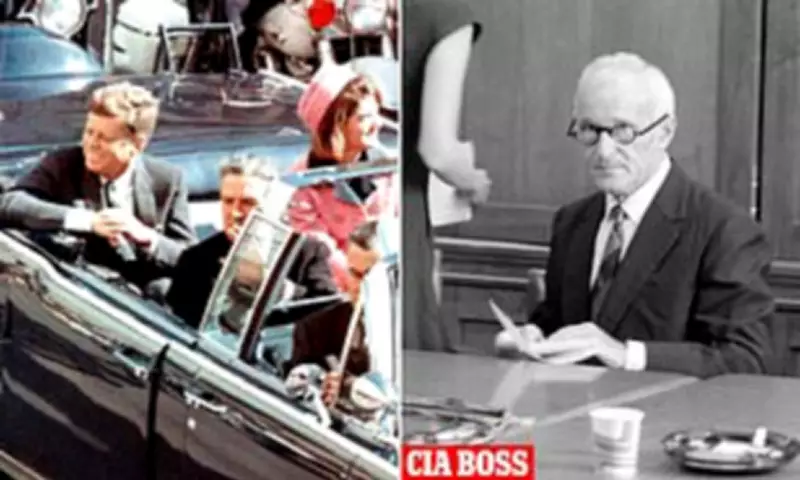
Ross noted that the CIA efforts spanned multiple classified programs beginning in the early 1950s, at the height of Cold War fears that rival nations were developing psychological warfare techniques capable of controlling human behaviour. MK-Ultra, led by chemist Sidney Gottlieb, was a top-secret CIA program from 1953 to 1973 designed to develop methods for behavioural modification, mind control, and interrogation, largely using unsuspecting subjects.
It involved unethical experimentation, including administering drugs like LSD, sensory deprivation, and hypnosis. Some subjects were reportedly unaware they were being tested on, raising ethical concerns that later triggered lawsuits and congressional outrage. The program was exposed in 1975, prompting investigations into CIA abuses of power.
Before MK-Ultra, however, the CIA was running Bluebird, which would later be renamed Project Artichoke, setting the stage for its mind-control mission. The earliest documentation of Bluebird dates to April 1950. Early activities included testing on human subjects, such as a team traveling to Japan in July 1950 to test methods on suspected double agents.

Clear Evidence of Assassin Creation Plans
A declassified document from 1954 detailed turning a foreign official into an assassin without their knowledge. While the memo noted the target as a high-ranking politician in an unknown country, it also added that this technique could be used against American officials 'if necessary.' Ross asserted that this document is among the clearest written examples suggesting intelligence agencies seriously explored the possibility of creating unwitting assassins.
He told podcast host Jesse Michels that the CIA employed hypnotism, electric shock, drugs, sensory deprivation, and isolation during experiments. 'Basically, they threw everything at the wall to see what would stick,' he said.
Controversial Links to Historical Figures
Ross highlighted that some of the most controversial material he reviewed involved figures tied to major moments in American history, particularly the assassination of President John F. Kennedy. According to Ross, Lee Harvey Oswald's background contains several details that raise unanswered questions about whether the accused gunman had contact with intelligence-linked figures before the shooting.
Among those concerns was Oswald's defection to the Soviet Union during the Cold War, a move that typically resulted in harsh consequences for American citizens. Instead, Ross noted, Oswald was later allowed to return to the US. That unusual sequence of events has fueled decades of speculation. 'So Marine guy defects to Russia and then we just let him back in, nothing to see here,' Ross said, describing what he views as one of the most puzzling elements of Oswald's history.
Ross also pointed to claims that Oswald may have been impersonated overseas before Kennedy's assassination, something his mother reportedly warned officials about. If true, he suggested, that detail could indicate intelligence-level involvement or surveillance surrounding Oswald long before November 22, 1963. Oswald, however, consistently denied shooting anyone and claimed he was innocent, famously stating, 'I didn't kill anybody' and 'I'm just a patsy.'
The Enigmatic Case of Charles Manson
The psychiatrist also explored the case of Charles Manson, the cult leader responsible for the brutal Tate-LaBianca murders in 1969, suggesting his rapid transformation from petty criminal to manipulative cult figure remains difficult to explain. Ross said Manson frequently visited the Haight-Ashbury Free Medical Clinic in San Francisco during the late 1960s, a facility that treated large numbers of young people experimenting with drugs.
What makes that location significant, Ross noted, is that psychiatrist Dr Louis Jolyon West, a figure linked to CIA-funded research, worked at the clinic during that period. West later became one of the most controversial psychiatrists connected to government-funded behavioural research, and his work has been repeatedly cited in discussions surrounding MK-Ultra-era experimentation.
Ross described Manson's sudden rise to influence as striking. 'You have this transformation of this guy from this petty criminal to this cult leader, it's just this day and night sort of thing,' Ross said. While he stopped short of claiming direct involvement, Ross suggested the overlap between Manson and intelligence-linked figures remains an area of ongoing speculation among researchers.
The Legacy of Secrecy and Destruction
Ross believes the destruction of many MK-Ultra records in the 1970s ensured that the full extent of the program may never be known, leaving historians and investigators with only fragments of what he described as one of the most secretive operations in US intelligence history. This deliberate erasure of evidence continues to obscure the true scope of Cold War psychological experiments and their potential impacts on individuals and historical events.