Irish Deputy Premier Slams Trump's 'Board of Peace' as Red Flags Mount
Ireland Rejects Trump's 'Board of Peace' Over Putin Involvement

Irish Government Issues Strong Rejection of Trump's Peace Initiative

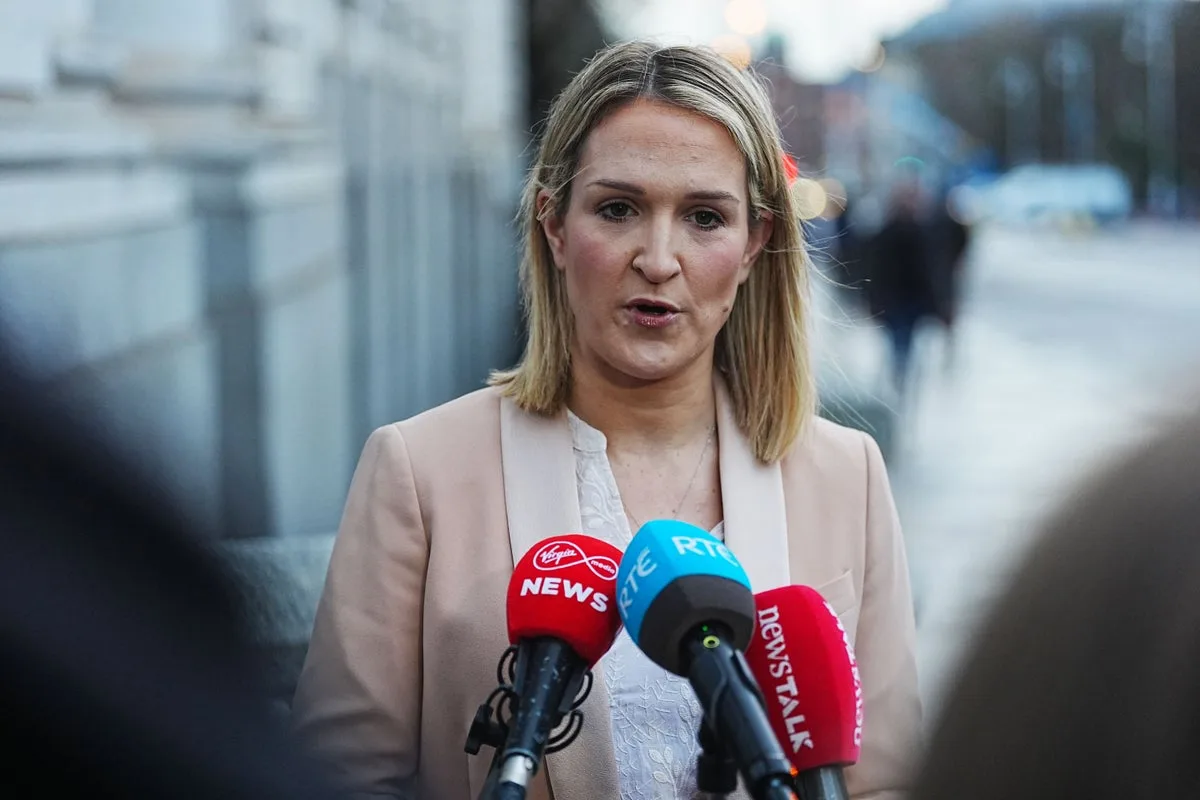
Ireland's deputy premier has delivered a scathing assessment of US President Donald Trump's newly established 'board of peace', declaring there are "very serious red flags" with the controversial initiative. Tánaiste and Finance Minister Simon Harris made the forceful statement during a parliamentary session on Thursday, confirming Ireland will not participate in the group as currently constructed.

Putin Involvement Raises Immediate Concerns

Mr Harris expressed particular alarm about Russian President Vladimir Putin's potential involvement in the peace initiative. "Anything Putin is considering joining with the word 'peace' in it does not sit well," the Irish minister told the Dáil during Leaders' Questions. This sentiment reflects broader European unease about Russia's participation in international peace efforts following its invasion of Ukraine.

Original Gaza Focus Has Been Lost

The Tánaiste highlighted how the initiative has dramatically shifted from its original purpose. "The original plan was to create a board to oversee a peace plan for Gaza, which was endorsed by the United Nations in November," Mr Harris explained. At that time, Ireland and other European nations were prepared to contribute constructively, offering expertise in conflict resolution and decommissioning processes.

Wide Pickt banner — collaborative shopping lists app for Telegram, phone mockup with grocery list

However, the minister made clear that the current proposal bears little resemblance to those earlier discussions. "What we are seeing today at this signing ceremony could not be further removed from that original conversation," he stated emphatically.

European Leaders Largely Absent From Davos Signing

The signing ceremony in Davos revealed significant international skepticism about the initiative. Mr Harris noted that no European leader attended except Hungarian Prime Minister Viktor Orbán, a known Trump ally. This conspicuous absence speaks volumes about continental reservations regarding the board's composition and objectives.

The Irish government's position was reinforced by Taoiseach Micheál Martin's decision not to attend the signing ceremony, which Mr Harris described as "entirely responsible." The issue was scheduled for further discussion at the European Council meeting on Thursday evening.

Parliamentary Criticism Intensifies

Social Democrats deputy leader Cian O'Callaghan offered particularly sharp criticism during the parliamentary exchange. He suggested the board should be renamed "the board of autocrats and war criminals" due to the participation of Vladimir Putin, Israeli Prime Minister Benjamin Netanyahu, and Belarusian leader Aleksandr Lukashenko.

Mr O'Callaghan highlighted what he called the initiative's "absurdity", noting that "Netanyahu is unable to attend a signing ceremony for the board of peace today because as an indicted war criminal he fears being arrested if he turns up in Davos."

Ireland's Position Contrasts With Other European Nations

The parliamentary debate revealed that while several European countries have already ruled out participation—including Sweden, Norway, France, Slovenia, and the United Kingdom—the Irish government had not yet made a definitive public statement until Thursday's announcement.

Mr O'Callaghan questioned this delay, asking "whether there is any outrage perpetrated by Trump that it is willing to take a strong and principled stand on." The Tánaiste's clear rejection now places Ireland firmly alongside other European nations expressing serious reservations about the initiative.

Trump's Vision Versus European Realities

At the Davos signing ceremony, President Trump presented an ambitious vision for the board, claiming it had the "chance to be one of the most consequential bodies ever created" and expressing honor at serving as its chairman. The initiative has expanded significantly from its original conception as a small group overseeing Middle East ceasefire arrangements to a much broader international body with dozens of invited countries.

Pickt after-article banner — collaborative shopping lists app with family illustration

However, Ireland's firm rejection, coupled with widespread European skepticism, suggests the initiative faces substantial diplomatic challenges. Mr Harris concluded unequivocally: "My personal view and the view of Government colleagues is that we cannot see any scenario in which Ireland can participate in the so-called board of peace as currently constructed."




