Iran's Top Diplomat Issues Most Direct Threat Yet to US Amid Nationwide Crackdown
Iran's foreign minister has delivered the most explicit warning to date against the United States, threatening severe retaliation if the Islamic Republic comes under attack. The stark declaration comes as Tehran faces intense international scrutiny over its violent suppression of domestic protests, which has resulted in thousands of casualties.
Explicit Warning Published in International Media
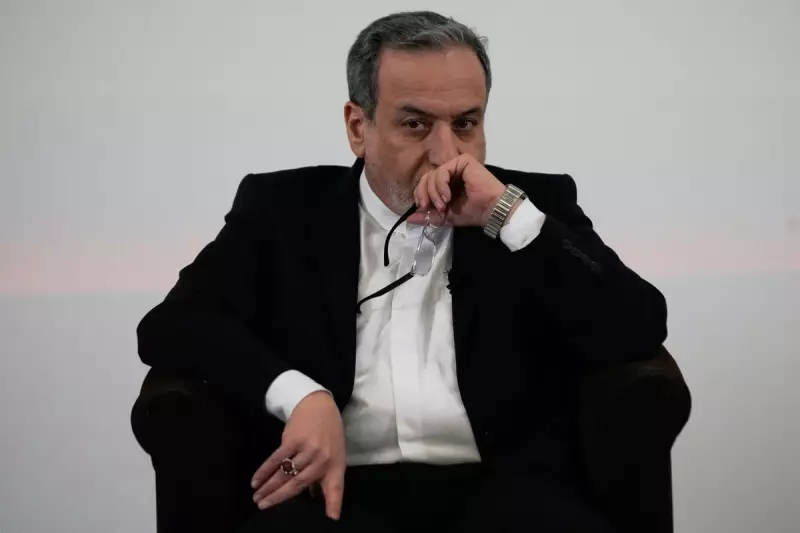
Abbas Araghchi issued the threat in an opinion article published by The Wall Street Journal, stating "our powerful armed forces have no qualms about firing back with everything we have if we come under renewed attack." The foreign minister emphasised that this was not merely a threat but a reality he felt compelled to convey explicitly, noting his personal aversion to war as both a diplomat and military veteran.
Araghchi referenced the June 2025 conflict with Israel while warning that any future confrontation would be "ferocious and drag on far, far longer than the fantasy timelines that Israel and its proxies are trying to peddle to the White House." He cautioned that such conflict would inevitably engulf the wider region and impact ordinary people globally.

Escalating Tensions and Military Movements
The diplomatic warning coincides with significant American military movements in the region. The USS Abraham Lincoln aircraft carrier group, recently operating in the South China Sea, has passed through the strategic Strait of Malacca and is heading westward toward the Middle East. While US naval officials have not explicitly confirmed the carrier's destination, its current position in the Indian Ocean places it just days away from entering the region.
This military repositioning follows a major US deployment in the Caribbean that saw troops seize Venezuelan leader Nicolás Maduro, with American fighter jets and equipment now appearing to mobilise in the Middle East. Meanwhile, Iran recently closed its airspace, likely in anticipation of potential strikes.
Protest Crackdown Reaches Unprecedented Scale
The diplomatic tensions unfold against the backdrop of Iran's most severe domestic unrest in decades. According to the US-based Human Rights Activists News Agency, the death toll from protests has reached at least 4,519 people—exceeding any previous round of protest-related violence since the 1979 revolution.
More than 26,300 individuals have been arrested during the crackdown, raising concerns about potential executions given Iran's status as one of the world's leading practitioners of capital punishment. Supreme Leader Ayatollah Ali Khamenei acknowledged on Saturday that "several thousand" people had died, marking the first official indication of the casualties' scale while blaming the United States for the unrest.
Despite government claims that "the violent phase of the unrest lasted less than 72 hours," videos emerging from Iran despite an internet shutdown appear to show security forces repeatedly using live ammunition against apparently unarmed protesters. The internet blackout imposed since January 8 continues to hinder independent verification of casualty figures, with fears that the death toll may increase significantly as information gradually emerges.
International Diplomatic Fallout
Araghchi's diplomatic standing has already suffered consequences, with his invitation to the World Economic Forum in Davos rescinded over Iran's protest crackdown. Middle Eastern nations, particularly Gulf Arab diplomats, have reportedly lobbied against American military action, reflecting regional concerns about escalating conflict.
The killing of peaceful protesters and potential executions of detainees represent two red lines identified by the US administration in the ongoing tensions, setting the stage for continued diplomatic and military confrontation between the long-standing adversaries.