Iran's Succession Crisis: Who Will Emerge After US-Israel Strikes?
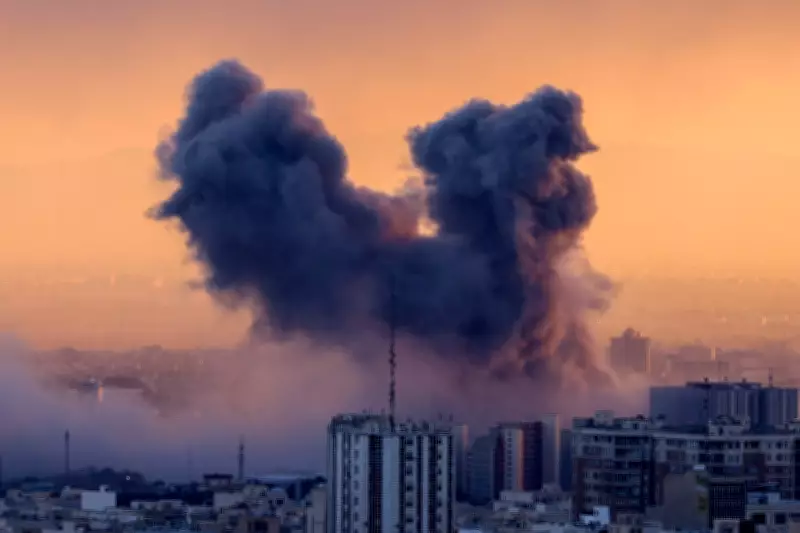
The Middle East has experienced a paradigm shift in recent days, with ramifications extending globally. The unthinkable has occurred: the United States and Israel have executed a joint operation resulting in the death of Iran's Supreme Leader, Ali Khamenei. This unprecedented offensive has decimated Iran's military leadership and affiliated networks across the region, claiming hundreds of lives, including children.
The Immediate Aftermath and Succession Race
Even the building housing Iran's Assembly of Experts, the body tasked with selecting Khamenei's successor, has reportedly been flattened by air strikes. Mojtaba Khamenei, the 56-year-old son of the late Supreme Leader, emerges as the favourite to assume power. However, Israel's explicit threat to assassinate any chosen successor casts a dark shadow over the entire succession process.
Former US President Donald Trump has seized the moment, urging Iranians to leverage what he describes as a generational opportunity to "take over your government." Yet, despite this dramatic call to action, the strategic objectives of the US-Israel operation remain opaque. Their timeline, endgame, and vision for "the day after" are either unclear or deliberately undefined, according to some analysts.

The Exiled Prince: A Distant Contender
Waiting eagerly in the wings is Reza Pahlavi, the 65-year-old exiled son of Iran's last Shah. Since the 1979 revolution that established the Islamic Republic, Pahlavi has resided in the United States, attempting to position himself as a transitional leader for a post-theocratic Iran. He has issued stirring statements promising an imminent return, garnering some support both within Iran and internationally.
However, his prospects appear limited. Retired American-Lebanese Colonel Abbas Dahouk, a former military adviser to the US State Department, bluntly assesses Pahlavi's standing: "He is maybe Plan D." Dahouk draws parallels to failed US attempts to install external leaders in Iraq, warning that such strategies often yield long-term complications. "We're still paying the price today," he notes.
Internal Opposition and Ideological Challenges
Within Iran, armed opposition groups like Kurdish separatists vehemently oppose any monarchical restoration, recalling historical marginalisation under the Shah's rule. These factions, some reportedly planning offensives with possible CIA support, represent critical ground forces that any prospective leader must win over.
Colonel Dahouk emphasises a fundamental challenge for the US and its allies: "We have the war machine to win the battlefield, but the missing piece is the ideological war." He points to protracted failures in Afghanistan and Iraq, stating, "Hearts and minds—we're not good at it."
The Complex Reality of Regime Change
Israeli sources acknowledge that genuine regime change in Iran would require months, if not years, and likely ground troops—a daunting prospect given Iran's 90 million population, advanced missile capabilities, and the entrenched Islamic Revolutionary Guard Corps (IRGC).
Since June, Iran has been effectively run by the Supreme National Security Council, led by former IRGC officer Ali Larijani. Some analysts speculate that Israeli Prime Minister Benjamin Netanyahu may prefer sustained chaos over structured regime change, particularly with domestic elections looming in October.
A Weakened Regime and Potential Recalibration
Iran's regional proxy network, painstakingly built by Khamenei, appears unable to mount an effective rescue. Hezbollah in Lebanon has suffered devastating Israeli retaliation, while responses from Iraq and Yemen have been conspicuously muted. "That means [the Iranian regime] has no friends any more," observes Dahouk.
Prominent Iranian-American historian Arash Azizi predicts that Khamenei's death will likely force Tehran to abandon core ideological policies. "Whoever comes out on top in Tehran now will have to consider recalibrating to ensure survival," he states. Sources close to parliamentary speaker Mohammad Bagher Ghalibaf, another former IRGC commander, indicate that anti-American rhetoric "will change" due to depleted resources.

Azizi suggests that figures like Ghalibaf and Larijani could potentially guide the Revolutionary Guards toward a new diplomatic arrangement with the United States. Faced with resource shortages, mass civil unrest, and internal armed opposition, such a recalibration may become Iran's only viable path forward.