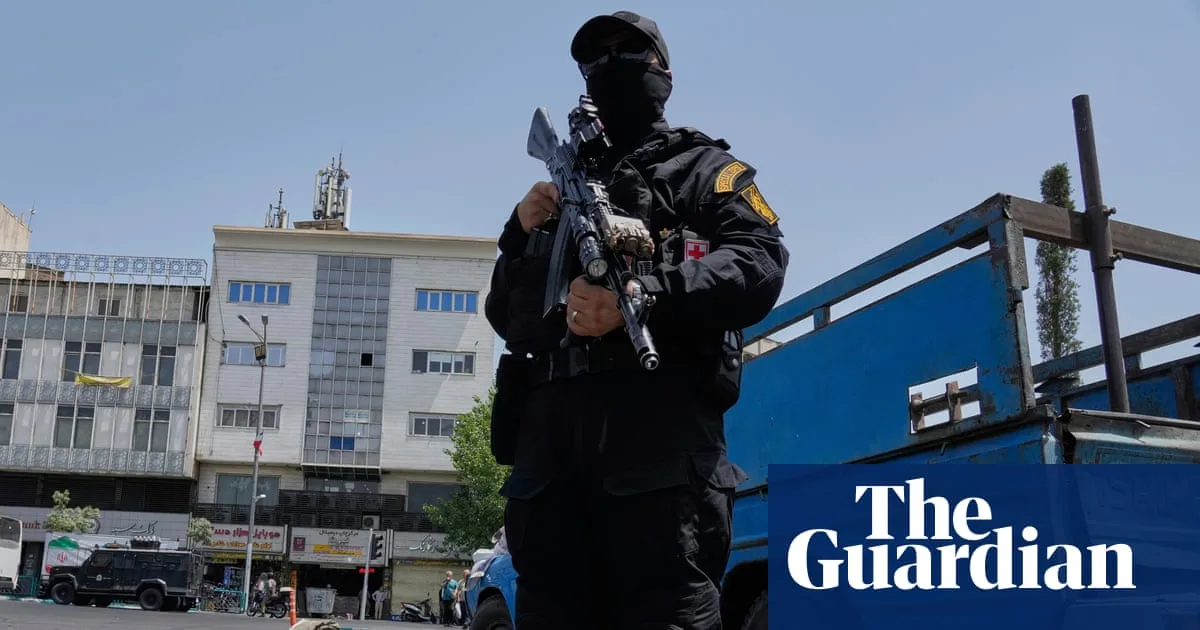
Iranian Regime Security Forces Descend into Chaos Amid Internal Purges
A mutilated body lies in the street, bearing savage yet calculated wounds. This gruesome scene represents more than mere sadism—it serves as a deliberate message. At first glance, it might appear as just another Iranian life lost to the state's promiscuous violence, a tragic but sadly routine occurrence within the Islamic Republic. However, this particular victim differs significantly: it is not a protester lying in the dirt but an officer of the regime's primary defense force, the Islamic Revolutionary Guard Corps (IRGC).
Intelligence Reveals Extraordinary Internal Breakdown
Since the commencement of US-Israeli strikes on Iran beginning February 28, I have maintained contact with a source possessing deep knowledge of western intelligence operations within the country. What this source has revealed is truly extraordinary: amid the chaos and fury of the ongoing conflict, the state's most brutal security forces are not only penetrated by enemy services and in disarray—they are actively turning on each other.
'Over the past four days, reports have painted a picture of an Iranian security apparatus under severe and accelerating internal strain,' states my confidential source. 'More than 60 incidents have been documented across virtually every branch of the regime's military and security apparatus, spanning multiple regions simultaneously.'
The source continues: 'That body turned up in the street just the other day, and it's not an isolated incident by any means. There are many reports of IRGC soldiers being executed for desertion. It's happening constantly. IRGC leaders are also regularly executing subordinates for refusing to carry out orders.' This situation represents 'not isolated turbulence but a nationwide condition.'
Widespread Executions and Secret Orders
Executions are reportedly occurring throughout Iran's military and security forces, with personnel from multiple branches being put to death—sometimes immediately at their own bases. These killings are frequently carried out under secret orders so tightly classified that even fellow officers remain unaware of their existence.
Simultaneously, bodies of regime officials displaying signs of torture have been appearing dumped in streets and other public locations. The victims originate from across Iran's security apparatus—including intelligence officers, naval personnel, and members of the regular army. Opposition groups are believed responsible for some of these killings, sending a clear message that the regime faces attacks from all directions.
Even Iranian missile teams have been compromised, with their equipment reportedly 'breaking down' mysteriously on multiple occasions. Authorities suspect sabotage, leading to investigations, arrests, and yet more executions. The security forces have become so widely compromised that they are effectively being turned inside out, with paranoia reaching unprecedented levels.
Regime Response and Civilian Reality
The Iran War has sparked outrage among numerous critics. Even those more sympathetic to the need to confront this vicious regime have questioned what appears to be an absence of clear objectives or strategic planning in the conflict. Regime change beyond the state's inner circles currently seems impossible, as demonstrated by the recent replacement of Ayatollah Ali Khamenei by his son Ayatollah Mojtaba Khamenei.
In a video message released on February 28 as strikes began, former President Donald Trump called on Iranians to seize the moment: 'The hour of your freedom is at hand. When we are finished, take over your government. Now is the time to seize control of your destiny.'
Thus far, little evidence suggests this is occurring. Most people remain confined to their homes while US and Israeli airstrikes continue to pound Iran. Trips into streets and shops are infrequent, primarily for basic necessities, with swift retribution for those who step out of line.
'If anyone comes forward in line with the wishes of the enemy, we will no longer see them as merely a protester, we will see them as an enemy,' declared national police chief Ahmad-Reza Radan in comments aired by state broadcaster IRIB. 'And we will do to them what we do to an enemy... all our forces are also ready, with their hands on the trigger.'
My source confirms this harsh reality: 'On the street the atmosphere remains bleak. Across the board there is extremely heavy repression. There are checkpoints everywhere in Tehran. People are being beaten, investigated and detained.'
Strategic Developments and Opposition Attempts
As days progress, a clearer tactical plan is beginning to emerge. The initial wave of strikes eliminated Iran's former Supreme Leader Ayatollah Khamenei and as much leadership as possible. Subsequent strikes targeted IRGC facilities and Iran's potent ballistic missile capability. More recently, strikes have focused on hitting the Basij—the IRGC's street-level enforcers—and their checkpoints.
What has become evident is that a central component of American and Israeli strategy involves doing whatever possible to help people rise up after bombing ceases. Even amid relentless pounding, signs of opposition persist.
'Last week there was an attempt to organise a large rally in Tehran,' reveals my security source. 'But it collapsed because the city was saturated with security forces. And yet the regime does not have complete control.'
Attacks from limited opposition elements mean security officials remain constantly on guard. 'Regime forces are more scared of a mobilised population than air strikes for these reasons,' explains my source.
Civilian Perspectives and Financial Pressures
Currently, bombing remains relentless; swathes of Iran resemble an inferno while people live in terror. A Tehran resident identified as Mahmoud expressed blunt assessment: 'It's terrifying. The bombs are very loud and we hear them through the night. I gather with my family and try to tell them we will be OK. We are very afraid. It's a terrible war. But we hope the Americans will succeed.'
When asked about potential regime change, Baqer, a 45-year-old office worker, responded: 'Right now, it seems little has changed,' referring to Mojtaba's accession to leadership. 'But we hope the regime will be much weaker when this war ends. One day Trump and Netanyahu will finish the job. Then, believe me, our time will come.'
While this might once have seemed fanciful, intelligence assessments are becoming more optimistic despite soaring oil and gas costs caused by Iran's chokehold on supplies. Another growing source of chaos involves the regime's failure to pay its security personnel.
Across Iran, soldiers and security personnel from multiple branches have reportedly staged protests, threatened to abandon posts, and in some cases deserted following months of unpaid salaries and pensions. Critically, this anger spans all ranks from ordinary troops to senior officers. Rather than addressing the mounting financial crisis, authorities have responded with characteristic aggression: increased surveillance, intimidation, and punishment.
Internal Resentment and Future Prospects
This approach merely breeds further resentment among the very forces the regime depends upon to maintain power. 'Personnel across multiple branches of the Revolutionary Guard have fled or attempted to flee,' reports my source. 'Manhunts have been launched for missing members, and families of those who fled have been placed under house arrest. Resignation requests across multiple provinces have been rejected outright, in some cases under explicit threat.'
The source concludes: 'The idea is that all this paves the way for uprisings in the future. When the smoke clears, people will be surprised at how degraded the regime's machinery of terror is. It's only a matter of time before it starts breaking down. No one seems to understand just how much trouble the regime is now in.'