Iran's Persian Gulf Barrage Reveals Strategy of Regional Chaos and Instability
For years, Iran's theocratic government has consistently warned that it would unleash a devastating wave of missile and drone fire across the Middle East if it perceived any existential threat to its regime. Now, the Islamic Republic is actively fulfilling that ominous promise through coordinated military actions.
Unleashing Regional Warfare
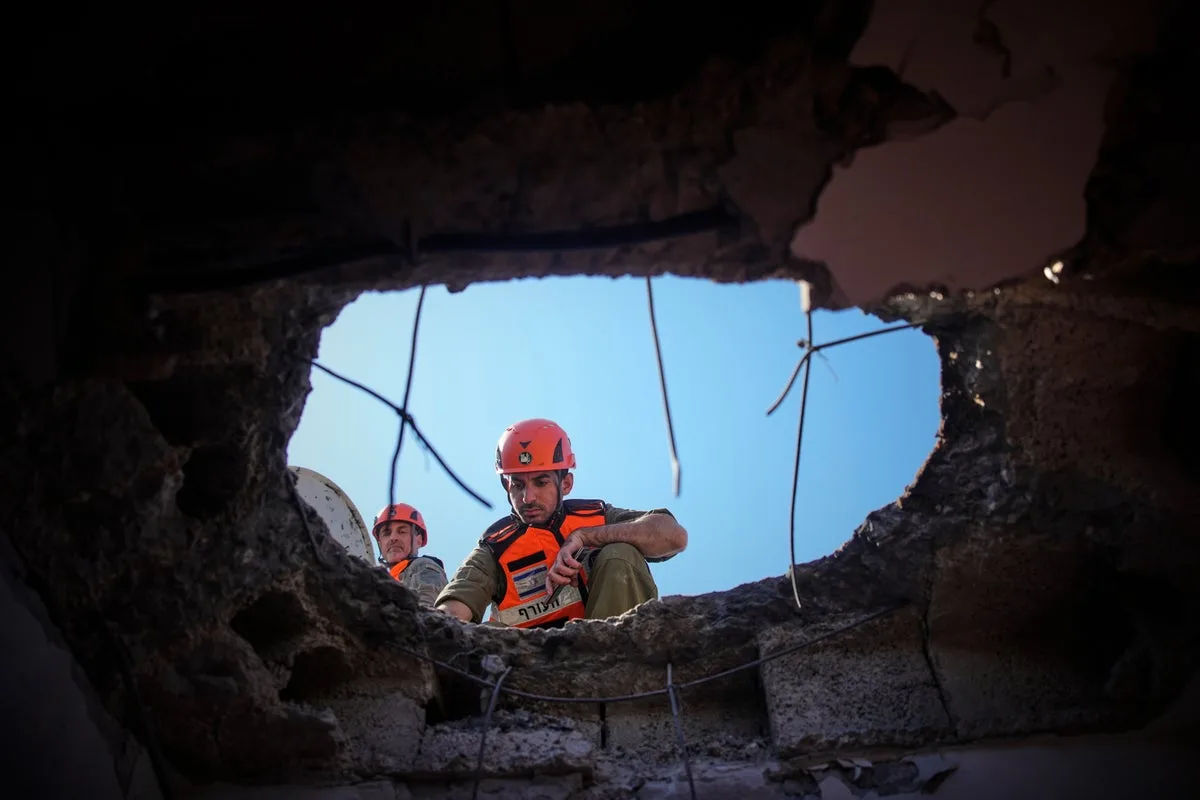
Since the United States and Israel initiated military operations on Saturday, resulting in the death of Iranian Supreme Leader Ayatollah Ali Khamenei, Iran has responded with overwhelming force. The country has launched thousands of drones and ballistic missiles targeting multiple strategic locations including Israeli territory, American military bases and diplomatic facilities throughout the region, and critical energy infrastructure across the Persian Gulf.
Iranian firepower has even extended beyond immediate borders, with attacks directed toward neighboring countries including Turkey and Azerbaijan. This demonstrates the expansive reach of Tehran's military capabilities and its willingness to engage multiple regional actors simultaneously.
Strategic Calculations and Potential Backfire
Iran's fundamental strategy appears focused on instilling widespread fear about the dangers of an expanding regional war. Tehran hopes that America's regional allies will apply sufficient pressure on Washington to halt the ongoing military campaign. A prolonged conflict resulting in American and Israeli casualties could potentially work to Iran's advantage by testing political resolve.
However, this aggressive approach carries significant risks of backfiring. According to Ellie Geranmayeh, deputy director of the Middle East and North Africa program at the European Council on Foreign Relations, "Iran is upping the costs for this U.S. military campaign and regionalizing it from the get-go, as they promised they would if America restarts the war again with Iran."
Iranian leaders believe that by inflicting casualties and disrupting energy production to drive up global oil and gas prices, they can pressure U.S. President Donald Trump through either allied nations or domestic public opinion. "The Iranians are banking on basically out-stomaching him, and exhausting him and his allies to the point where they would basically have a diplomatic off-ramp," Geranmayeh explained.
Regional Impact and Unintended Consequences
The Iranian response has spared few regional actors, including traditional mediators like Oman. Despite Oman's decades-long close relationship with Iran and its recent mediation efforts in nuclear talks, Omani ports and coastal ships have been targeted by Iranian missiles. Similarly, Saudi Arabia's Ras Tanura oil refinery has faced repeated attacks, while the U.S. Embassy in Riyadh has been struck by drones.
This indiscriminate targeting may be undermining Iran's strategic objectives. According to Hasan Alhasan, a Middle East expert with the London-based International Institute for Strategic Studies, Iran's strategy of threatening energy security and driving wedges between Gulf and Western states is "backfiring." He noted that "It's driving and pushing the Gulf states into closer alignment with the United States."
Alhasan emphasized that "The Gulf states can't simply sit idle and continue absorbing indefinite attacks to their critical infrastructure and to civilians in Gulf cities." These nations are likely pursuing both enhanced defensive capabilities and diplomatic solutions to end the conflict.
Military Dynamics and Resource Limitations
A grim mathematical reality underlies the ongoing conflict. Iran possesses a finite inventory of missiles and drones, while Gulf Arab states, the United States, and Israel maintain limited interceptor missile supplies capable of neutralizing incoming threats. U.S. Defense Secretary Pete Hegseth reported that thousands of Iranian missiles and drones have been "intercepted and vaporized" during the war.
According to U.S. Navy Admiral Brad Cooper, head of American Central Command, "In simple terms, we are focused on shooting all the things that can shoot at us." A senior Western official speaking anonymously about intelligence matters suggested Iran may have several days' worth of ballistic missiles remaining if current firing rates continue, but might conserve resources for a prolonged campaign.
Diplomatic Disarray and Command Questions
Iran's foreign minister has suggested that military units may be operating with considerable autonomy from central government control, potentially providing justification for increasingly erratic targeting. Abbas Araghchi told Al Jazeera that forces were "acting based on instructions — you know, general instructions — given to them in advance."
However, Qatar's prime minister, Sheikh Mohammed bin Abdulrahman Al Thani, "categorically rejected" Araghchi's assertion that Iranian missiles were solely directed at American interests and not intended to target Qatari territory. This diplomatic friction highlights the complex regional dynamics exacerbated by Iran's military strategy.
As the conflict continues, Iran's approach of creating regional chaos faces mounting challenges from both military realities and diplomatic repercussions, potentially undermining the very strategic objectives it seeks to achieve.






