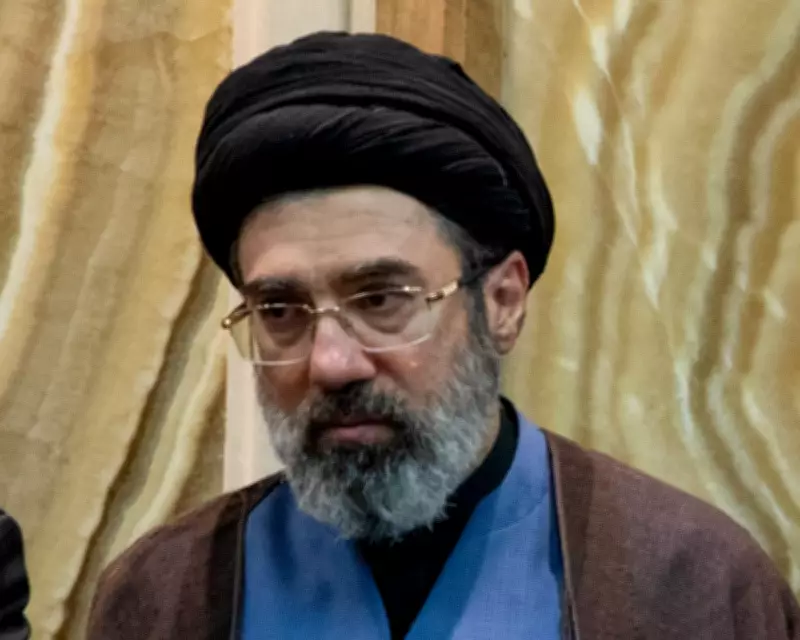
Iran's New Supreme Leader Injured in Fatal Strike, Ambassador Reveals
Iran's new supreme leader, Mojtaba Khamenei, sustained injuries during the devastating attack on 28 February that claimed the lives of six of his family members, including his father, as confirmed by Tehran's ambassador to Cyprus. In an exclusive interview, Alireza Salarian provided critical insights into the incident, highlighting the precarious survival of the 56-year-old cleric amidst the chaos.
Details of the Attack and Khamenei's Condition
Ambassador Salarian, speaking from his embassy compound in Nicosia, elaborated that Mojtaba Khamenei was fortunate to survive the strike, which completely destroyed the late ayatollah's residence. "He was also there and he was injured in that bombardment but I haven't seen that reflected in the foreign news," Salarian stated. "I have heard that he was injured in his legs and hand and arm ... I think he is in the hospital because he is injured." This revelation sheds light on why Khamenei has remained out of public view since succeeding his father, with Salarian adding, "I don't think he is comfortable [in any condition] to give a speech."
The attack occurred on the opening day of US-led airstrikes against Iran, targeting the presidential complex in Tehran during the holy month of Ramadan. Among the victims were Khamenei's wife, Zahra, and his teenage son, Mohammad Bagher. Iranian media reports indicated that Ali Khamenei's wife, Mansour, passed away three days post-strike. Salarian recounted, "The [late] supreme leader was killed with his wife, with his daughter, with his son-in-law and with his daughter's 14-month-old baby." He noted that top commanders were also killed, as they had been invited to the residence, emphasizing the familial and political toll.

Political Reactions and Geopolitical Tensions
Earlier statements from Iranian officials had hinted at Khamenei's injuries without full disclosure. Yousef Pezeshkian, a senior government adviser, mentioned on Telegram that Khamenei was wounded but safe, while an Iranian official told Reuters he was "lightly injured" and still operational. Iranian state TV later described him as a "wounded veteran of the Ramadan war," though specifics were omitted.
The geopolitical landscape has intensified, with US President Donald Trump criticizing Khamenei's election as "an unacceptable choice" and predicting his short tenure. Israel has issued warnings about potential assassination attempts, viewing the new leader as hardline as his father, who held power for 37 years. Salarian revealed that the late ayatollah had opposed his son's succession, fearing a dynastic system, but clergy insisted post-attack.
Western intelligence services speculate that Khamenei is being shielded from public exposure to mitigate assassination risks. "I don't know if he [the new leader] is worried or not, but we know that the US, and especially Israel, will target him," the ambassador cautioned.
Broader Impacts and Diplomatic Statements
Salarian estimated the war death toll in Iran had reached 1,400 by Tuesday, with Tehran's population halved as residents fled bombardment. He criticized the Trump administration for disregarding international law, contrasting it with the approaches of Biden and Obama. "Trump is a phenomenon. He does not believe in rule of law internationally or even internally in his own country," he asserted.
Denying Iran's pursuit of nuclear weapons, Salarian cited religious prohibitions, while addressing tensions with Cyprus over British bases. He claimed these bases supported Israeli and US operations in past conflicts but found no evidence of involvement in the recent strike. However, he blamed militia groups in Lebanon for drone attacks on RAF Akrotiri, suggesting Israel might have staged them to escalate the conflict. "If the bases are used in Cyprus [against us] we have the right to respond," he warned, maintaining Iran's innocence in the drone incidents.