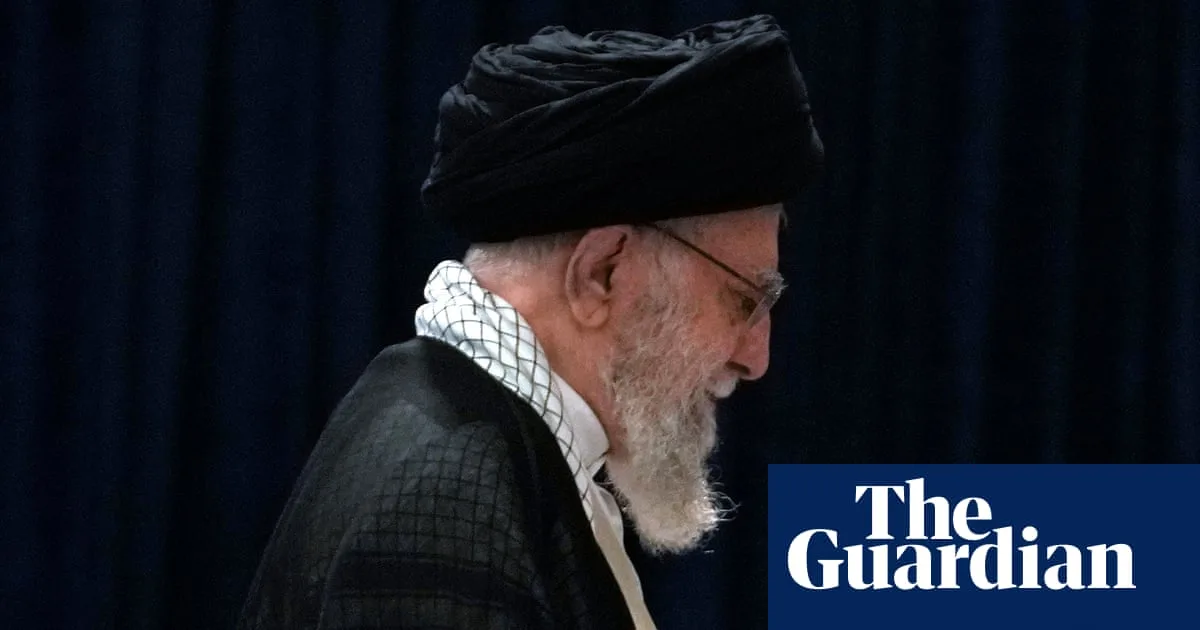
Iran's Supreme Leader Khamenei Killed in US-Israeli Strike, Sparking Regional Crisis
Iran's Khamenei Killed in US-Israeli Strike, Crisis Looms

Final Moments of Iran's Supreme Leader in Devastating 60-Second Strike

The decades-long rule of Ayatollah Ali Khamenei, Iran's iron-fisted Supreme Leader, ended abruptly in a single, coordinated blast lasting just 60 seconds. This dramatic event has plunged the Middle East into a state of high alert, with the world bracing for potential harrowing fallout from the escalating conflict.

Strike Details and Immediate Aftermath

In the early hours of February 28, 2026, explosions tore through Tehran, marking the most significant military escalation in the region in decades. Initially, rumours swirled about Khamenei's fate, but by the following day, Iranian state media confirmed his death at age 86. The strike, a joint operation by the United States and Israel, targeted his heavily secured compound, killing him alongside family members, including his daughter, grandchild, daughter-in-law, and son-in-law. Additionally, forty senior Iranian leaders perished in the attack.

For years, Khamenei was considered virtually untouchable, shielded by layers of intelligence, military protection, and loyal Revolutionary Guard units. However, Western and Israeli officials stated the strikes were precisely designed to dismantle this defence amid growing concerns over Iran's nuclear weapons programme. Satellite imagery later revealed extensive destruction at the compound, believed to house key leadership offices.

Political and Regional Repercussions

Khamenei's death has triggered a complex mix of reactions: mourning within Iran, celebration among some exiles, fury from allied nations, and widespread fears of a broader war. Iranian authorities declared a 40-day nationwide mourning period, which experts suggest could be used to stifle any attempts at regime change. The operation, part of a broader campaign to cripple Iran's military and nuclear infrastructure, also eliminated several top commanders, marking the first successful targeted killing of a sitting Supreme Leader in the Islamic Republic's history.

In the chaotic aftermath, conflicting claims flooded international media. Iranian representatives initially denied Khamenei's death, calling it psychological warfare, but as communications fell silent and senior figures failed to appear, confirmation followed. Tearful state broadcasters announced the news, while some citizens celebrated, with videos showing Iranians cheering from balconies.

Historical Context and Succession Uncertainty

Khamenei assumed power in 1989 after the death of revolutionary founder Ayatollah Ruhollah Khomeini. Over 37 years, he consolidated unparalleled authority over Iran's military, judiciary, foreign policy, and religious institutions. His rule saw Iran expand regional influence through proxy networks while confronting the US and Israel over sanctions and nuclear ambitions. Despite facing repeated protests, supporters viewed him as a defender of sovereignty, while critics accused his administration of tightening control over public life.

Iran's constitution allows for a temporary leadership council while the Assembly of Experts selects a new Supreme Leader, but analysts note no obvious successor commands universal support. Potential contenders include judiciary chief Gholam-Hossein Mohseni-Eje'i, cleric Alireza Arafi, reform-leaning figure Hassan Khomeini, and Khamenei's son Mojtaba, though hereditary rule remains controversial. Many observers believe the Islamic Revolutionary Guard Corps, strengthened under Khamenei, may play a decisive role in the transition, plunging Iran into its most fragile political moment since the 1979 revolution.

International Responses and Economic Concerns

European leaders described the event as a potential turning point for Iran's future, urging restraint to avoid wider conflict. Russia condemned the killing as a violation of international norms, and China warned of dangerous escalation. Iranian officials have pledged retaliation, raising fears of attacks on US or allied targets across the Middle East. Military analysts warn that disruption to key shipping routes like the Strait of Hormuz could have global economic consequences, as a significant share of oil supplies passes through this area.

Airspace closures, troop mobilisations, and emergency UN meetings followed swiftly. Retaliatory strikes have already occurred across the region, including drone attacks on an RAF base in southern Cyprus. The UK, while not involved in the initial strikes, has confirmed that the US will use RAF Fairford in Gloucestershire and Diego Garcia in the Indian Ocean for defensive purposes against Iranian missile sites. Prime Minister Keir Starmer justified this decision based on collective self-defence and protecting British lives, accusing Iran of a scorched-earth strategy.

Domestic Political Fallout in the UK

Conservative leader Kemi Badenoch criticised the government, accusing it of being too scared to take a stronger stance against Iran due to concerns over Labour voters' opinions on Middle East conflicts. She argued that this reluctance compromises the British national interest, leading to what she described as obfuscation in interviews by cabinet ministers.

As the situation continues to evolve, the world watches closely, with the Middle East standing on the brink of a potentially devastating wider war. The death of Khamenei not only marks the end of an era for Iran but also sets the stage for uncertain and turbulent times ahead in global geopolitics.




