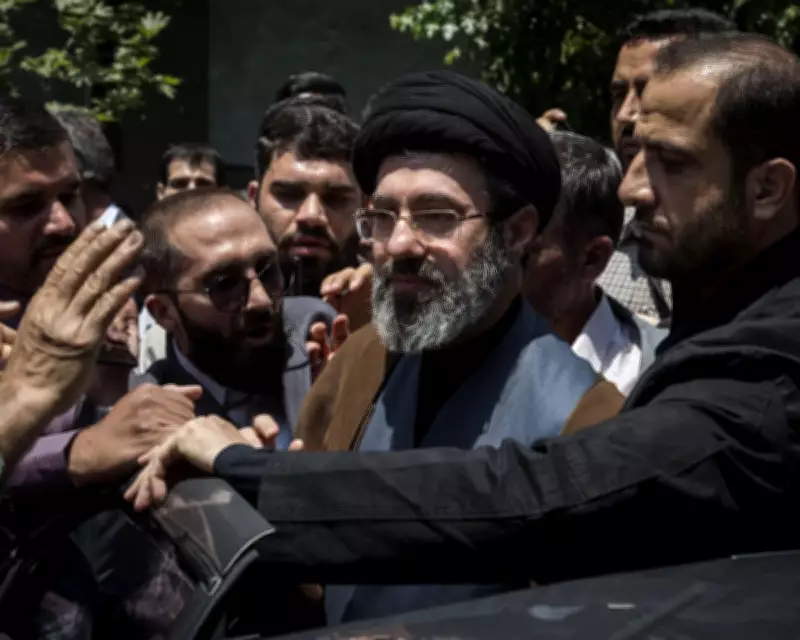
Iran's Assembly of Experts Reportedly Chooses Khamenei's Son as Next Supreme Leader
The Assembly of Experts of Iran has reportedly settled on Mojtaba Khamenei, the son of Ayatollah Ali Khamenei, as the country's next supreme leader, according to claims from his supporters. This significant development comes as Iran faces intense regional pressures, including ongoing conflicts with Gulf neighbours and a US-Israeli military onslaught. The announcement of Mojtaba's appointment has been delayed due to a dispute over voting procedures within the assembly.
Internal Disputes and Voting Procedures
Hosseinali Eshkevari, a member of the council tasked with electing a new leader, stated that "The name of Khamenei will continue," adding that "The vote has been cast and will be announced soon." However, if the assembly decides that members do not need to meet in person to vote, its secretariat could simply declare that a consensus had been reached. This procedural flexibility has created uncertainty around the timing of the official announcement.
Former president Hassan Rouhani hinted at potential delays, suggesting that any announcement should "come at an appropriate time that doesn't harm the public focus on the sacred defence." This indicates that internal political considerations are influencing the timing of this crucial leadership transition.

International Reactions and Regional Tensions
The expected appointment of Mojtaba Khamenei is likely to face rejection from former US President Donald Trump, who has previously called him "unacceptable." Trump has insisted on playing a decisive role in the choice of Iran's next supreme leader, while Israel has threatened to kill both the next supreme leader and those who selected him. These international pressures add complexity to Iran's leadership transition.
Within Iran, some voices express concern about handing power during wartime to a relative novice. These critics believe defence efforts should remain in the hands of experienced figures like Ali Larijani, the highly experienced secretary of the supreme national security council. However, supporters present Mojtaba Khamenei as a rejuvenated version of his father, noting his intimate knowledge of the supreme leader's office from his previous role as deputy chief of staff.
Current Leadership and Regional Diplomacy
Iran is currently being run by a temporary tripartite leadership council that includes President Masoud Pezeshkian. Recently, Pezeshkian made a controversial attempt to reset relations with Gulf states by apologising for Iran's attacks on their territory. He announced that Iran would end strikes if Gulf states prevented attacks on Iran from being mounted from their countries.
Pezeshkian's comments followed Russian mediation and were expected to receive positive responses from at least two Gulf states. However, immediate internal opposition and continued attacks on Gulf states prevented this diplomatic breakthrough. Trump further undermined Pezeshkian's position by calling his move "a humiliating surrender" on Truth Social.
Military Stance and Regional Dynamics
Iran's foreign minister, Abbas Araghchi, defended the apology, noting that in Iranian culture, saying sorry was "a sign of dignity and strength." However, Pezeshkian's statement was immediately countermanded by the Iranian army, which regards US bases in the Gulf as legitimate targets in what they consider an existential war of self-defence.
Ali Larijani clarified Iran's stance in a television interview, stating: "We have told our neighbours and we repeat: If a base is to be provided to the Americans from your soil to attack Iran from there, it is our undisputed right to respond to those bases." He also pressured Gulf states to consider the role of these bases if they believed Israel was the chief source of regional insecurity.
Military sources indicated that attacks on US assets in the Gulf would be widened in response to US assaults on Iranian oil refineries and fuel depots. Iran responded to these onslaughts by reducing maximum daily petrol consumption while maintaining stable supplies. Iranian officials did not deny receiving intelligence assistance from Russia.

Regional Reactions and Future Prospects
Western diplomats report no letup in Iran's ability to mount drone and missile attacks, warning that the scale of military assets being poured into the region suggests the US does not intend to make an early unilateral declaration of victory. Larijani expressed confidence that Iranian society was not turning against the government and rejected Trump's plan to divide the country along ethnic lines.
Despite rising anger over Iran's attacks on Gulf states, most Gulf governments have not yet backed a counteroffensive that would align them with the US and Israel. Iran has admitted that 60% of its missiles and drones have been directed at Gulf states, compared with 40% at Israel. Foreign ministers from the Arab League recently met to discuss their options, with one western diplomat noting: "Their patience is running out. The attractiveness of their economies and reputations for stability are being trashed."
The United Arab Emirates government described Iranian attacks as "brutal and unprovoked," claiming more than 1,400 ballistic missiles and drones had been aimed at its infrastructure. Some Arab diplomats, despite reservations about Iran's regional role, sense the greater risk is that Israel emerges strengthened from this conflict. Former Arab League secretary general Amr Moussa warned that the ongoing attack on Iran represents "a planned strategic American move" toward changing the Middle East's geopolitical landscape.